Former Aeroflot employee convicted for parts
A former Aeroflot employee was convicted on August 28, 2026, for smuggling over $900,000 in U.S. aircraft parts to Russia, violating export controls after the Ukraine invasion.
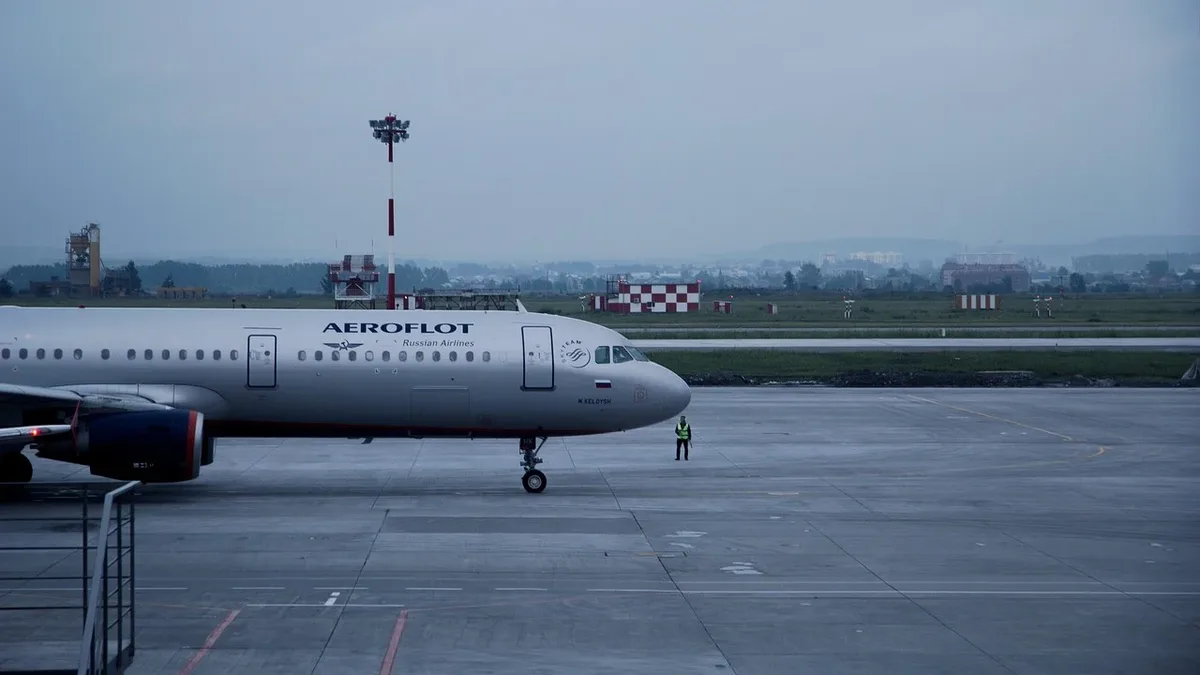
A former Aeroflot employee has been convicted in the United States for his role in smuggling more than $900,000 worth of American aircraft parts to Russia. A federal jury in Florida found him guilty on all 12 counts on August 28, 2026, following a trial in the Southern District of Florida.
The charges, detailed by the U.S. Department of Justice, included conspiracy to violate the Export Control Reform Act, illegal export of controlled items, smuggling, providing false export information, and conspiracy to commit money laundering. The case originated from an indictment filed in April 2025.
Prosecutors stated the former airline employee collaborated with another Russian national to procure components from U.S. suppliers after Washington tightened export restrictions following Russia's full-scale invasion of Ukraine in 2022.
The Smuggling Scheme
According to court documents and testimony, the two individuals used false final destinations to conceal the true endpoint for the aircraft parts. Suppliers were told the goods were destined for countries like the UAE and China. Prosecutors asserted the parts were ultimately sent to Russia and the state-owned carrier Aeroflot.
The central issue was the deliberate concealment of the final destination.
U.S. export controls restrict the sale of certain American-origin products to Russia. After the war expanded, the U.S. Department of Commerce issued a Temporary Denial Order against Aeroflot, blocking it from receiving U.S.-origin goods.
Prosecutors said the defendants continued sourcing aviation parts by presenting different shipment destinations. The use of third countries made purchases appear unrelated to Russia at the point of sale. Financial transactions were also structured to conceal the movement of goods and money.
U.S. Attorney Jason A. Reding Quiñones said the scheme demonstrated an attempt to use South Florida and third-country destinations to circumvent U.S. restrictions. "Russia cannot evade American sanctions and export controls by routing its purchases through South Florida," Quinones stated. "You cannot put a fake destination on a shipping label and make American export laws disappear."
Impact on Aeroflot and Enforcement
Aeroflot was specifically targeted by U.S. export restrictions after the invasion. These restrictions are critical because Aeroflot operates aircraft reliant on foreign-designed components and maintenance supply chains. Cutting off access to U.S.-origin parts complicates the airline's ability to source components through normal channels.
Rather than attempting direct purchases for Russia, prosecutors said the defendants used seemingly legitimate transactions with U.S. suppliers, providing different countries as stated destinations.
The jury convicted the defendant not only of export-control violations but also of smuggling, providing false export information, and conspiracy to commit money laundering. The U.S. Attorney's Office confirmed the scheme involved over $900,000 in American aircraft parts.
"This defendant conspired to secretly funnel nearly $1 million in American aircraft parts to Russia and Aeroflot, then used false destinations and financial transactions to conceal what he was doing," Quinones concluded. "Yesterday, a federal jury held him accountable on every count."
The recent investigation was conducted by the FBI Miami Field Office with assistance from the U.S. Department of Commerce’s Bureau of Industry and Security (BIS). The defendant is scheduled for sentencing on November 20, 2026.
Source: AeroTime