Hamburg Airport: From Zeppelin Base to Hub
Hamburg Airport, operating commercially since January 1911, is considered the world's oldest continuously operating commercial airport.
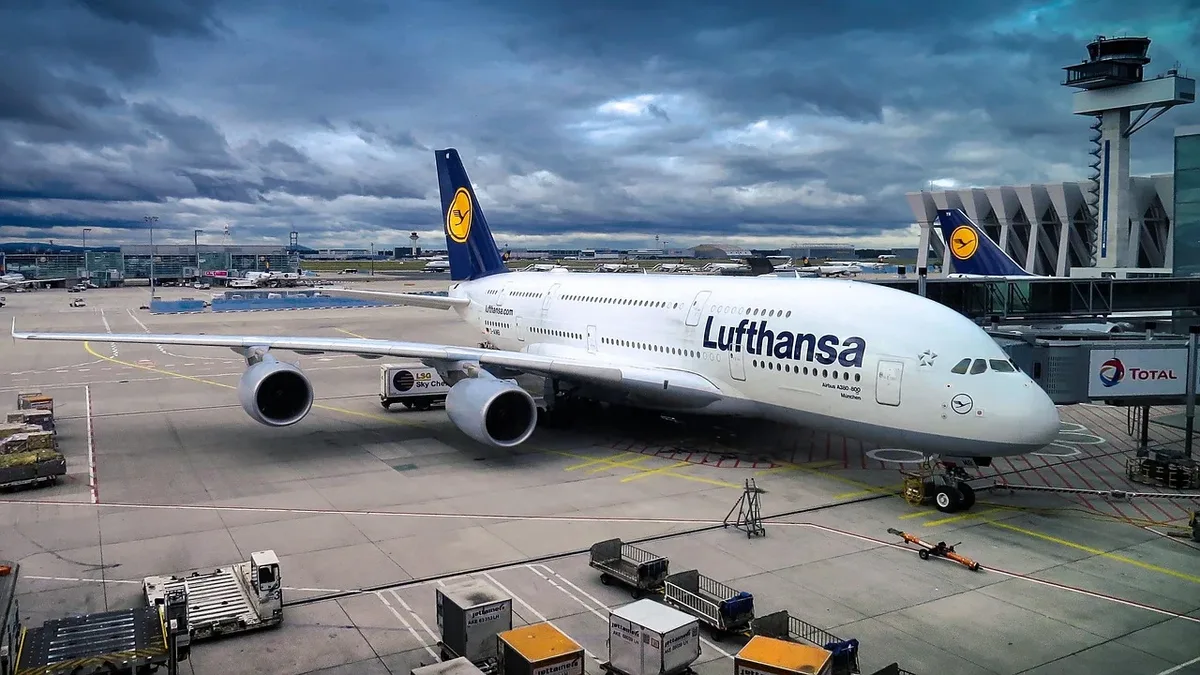
Hamburg Airport has been selling tickets in some form since January 1911, making it the oldest continuously operating commercial airport on Earth. It started not with airplanes, but as a base for rigid airships.
The airport's origin lies in a public relations pitch. In March 1910, Count Ferdinand von Zeppelin addressed Hamburg residents about the commercial future of airships. Local investors founded the Hamburg Airship Hangar Company on January 10, 1911, setting aside roughly 111 acres of land near Fuhlsbüttel for a hangar large enough for two Zeppelins.
From Airship Hangar to Wartime Asset
The Fuhlsbüttel hangar, finished in 1912, linked the site to DELAG, widely regarded as the world's first airline. Passengers rode in open gondolas beneath hydrogen-filled envelopes. This strange beginning was short-lived. Europe was at war by 1914.
The German military requisitioned the field. The original airship hangar was destroyed. Under the Treaty of Versailles, Germany's rigid-airship program was dismantled. The field's founding purpose vanished before its tenth anniversary.
Scheduled flights resumed in 1919. KLM launched the first international route in 1920, linking Rotterdam, Amsterdam, Hamburg, and Copenhagen. Passenger numbers were tiny. Hamburg counted exactly 241 passengers in 1920. The total climbed steadily. By 1929, the airport had opened its first proper terminal building.
On August 28, 1939, the Luftwaffe requisitioned Fuhlsbüttel. Historical records show the airport had already been expanded and militarized by the Luftwaffe in 1936-37. Its wartime units included a long-range reconnaissance Staffel equipped with Heinkel He 111 bombers. The field was repeatedly bombed during Allied attacks on Hamburg.
The RAF Museum states Bomber Command flew 3,091 sorties during Operation Gomorrah and dropped 8,344 tons of bombs. Hamburg Airport says the Luftwaffe camouflaged the field with trees and nets. Fuhlsbüttel survived largely intact. When Germany surrendered in 1945, the Royal Air Force took control.
Postwar Transformation and the Jet Age
Britain administered the airport from 1945 until 1950. The field served as a launch point for the Berlin Airlift between June 1948 and May 1949. Runways built for propeller aircraft were moving flour and coal into West Berlin.
The site was renamed Hamburg Airport in 1950. Lufthansa began scheduled domestic services from Hamburg on April 1, 1955. Just over two months later, it launched its first North Atlantic service to New York using a Lockheed Super Constellation.
Lufthansa's first Boeing 707 arrived at Hamburg directly from Seattle on March 2, 1960. The first Lufthansa Boeing 747 landed at Fuhlsbüttel on March 30, 1970. The 350-ton jumbo jet required a reinforced apron and Hamburg's first two passenger bridges.
Modernization for the Largest Aircraft
Hamburg's answer to aging infrastructure was the HAM21 modernization program from 2001 to 2009, costing roughly $390 million. The project rebuilt the airport around two passenger terminals and added a metro station.
The airport's two terminals can now handle roughly 14 million passengers a year. On October 29, 2018, Hamburg became a certified Airbus A380 destination and welcomed its first scheduled Emirates A380. The aircraft has a wingspan of 261 feet and a maximum takeoff weight of about 1.27 million pounds. Emirates later replaced the A380 on the Hamburg-Dubai route with Boeing 777-300ERs.
A hangar built for two Zeppelins now shares a runway with the largest passenger jet ever certified. However, College Park Airport in Maryland predates Hamburg by two years. According to Airport Technology, the US Army Signal Corps brought Wilbur Wright to that field in 1909. The distinction for Hamburg rests on the word 'commercial' and its continuous operation selling tickets.
Source: Simple Flying