Sceye airship completes first transpacific
Sceye's ST1 airship completed a 13-day nonstop flight from New Mexico to Japan, testing stratospheric telecom and surveillance systems with SoftBank.
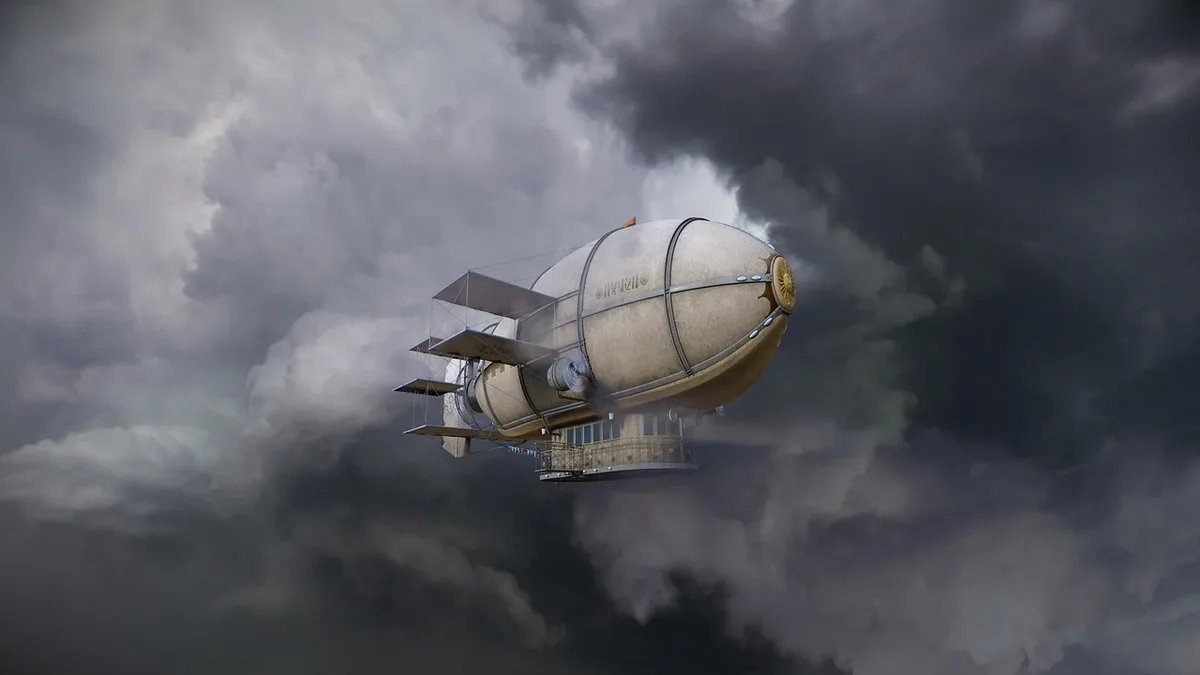
US firm Sceye announced on September 2, 2026, that it has completed the first transpacific deployment of its high-altitude airship. The ST1 vehicle conducted a 13-day nonstop flight through the stratosphere from New Mexico to Japan in collaboration with investor SoftBank Corp.
The mission began on August 9, 2026. The airship traveled 15,000 kilometers to Japan, where it remained airborne for a further seven days of operational trials. After completing those tests, the ST1 started its return journey to the United States, which was still underway as of the announcement date.
Mission Profile and Tests
During the flight, the vehicle typically operated at an altitude of 16.5 kilometers, or 54,000 feet. It performed tests involving the relay of regular and emergency telecommunications. These included text messaging, voice calls, internet access, and emergency calls. The airship also interacted with drones during the mission.
For this deployment, the ST1 was equipped with specialized telecommunications hardware called SceyeCELL. Sceye claims this technology is a first-of-its-kind system with functions similar to ground-based cell towers. It is designed to deliver wireless communications over wide areas from the stratosphere.
The flight marked another technical milestone. It was the first time a mobile core network and a web server were successfully installed and tested on a High-Altitude Platform System (HAPS) vehicle. Data was processed entirely onboard and relayed back to smartphones on the ground.
The HAPS Value Proposition
According to Sceye, HAPS-based technology can complement both terrestrial networks and satellites. The company makes specific claims about the system's efficiency. A single HAPS platform is reportedly able to do the work of 500 terrestrial cell towers. It also operates about 1,800 times closer to the Earth's surface than a geostationary satellite.
By stationing in the stratosphere, these systems aim to offer wide-area mobile coverage. Sceye states this comes with a much lower latency and cost compared to satellite-based solutions.
Previous Long-Endurance Mission
The August-September 2026 mission was not Sceye's first international flight. The company conducted another long-endurance flight earlier in 2026. That mission provides a point of comparison with the recent transpacific journey.
| Mission Aspect | April 2026 Mission | August-September 2026 Mission |
|---|---|---|
| Route | New Mexico to coast of Brazil | New Mexico to Japan |
| Duration | 12 days | 13 days (initial transit) |
| Distance | 6,400 miles (10,000 km) | 15,000 km (8,100 nm) |
| Operational Tests | 88 hours | 7 days post-arrival in Japan |
The April mission involved 88 hours of operational tests. These were conducted both in New Mexico and while the vehicle kept station for long periods at designated spots off the Brazilian coast. The successful transpacific flight represents a significant expansion in the demonstrated range and operational scope of Sceye's stratospheric airship technology.