USAF Ramstein Base Anchors Middle East Airlift Surge
Ramstein Air Base in Germany is coordinating a massive C-17 airlift operation to support the US military buildup in the Middle East, with its strategic
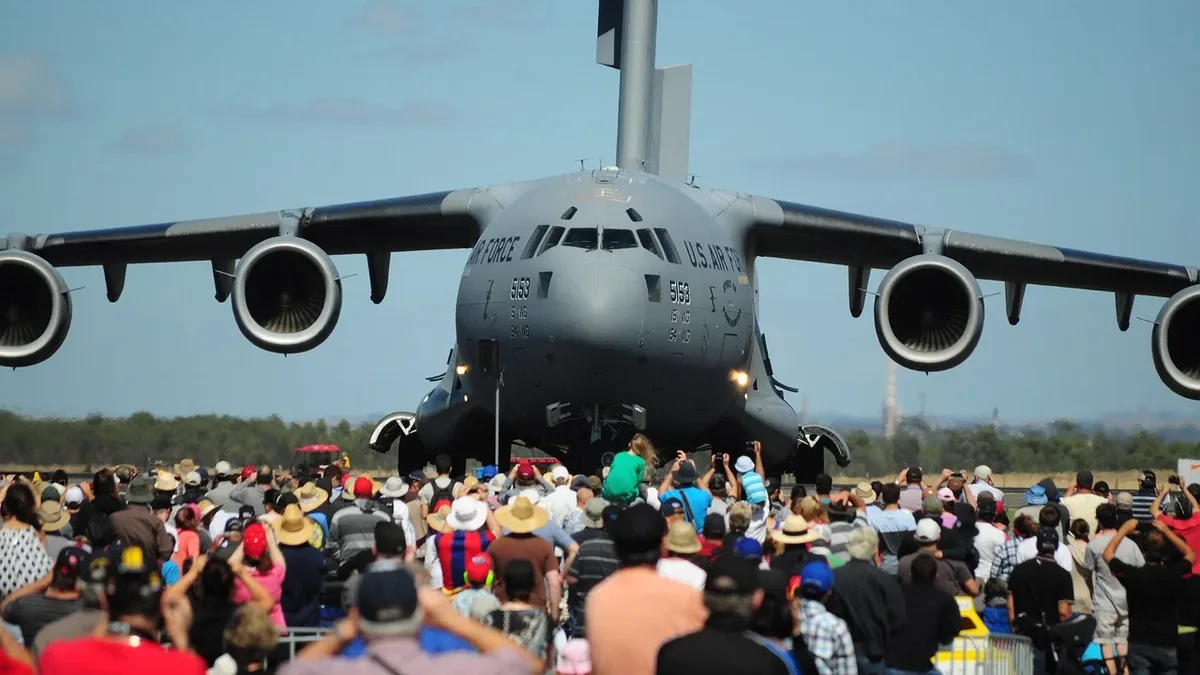
Ramstein Air Base in Germany is the central hub for a major US Air Force airlift operation supporting the Middle East. The 521st Air Mobility Operations Wing coordinates the flow, with its subordinate 721st Air Mobility Operations Group handling an average of over 350 aircraft movements monthly even before the current surge.
The base's role has expanded dramatically since the launch of Operation Epic Fury. In the months preceding the joint US-Israeli air campaign, continuous streams of Boeing C-17 Globemaster III jets began shuttling into Ramstein. Independent tallies indicated more than 300 US military aircraft were in the CENTCOM area by late February, including an estimated 270 C-17 sorties in January alone.
The Cold War-Scale Airlift
The scale of the current operation draws direct comparison to the 1948-49 Berlin Airlift. At its height, that mission delivered roughly 8,000 tons of supplies daily using Douglas C-54s, each carrying about 10 tons. The report states that one modern C-17 can move up to 170,900 pounds (77,519 kg) in a single sortie. This means one Globemaster can lift what took roughly eight C-54s to carry.
| Aircraft | Payload Capacity | Era |
|---|---|---|
| Douglas C-54 | ~10 tons | 1948-49 Berlin Airlift |
| Boeing C-17 Globemaster III | Up to 170,900 lbs (77,519 kg) | Current Operation |
The analogy breaks down for sustainability. The Berlin Airlift ran for 15 months with a fleet of propeller aircraft that could be replaced relatively cheaply. Today, the Air Force relies on a fixed fleet of 222 C-17s, with Boeing having stopped production in 2015. Retired Air Mobility Command (AMC) Commander General Michael Minihan reportedly stated that flight hours have been accumulating on C-17 airframes faster than planned.
A Strategic Geographic Bottleneck
Ramstein's critical role is not by choice but by geographic and institutional design. The base sits at the intersection of three combatant commands' areas of responsibility. Aircraft flying from across the Atlantic can stage there to refuel and reconfigure before returning to the US or continuing to more distant destinations. Another key node is NSA Souda Bay in Crete, which serves as a refueling and logistics waypoint for aircraft transiting toward multiple theaters.
Landlocked in southern Germany, Ramstein is the largest and most developed NATO air hub and is home to the Allied Air Command. It also serves as a critical deployment point for large equipment like main battle tanks and combat helicopters to support ground forces in Europe.
Strain on an Aging Fleet
The C-17 fleet tasked with this tempo is smaller and older than it appears. The Air Force operates 222 C-17s in total, with the last new aircraft delivered in 2015. The fleet is divided among active-duty, Air National Guard, and Air Force Reserve units.
| Unit Type | Number of C-17s |
|---|---|
| Active-Duty Units | 157 |
| Air National Guard | 47 |
| Air Force Reserve | 18 |
| Total USAF Fleet | 222 |
Against this fixed fleet, demand has spiked sharply. Analysts at the Center for a New American Security reportedly flagged airlift as one of the mobility functions most likely to be strained by a sustained campaign. The C-17's mission-capable rate of roughly 75% as of 2024 data compares favorably to other cargo and tanker aircraft, but flying at an unsustainable tempo still stresses the system.
The Total Force Integration Solution
To manage the demand, the Air Force relies on Total Force Integration, a crew architecture that blends active-duty, Guard, and Reserve airmen into the same flying and maintenance units. This model provides surge capacity without a permanent expansion of the active-duty roster. The 911th Airlift Wing, for example, converted from flying C-130s to the C-17 mission between 2017 and 2019 specifically to fill a strategic-lift gap.
The result is that when a C-17 lands at Ramstein today, the crew could be on active orders or a traditional reservist balancing a civilian job. This integration allows the Air Force to generate the large-scale airlift sorties demanded by operations in the Middle East.