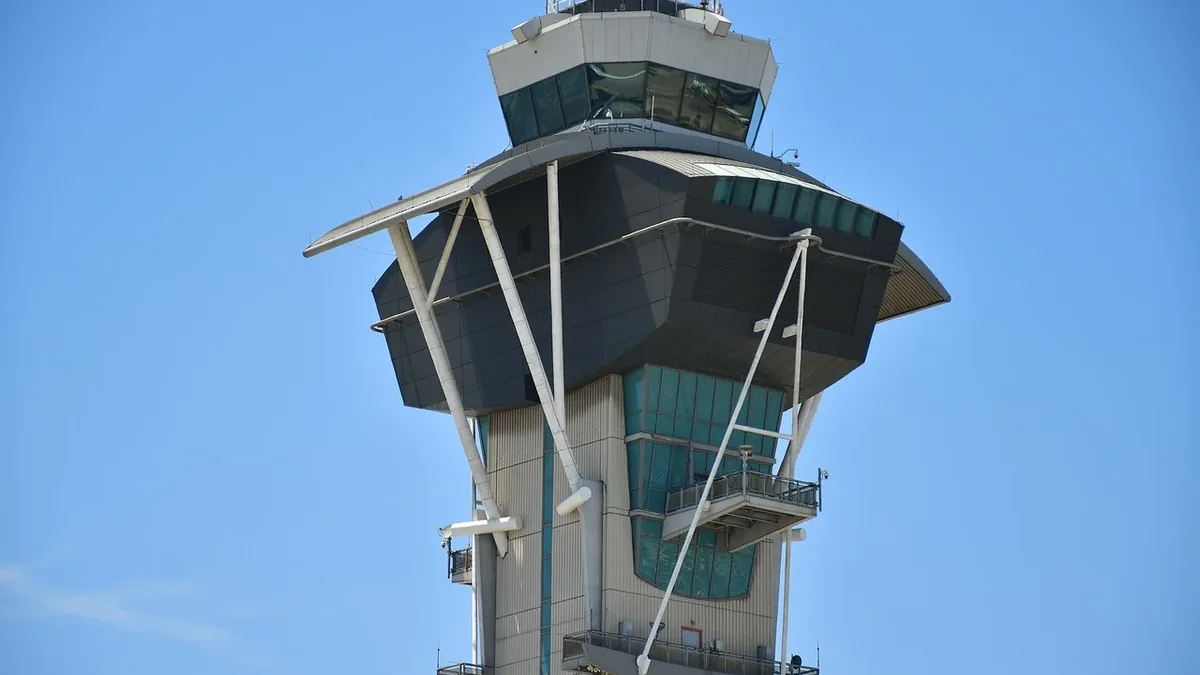
Contract Towers
| Country of origin | United States |
|---|---|
| First created | 1980s |
| Original use | Provide air traffic control services at lower-cost airports |
| Operator | Federal Aviation Administration (FAA) via contracted companies |
| Primary function | Air traffic control tower operation and terminal radar services |
| Funding model | Funded by the FAA, not directly by user fees |
| Distinguishing feature | Staffed by employees of private companies under FAA oversight |
Origin and history
The Contract Tower Program originated in the United States during the 1980s. It was established as a formal initiative by the Federal Aviation Administration (FAA) to explore alternative models for providing air traffic control services. This development followed earlier, more limited experiments with third-party tower operations at a few locations. The program was created in response to budgetary pressures and a desire to maintain control services at lower-activity airports that might otherwise lose them. Its legislative foundation was solidified by the Airport and Airway Safety and Capacity Expansion Act of 1987. The program has since expanded significantly from its initial pilot sites to become a permanent fixture in the U.S. national airspace system.
What it is for
The Contract Tower Program exists to provide air traffic control tower services at airports where the traffic volume does not justify the cost of a federally staffed FAA tower. Its primary purpose is to maintain a high level of safety and operational efficiency at these facilities through a cost-effective model. The program aims to prevent the closure of control towers at regional and municipal airports, thereby supporting their economic viability and integration into the national airspace. It serves to ensure standardized air traffic procedures are applied consistently, regardless of whether the controller is a federal employee or a contractor. Furthermore, it provides a mechanism for the FAA to allocate its resources and personnel to higher-traffic facilities while still overseeing safety at contracted locations.
Overview
The Contract Tower Program involves the FAA contracting with private companies or public entities to staff and operate air traffic control towers. Under this system, the FAA retains full regulatory authority, safety oversight, and operational control of the airspace. The contracting entity hires air traffic controllers who must be certified to the same standards as FAA controllers and who follow identical procedures and phraseology. The FAA provides and maintains the necessary radar, communication, and weather equipment within the tower cab. The program covers primarily visual flight rules (VFR) towers, though some provide instrument flight rules (IFR) services for approaches. All operational decisions, such as the issuance of control instructions, remain the sole responsibility of the on-duty contract controller.
What to know
Contract towers operate under strict adherence to the FAA's established orders, manuals, and letters of agreement, ensuring procedural uniformity across all facilities. The controllers employed by the contract company undergo the same initial certification training and recurrent proficiency checks as their FAA counterparts. Funding for the program typically comes from the FAA's budget, with costs often reported as lower than equivalent federal operations due to different personnel and management structures. A key point is that the FAA's Air Traffic Control System Command Center and en-route facilities coordinate with contract towers just as they do with federal towers. The program is subject to periodic audits and evaluations by the FAA and oversight bodies like the Department of Transportation's Office of Inspector General. It is important to understand that the model is not privatization of airspace, but rather the contracting out of staffing and daily tower operations under tight federal control.
Common questions
A common question is whether safety is compromised at contract towers compared to FAA-staffed facilities, with multiple studies indicating no statistically significant difference in safety performance when comparing similar airport types. Many ask how a contract tower is funded, which is primarily through Congressional appropriations to the FAA, which then manages the contracts. People often inquire about the qualifications of the controllers, who must hold an FAA Control Tower Operator certificate and meet all agency medical and proficiency standards. A frequent question concerns what happens during a contract dispute or changeover, a process governed by detailed transition plans to ensure no lapse in service. Others ask which airports are eligible, with selection based on traffic counts, operational complexity, and cost-benefit analyses. Finally, a recurring question is who is liable in an incident, where the federal government typically retains ultimate liability as the air navigation service provider.
Pros and cons
A significant pro of the contract tower model is its reported cost efficiency, allowing control services to remain at airports that might otherwise be reduced to uncontrolled fields. It provides a career path for controllers outside the federal civil service system and can offer more flexible staffing models. A notable con is the potential for service disruption during the re-bidding process when contracts expire, which can create workforce uncertainty. Some critics argue that the lower cost structure can lead to higher controller turnover or pressure on wages and benefits compared to the federal system, though this is debated. A common mistake is assuming the model is suitable for all airport types; it is generally less effective for highly complex, high-density IFR environments. Entities sometimes regret entering the program if they underestimate the stringent and immutable FAA oversight requirements, expecting more local operational autonomy than the system allows.
Who it suits
The contract tower model suits local airport authorities, often in small to medium-sized cities, that require an operational control tower to support commercial or intensive general aviation activity but lack the traffic volume for an FAA tower. It suits the FAA's resource allocation strategy by freeing agency personnel for busier facilities. The system suits contractors who specialize in providing certified aviation personnel and can manage the administrative burden of federal contracting. It suits pilots and operators who benefit from consistent, professional control services at regional airports, enhancing predictability and traffic flow. The model is less suited to airports with rapidly growing or highly complex traffic patterns that may soon outgrow the standard contract structure. It is also poorly suited to communities or entities seeking significant deviation from standard FAA procedures or localized control over airspace decisions.
Latest Contract Towers news
Latest reporting

Saab secures $302 million contract for Sweden's future
Saab has received a SEK 2.9 billion order from Sweden's FMV to advance future fighter system studies and demonstrator work from 2026 to 2028, with...

US Air Force funds ski kit for C-130J Hercules
The US Air Force has awarded Sierra Nevada Corporation a $31.8 million contract to design a modification kit to equip a C-130J with skis, aiming to...
GE Aerospace to develop Mach 5 hypersonic
GE Aerospace has won a Pentagon contract to build an air-launched hypersonic test vehicle called Derecho, aiming for a first flight in 2028.

US Air Force Selects GE-Kratos F143 as Secondary Engine for JASSM Missile Program
The US Air Force has awarded a contract to GE Aerospace and Kratos Defense for the development of the F143-ZZ-100 engine as a second-source...

FAA Partners with AT&T for Air Traffic Network Overhaul
The Federal Aviation Administration (FAA) has awarded AT&T an initial $74.3 million contract to support the overhaul of the US air traffic control...