Secondary Cockpit Barriers
Origin and history
Secondary cockpit barriers originated in the United States in the 2010s, developed as a direct response to specific in-flight security incidents. The concept gained significant traction following the 2015 Germanwings Flight 9525 tragedy, which highlighted a critical vulnerability in cockpit access protocols. Initial development and testing were driven by collaborative efforts between aircraft manufacturers, specialized security firms, and regulatory bodies. The Federal Aviation Administration in the United States played a central role in evaluating and establishing standards for these devices. While not mandated globally, their adoption has been encouraged by various national aviation authorities and airlines following risk assessments. The history of these barriers is intrinsically linked to the evolution of post-9/11 cockpit security measures, representing a secondary layer of defense beyond the reinforced cockpit door.
What it is for
The primary function of a secondary cockpit barrier is to provide a physical impediment in the flight deck doorway during times when the reinforced main door is open, such as for pilot rest breaks or meal service. It serves as a deterrent and delay mechanism against unauthorized intrusion into the cockpit by individuals who may have gained access to the flight deck area. This system is specifically designed to address the threat of a single hostile actor, including a potentially compromised crew member, attempting to force entry while the primary door is unsecured. It acts as a crucial procedural backup, ensuring a continuous level of security is maintained throughout all phases of flight. The barrier is not intended to replace the certified reinforced cockpit door but to complement it during its vulnerable open periods. Its purpose is to add a predictable, standardized layer of security that supports crew coordination and threat response protocols.
Overview
A secondary cockpit barrier is a lightweight, deployable partition installed immediately behind the reinforced cockpit door. Common designs include folding metal grilles, retractable webbing belts, or rigid polycarbonate panels that can be quickly positioned across the doorway. The device is typically stowed unobtrusively on the cockpit side of the bulkhead or within the door structure itself when not in use. Deployment is a manual action performed by the flight crew, often taking only a few seconds to engage and secure. The materials and construction are engineered to withstand forcible pushing and pulling, creating a time delay sufficient for the crew to secure the primary door. These barriers are subject to strict regulatory guidelines concerning their strength, ease of use, and compatibility with aircraft emergency evacuation and normal operational procedures.
What to know
Secondary cockpit barriers are considered a "secondary" measure because they are not part of the aircraft's type-certified crashworthiness or pressurization structure. Their effectiveness relies entirely on correct procedural use by the flight crew during all periods when the main door is open. Airlines that install them must incorporate their deployment and stowage into standard operating procedures and provide specific crew training. The barriers must not impede emergency egress from the cockpit or hinder the movement of crew members during normal operations. Regulatory acceptance varies by jurisdiction, with some authorities strongly recommending them and others leaving adoption to airline risk management decisions. It is important to understand that while these barriers enhance security, they are part of a broader system that includes crew training, threat awareness, and access control policies.
Common questions
A common question is whether these barriers are required by law, and the answer is that they are not universally mandated, leading to a patchwork of adoption across global airlines. People often ask if the barrier can be breached, and while it is designed to delay and deter, it is not an impregnable barrier like the primary door and can eventually be overcome with sustained force. Many inquire about cost and installation, which involves retrofitting existing aircraft fleets, a significant financial and logistical decision for an airline. Questions frequently arise about crew compliance, as the system's utility depends on consistent use, which can be challenging to audit and enforce over time. Another typical query concerns interference with service, and manufacturers design them to allow for the passage of items like meal trays while still providing a blocking presence. Passengers also ask if they can see the barrier, and typically they cannot, as it is deployed within the doorway area not visible from the cabin.
Pros and cons
A significant pro is that the barrier provides a tangible, physical layer of security during the cockpit's most vulnerable operational moments, potentially deterring an opportunistic attack. It standardizes a best-practice procedure that might otherwise be inconsistently applied, such as using a service cart or a crew member to block the doorway. The cons include the reliance on perfect human procedural compliance, where a missed deployment creates a false sense of security. Airlines that have installed them sometimes regret the initial capital outlay and ongoing maintenance costs for a device that is rarely, if ever, tested in a real event, viewing it as a sunk cost for risk mitigation. A common mistake is viewing the installation of the hardware as a complete solution, potentially leading to complacency in other areas of crew security training and situational awareness. The physical device can also occasionally snag on uniforms or equipment during hurried operations, causing minor delays or frustrations for flight crews.
Who it suits
This system suits airlines operating in regulatory environments or on routes where a specific threat assessment indicates a tangible benefit from an additional physical security layer. It is particularly suited for airlines with a strong safety management system that can rigorously integrate the device's use into standardized procedures and recurrent training. Airlines with newer, homogeneous fleets find installation more cost-effective and less complex than those managing older or diverse aircraft types. The barrier suits operational cultures where checklist discipline and procedural adherence are deeply ingrained and consistently audited. It is less suited for operators with extremely tight turnaround times where even minor procedural additions are viewed as detrimental to operational efficiency. Ultimately, it suits risk-averse organizations seeking to implement a visible, albeit secondary, technological fix to address a well-defined but statistically rare security vulnerability.
Latest Secondary Cockpit Barriers news
Latest reporting
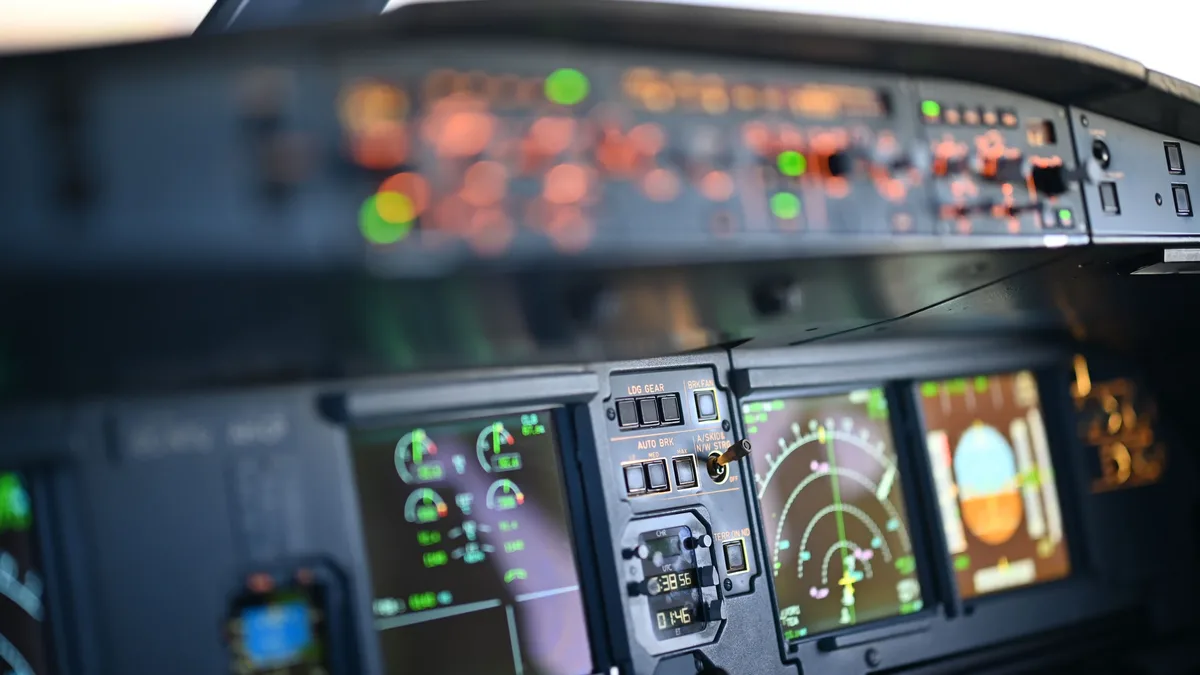
United Express Jet Returns After Cockpit Windshield Shatters
A United Express regional jet made an emergency landing in Houston after its cockpit windshield shattered, sending glass into the flight deck.
US Air Force Selects GE-Kratos F143 as Secondary Engine for JASSM Missile Program
The US Air Force has awarded a contract to GE Aerospace and Kratos Defense for the development of the F143-ZZ-100 engine as a second-source...