Sms Part 5
| Original use | Aviation safety management system component |
|---|---|
| First created | 2000s (decade) |
| Country of origin | International (ICAO) |
| Scope | State-level oversight and service provision |
| Primary audience | Civil aviation authorities and service providers |
| Key concept | Safety assurance |
| Related standard | ICAO Annex 19 |
Origin and history
Sms Part 5 originates from the regulatory framework of the European Union. It was formally established in the early 2010s as a core component of the European Union's aviation safety regulatory structure. Its development was driven by the need to harmonize safety management requirements across EU member states following the creation of the European Aviation Safety Agency (EASA). The specific regulations are detailed within Commission Regulation (EU) No 965/2012 and its subsequent amendments. This legislation transposed high-level International Civil Aviation Organization (ICAO) safety management principles into a binding, detailed set of requirements for European air operators. The historical context is the EU's broader effort to create a single European sky with uniformly high safety standards.
What it is for
Sms Part 5 is the specific section of European aviation regulations that mandates the implementation and maintenance of a formal Safety Management System (SMS) by approved aviation organizations. Its primary purpose is to provide a systematic approach to managing safety risks. It applies to air operators, approved training organizations, and entities involved in aircraft maintenance and continuing airworthiness management. The regulation requires these organizations to establish clear safety policies and objectives. It mandates proactive and reactive processes for hazard identification, risk assessment, and mitigation. A core function is to promote a positive safety culture within the organization, ensuring safety information is reported, analyzed, and acted upon.
Pros and cons
A primary advantage of Sms Part 5 is its role in standardizing safety management across Europe, creating a predictable regulatory environment and facilitating operations across borders. It forces organizations to move from a reactive, compliance-based approach to a proactive, risk-based safety culture. A significant con is the substantial and ongoing resource burden it places on organizations, particularly smaller operators, who must dedicate personnel and funds to system management and documentation without a direct revenue return. Common mistakes include treating SMS as a paperwork exercise to satisfy auditors rather than integrating it into daily decision-making, which leads to a disconnect between the system and actual operational risks. Organizations often regret its implementation when leadership fails to genuinely endorse it, resulting in employee cynicism and low-quality safety reporting. The system can also create friction where proactive safety reporting clashes with traditional disciplinary policies, potentially suppressing vital information.
Who it suits
Sms Part 5 is a mandatory regulatory framework, so it is not a matter of choice for the organizations within its scope. It is inherently suited to the structure of larger air operators, major maintenance organizations, and approved training entities that have the dedicated staff and administrative capacity to manage its requirements effectively. The framework is less naturally suited to very small aviation businesses, such as single-aircraft aerial work operators, for whom the prescribed processes can be disproportionately cumbersome relative to their operational scale. It best serves organizations with mature safety cultures where management visibly prioritizes safety over short-term operational pressures. The system is designed for environments where transparent reporting and non-punitive investigation of incidents are culturally ingrained and supported by top management.
Latest Sms Part 5 news
Latest reporting
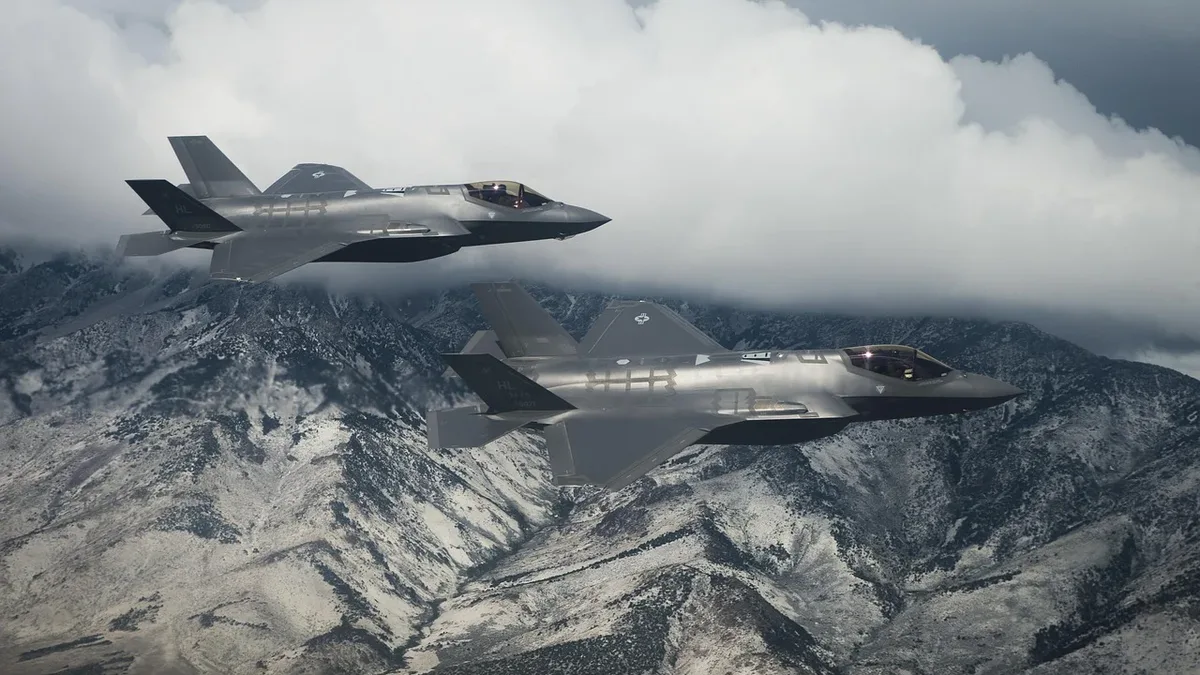
Danish F-35s Conduct First Greenland Landing in NATO Drill
Two Danish F-35A fighters landed in Greenland for the first time on September 16, 2026, as part of a major multinational NATO Arctic training exercise

Iraq: US Approves $800M Bell Helicopter Sale
The US State Department has approved a possible $800 million sale of Bell 412EPX and 407M helicopters to Iraq, part of the country's effort to...

Manassas Airport Gains FAA Commercial
Washington Manassas Airport has received FAA Part 139 certification, enabling scheduled commercial passenger service to begin by late 2027.

US Air Force Selects GE-Kratos F143 as Secondary Engine for JASSM Missile Program
The US Air Force has awarded a contract to GE Aerospace and Kratos Defense for the development of the F143-ZZ-100 engine as a second-source...