
Part 108 And Beyond Visual Line Of Sight
| Regulatory framework | FAA Part 107 waiver extension for complex operations |
|---|---|
| Primary function | Enables sustained unmanned flight over people and at night |
| Key enabler | Remote Identification (Remote ID) broadcast capability |
| Operational scope | Beyond Visual Line of Sight (BVLOS) without visual observers |
| Original use | Designed for commercial drone operations like delivery and inspection |
| First created | Concept formalized in the FAA's 2021 rulemaking for Part 107 |
| Typical users | Certified drone service providers and operators under Part 135 |
Origin and history
Part 108 is a regulatory framework originating in the United States, developed by the Federal Aviation Administration (FAA). Its development began in earnest in the 2010s, driven by the rapid expansion of unmanned aircraft systems (UAS) operations that exceeded the scope of earlier rules like Part 107. The "Beyond Visual Line of Sight" (BVLOS) component refers to operations conducted without the pilot maintaining direct sight of the aircraft, a capability critical for scaling commercial drone use. This regulatory pathway was established to provide a structured, risk-based method for authorizing complex drone operations that were previously prohibited or required cumbersome exemptions. The history of Part 108 is intertwined with the FAA's Integration of Civil Unmanned Aircraft Systems in the National Airspace System roadmap, which outlined incremental steps toward expanded operations. Its formalization represents a shift from case-by-case waivers toward a more standardized, scalable regulatory model for advanced UAS operations.
What it is for
Part 108 and BVLOS regulations are designed to enable unmanned aircraft to perform commercial and public benefit missions over long distances and in controlled airspace without direct visual observation by the pilot. Its primary purpose is to facilitate economically viable operations such as long-linear infrastructure inspection for pipelines and power lines, large-scale agricultural surveying, and logistics deliveries. The framework is intended to maintain the safety levels of the National Airspace System by introducing rigorous operational and technical requirements for these higher-risk activities. It serves to bridge the gap between small UAS rules for visual operations and the future integration of unmanned aircraft as routine airspace users. The regulations provide a necessary legal and procedural structure for operators to plan and execute missions that were previously impractical under visual line-of-sight rules. Ultimately, it is for unlocking the full economic and operational potential of drone technology while ensuring seamless coexistence with manned aviation.
Overview
Part 108 and BVLOS operations constitute an advanced regulatory category within U.S. aviation law, building upon but distinct from the foundational Part 107 rules. The system requires operators to submit a comprehensive operational safety case to the FAA, detailing how they will mitigate the specific risks of flying beyond the pilot's direct vision. This safety case typically encompasses robust aircraft performance standards, defined operational procedures, advanced detect-and-avoid technology, and detailed contingency plans for events like lost link or system failures. Oversight involves coordination with air traffic control services when operating in certain classes of airspace, necessitating communication and tracking capabilities. The framework often involves the use of visual observers or strategically placed technology to serve as a substitute for the pilot's own vision in complying with "see-and-avoid" principles. Successful authorization under this system results in an operator-specific certificate allowing recurrent BVLOS operations under the approved conditions, moving beyond single-flight waivers.
What to know
A key concept is that Part 108/BVLOS is not a single, prescriptive rule but a performance-based regulatory pathway where the operator must demonstrate equivalent levels of safety. The operational risk assessment is central, requiring identification of hazards like mid-air collisions, ground risks, and system reliability, along with proposed mitigations. Applicants must understand that approvals are highly dependent on the specific operational environment, aircraft type, and proposed risk mitigations; a certificate for one type of operation does not grant blanket permission. Technological requirements often include a detect-and-avoid system, which can be either onboard technology or ground-based infrastructure, to fulfill the collision avoidance responsibility. Operators should know that the process is resource-intensive, requiring significant investment in documentation, technology, and potentially third-party validation services. It is also critical to recognize that regulatory acceptance is evolving, and standards for acceptable mitigations, particularly for detect-and-avoid, are still being refined by the FAA and industry.
Common questions
A common question is whether Part 108 replaces Part 107, to which the answer is no; Part 107 remains the baseline for visual operations, while Part 108 provides a pathway for operations that exceed Part 107 limitations. Many ask about the cost and timeline for obtaining a BVLOS certificate, which varies dramatically based on operational complexity but universally represents a substantial investment of time and capital exceeding that for a Part 107 waiver. Operators frequently inquire about acceptable detect-and-avoid solutions, a area where the FAA has not prescribed specific technology but requires proof of reliable performance in the intended operational environment. Another recurring question concerns the use of visual observers and whether they can be stationed along a route to maintain a form of extended visual line of sight, a strategy sometimes used as a mitigation. People also ask if authorization grants access to all airspace, but it is always specific to defined operational areas and may still require separate airspace coordination with ATC. Finally, there is confusion about the relationship with other advanced operational frameworks like Part 135 for air carrier operations, which may also involve BVLOS but under different economic models.
Pros and cons
A significant advantage of this regulatory system is that it provides a structured, repeatable pathway to lawful BVLOS operations, offering regulatory certainty for business planning and investment. It promotes safety by forcing operators to rigorously analyze and mitigate risks in a systematic way before commencing flights, which ad-hoc waivers may not achieve. However, a major con is the high barrier to entry; the process is notoriously slow, expensive, and requires specialized regulatory expertise, effectively limiting it to well-funded corporations or entities with government backing. A common mistake is underestimating the depth of evidence required for the safety case, particularly around the performance validation of detect-and-avoid systems, leading to lengthy review cycles and rejections. Operators often regret the initial choice to pursue this path when they discover the ongoing compliance burden and the fact that certificates are not easily transferable to new aircraft or slightly altered mission profiles. The system can also stifle innovation by locking operators into the specific technologies and procedures approved in their certificate, making iterative improvement a bureaucratic challenge.
Who it suits
This regulatory pathway best suits large-scale commercial enterprises with substantial capital and a clear, high-value use case where BVLOS operations are fundamental to the business model, such as utility companies or logistics networks. It is appropriate for aircraft manufacturers and technology developers who need to conduct extended flight testing or demonstrate their systems in real-world operational environments under a certified framework. Public entities like law enforcement, emergency services, or government agencies conducting missions such as wildfire monitoring or disaster response are also primary candidates, given their operational needs and resource access. Established drone service providers seeking to scale their operations beyond the limitations of visual line-of-sight and differentiate themselves in the market may find the investment necessary. It does not suit small businesses, hobbyists, or operators with sporadic or short-range BVLOS needs, as the cost and complexity are disproportionate to their requirements. The system also suits operators who have the in-house aviation safety and regulatory affairs expertise to navigate the complex application and sustain the ongoing safety management system required for compliance.
Latest Part 108 And Beyond Visual Line Of Sight news
Latest reporting
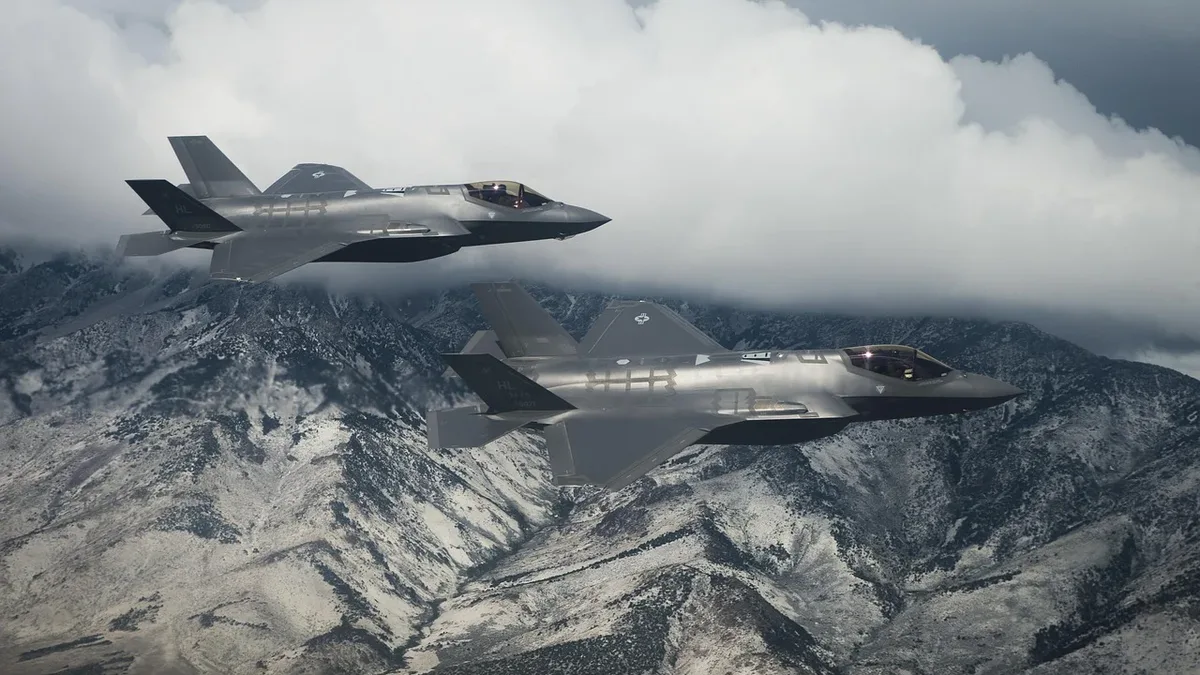
Danish F-35s Conduct First Greenland Landing in NATO Drill
Two Danish F-35A fighters landed in Greenland for the first time on September 16, 2026, as part of a major multinational NATO Arctic training exercise
Iraq: US Approves $800M Bell Helicopter Sale
The US State Department has approved a possible $800 million sale of Bell 412EPX and 407M helicopters to Iraq, part of the country's effort to...
Manassas Airport Gains FAA Commercial
Washington Manassas Airport has received FAA Part 139 certification, enabling scheduled commercial passenger service to begin by late 2027.

Delta, ALPA Negotiate Crew Scheduling as
Delta Air Lines and the Air Line Pilots Association are negotiating crew scheduling practices as their pilot agreement nears expiration.
US Marine Takes Control of Valkyrie Drone in Electronic Warfare Mission
A US Marine successfully took control of a Kratos Valkyrie drone beyond line of sight during an electronic warfare mission in southern California.

US Air Force Selects GE-Kratos F143 as Secondary Engine for JASSM Missile Program
The US Air Force has awarded a contract to GE Aerospace and Kratos Defense for the development of the F143-ZZ-100 engine as a second-source...