Pay Rates And Contract Cycles
Origin and history
The system of Pay Rates And Contract Cycles in civil aviation is a product of the late 20th century, originating primarily in the United States and Europe following the deregulation of the airline industry. Its formal structures evolved from earlier, more rigid civil service models that governed air traffic controllers and regulatory personnel. The shift towards defined contract cycles and market-linked pay rates gained significant traction in the 1980s and 1990s as aviation authorities were commercialized or faced pressure to control costs. This period saw the move away from uniform government pay scales toward performance-linked and seniority-based compensation frameworks. The model was further refined through collective bargaining agreements between airlines, labor unions, and air navigation service providers. Its adoption has been uneven globally, with many regions adapting the core principles to fit local labor markets and regulatory environments.
What it is for
This system exists to structure the compensation and employment terms for critical aviation personnel, including air traffic controllers, safety inspectors, and technical staff. Its primary purpose is to attract and retain a highly skilled workforce in a specialized, safety-critical industry with significant training investments. It aims to balance fair remuneration with the financial sustainability of airlines, airports, and air navigation service providers. The system also serves to manage labor relations by providing a predictable framework for negotiations and dispute resolution. By establishing clear contract cycles, it ensures operational stability and continuity by preventing frequent, uncoordinated labor disruptions. Furthermore, it aligns workforce costs with long-term business planning cycles and regulatory funding mechanisms.
Overview
Pay Rates And Contract Cycles constitute the formal framework governing how aviation professionals are compensated and the duration and terms of their employment agreements. Pay rates are typically determined by a combination of factors including role, seniority, certification level, geographic location, and facility complexity. Contract cycles refer to the fixed period, often ranging from three to five years, for which collective bargaining agreements or individual employment terms are legally binding. The system involves multiple stakeholders: employees and their unions, employer organizations, and sometimes government regulators who may oversee or approve terms for essential services. It encompasses not only base salary but also overtime rates, hazard pay, retirement benefits, and other allowances specific to aviation duties. The negotiation process is a central component, often occurring well before the expiration of the current contract to ensure seamless transition.
What to know
A key principle is that pay rates in aviation, especially for controllers and technical roles, are often higher than national averages due to the specialized skills and high-stress environment. Contract cycles are strategically important, as their expiration can become a focal point for industrial action if negotiations stall, potentially disrupting national airspace. Pay is frequently structured on a "step" or "band" system, where increments are tied to years of service and successful performance evaluations. In many countries, the pay for air traffic controllers employed by government or quasi-government agencies is benchmarked against private sector counterparts to remain competitive. The system must account for shift work, including night and weekend differentials, which are critical for 24/7 operations. Understanding that these cycles are influenced by broader economic conditions, government budgets, and the financial health of the aviation industry is essential.
Common questions
A common question is why contract negotiations in aviation often go down to the wire, which is due to the high stakes for both sides and the use of deadline pressure as a tactical element in bargaining. People often ask if air traffic controller pay is standardized globally, and the answer is no; it varies dramatically by country, employer type, and local cost of living. Many inquire about the impact of automation on these pay rates, which generally leads to increased pay for managing more complex systems rather than a reduction for displaced roles. A frequent question concerns the legality of strikes, which varies by jurisdiction, with many having strict mediation processes or prohibiting strikes for essential safety personnel. Individuals ask how pay compares between major airlines and the federal government, with airline pay often being higher but with differing benefits and job security profiles. Another common query is about the biggest drivers of pay increases, which are typically inflation adjustments, changes in traffic volume, and the outcomes of comparative labor market studies.
Pros and cons
A significant pro is that structured cycles provide stability for both employees and operators, allowing for long-term financial and operational planning. The system’s transparency and formal negotiation processes can help prevent arbitrary pay changes and foster a more professional labor relationship. However, a major con is the inherent rigidity; multi-year contracts can lock in terms that become economically untenable for employers or unsatisfactory for employees if industry conditions change rapidly. The negotiation phase itself often creates a period of uncertainty and workplace stress, which can impact morale and focus. A common mistake is for management to view the contract solely as a cost-control document, rather than a tool for workforce management, leading to adversarial relationships. Those who regret the system are often smaller regional carriers or service providers who find themselves bound by industry-standard pay scales that strain their limited finances, and new entrants who lack the seniority to benefit from its top-tier pay bands.
Who it suits
This system suits large, established organizations like major airlines, national air navigation service providers, and large airports that have the administrative capacity for complex negotiations and long-term fiscal management. It is well-suited to unionized workforces that seek collective bargaining power to secure standardized benefits and protections across a large employee base. The model suits employees who prioritize job security, predictable advancement, and comprehensive benefit packages over more variable, performance-based compensation. It is less suited to highly dynamic, startup aviation ventures or markets experiencing extreme volatility, where fixed multi-year cycles can be a strategic handicap. The system also suits regulatory environments where government oversight of essential service labor relations is required to ensure continuous safe operation of the national airspace.
Latest Pay Rates And Contract Cycles news
Latest reporting
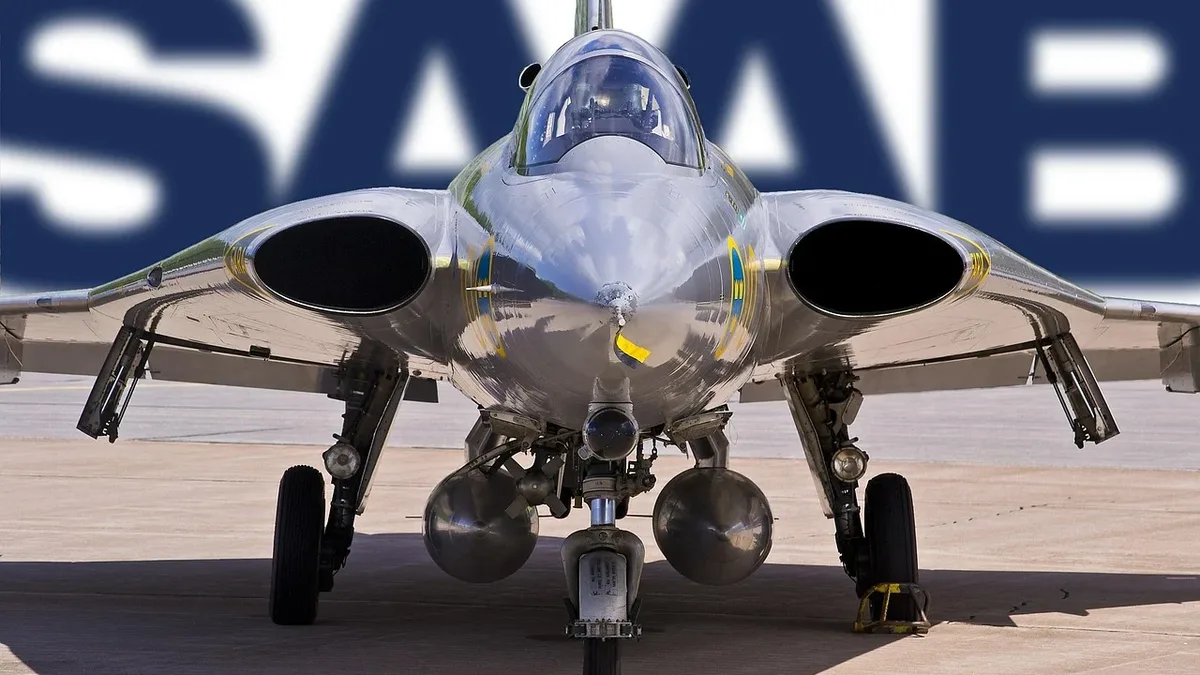
Saab secures $302 million contract for Sweden's future
Saab has received a SEK 2.9 billion order from Sweden's FMV to advance future fighter system studies and demonstrator work from 2026 to 2028, with...

Private Jet Charter Costs for New York-London Route in 2026
A pricing guide details the costs, aircraft, and factors influencing private jet charters between New York and London in 2026, with rates ranging from

US Air Force funds ski kit for C-130J Hercules
The US Air Force has awarded Sierra Nevada Corporation a $31.8 million contract to design a modification kit to equip a C-130J with skis, aiming to...
GE Aerospace to develop Mach 5 hypersonic
GE Aerospace has won a Pentagon contract to build an air-launched hypersonic test vehicle called Derecho, aiming for a first flight in 2028.

US Air Force Selects GE-Kratos F143 as Secondary Engine for JASSM Missile Program
The US Air Force has awarded a contract to GE Aerospace and Kratos Defense for the development of the F143-ZZ-100 engine as a second-source...

FAA Partners with AT&T for Air Traffic Network Overhaul
The Federal Aviation Administration (FAA) has awarded AT&T an initial $74.3 million contract to support the overhaul of the US air traffic control...