Private Jet Charter Costs for New York-London Route in 2026
A pricing guide details the costs, aircraft, and factors influencing private jet charters between New York and London in 2026, with rates ranging from
Chartering a private jet between New York and London in 2026 can cost between $60,000 and $80,000 for a one-way trip, according to a pricing guide from Simple Flying. The final price is heavily influenced by aircraft type, seasonal demand, and operational costs like repositioning flights and airport fees.
Why the Route Dominates Private Aviation
The New York-to-London corridor is one of the world's most significant long-haul routes for private aviation. Airports like Teterboro in New Jersey and Farnborough near London are optimized for business jets, allowing travelers to bypass crowded commercial terminals. Time savings are a key driver. Passengers can arrive just 15 to 30 minutes before departure.
Schedule flexibility is another major factor. Charters operate around passenger needs, not fixed airline timetables. The route spans roughly 3,470 miles. Eastbound flights typically take six to seven hours, while westbound journeys can stretch to eight due to headwinds. This operational profile makes it a prime shows for ultra-long-range aircraft models.
Aircraft Commonly Used on Transatlantic Charters
Only certain aircraft types are recommended for the nonstop Atlantic crossing, especially when considering winter winds and passenger payloads. Operators typically deploy heavy jets or ultra-long-range models for this mission.
| Aircraft Model | Category |
|---|---|
| Gulfstream G650ER | Ultra-Long-Range Jet |
| Bombardier Global 7500 | Ultra-Long-Range Jet |
| Dassault Falcon 8X | Ultra-Long-Range Jet |
| Challenger 650 | Heavy Jet |
| Gulfstream G450 | Heavy Jet |
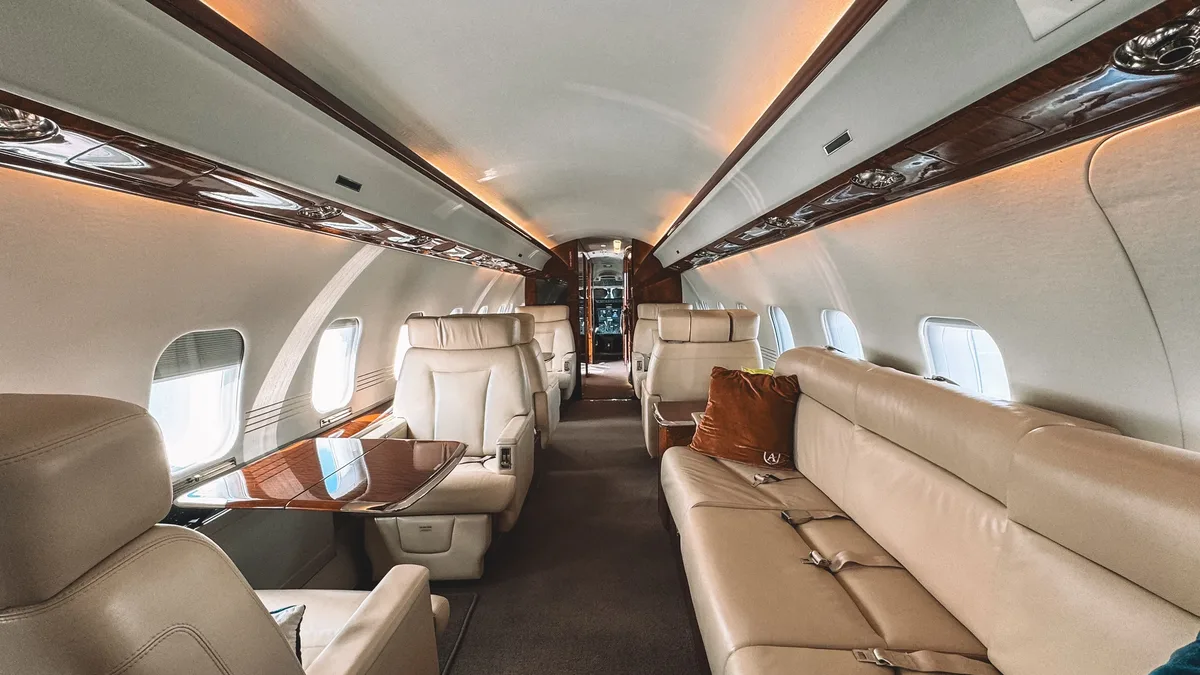
Smaller super-midsize jets like the Citation Longitude may occasionally fly the route, but they often face payload restrictions or require technical stops. Hourly charter rates for ultra-long-range aircraft can exceed $14,000 in 2026, according to industry data from Most important Business Jets. These high-end aircraft feature lie-flat beds, private compartments, and full galleys. Using private Fixed Base Operators (FBOs) drastically cuts pre-flight processing times compared to commercial airports.
Factors Driving Price Fluctuations
Charter pricing is complex, extending far beyond simple fuel and flight time calculations. A major cost component is repositioning, or 'deadhead,' flights where an empty aircraft must be moved to the pickup location. Operators typically charge for these segments.
London-area airports like Farnborough and London Luton impose premium handling charges due to their dedicated private aviation infrastructure. The final quote is shaped by aircraft size, landing fees, crew expenses, catering, international taxes, and seasonal demand. Luxury catering requests, such as Michelin-star meals or vintage champagne, can add substantially to the cost.
Transatlantic charter demand spikes during major events like Formula 1 weekends, fashion weeks, and the Christmas holiday season. Empty-leg flights, where an aircraft repositions without paying passengers, are sold at steep discounts but come with limited scheduling flexibility. Broker ZephyrJets states the route usually costs between $60,000 and $80,000, depending on aircraft and timing.
Comparing Costs with Commercial First Class
For group travel, the per-person economics of private charter can approach commercial first-class fares. Splitting a $140,000 heavy-jet charter among 14 passengers results in a cost of roughly $10,000 per traveler. During peak periods, round-trip first-class fares on major airlines between New York and London can exceed $8,000 to $15,000.
While commercial travel remains less expensive private aviation offers advantages in efficiency and time savings that premium airline cabins cannot match. A separate Simple Flying analysis noted that many corporate travelers justify charter expenses through these efficiencies rather than comfort alone.
Sustainability Pressures on the Industry
Private aviation faces growing scrutiny over its environmental footprint. This pressure is beginning to reshape the industry's future economics. Manufacturers and operators are increasingly focused on developing and adopting more sustainable technologies and practices to address these concerns.