US Air Force Splits A-10 Mission Among F-35A, F-15EX
The US Air Force is using its FY2027 budget to replace the A-10 Warthog's close air support role with a trio of aircraft: the F-35A, F-15EX, and OA-1K
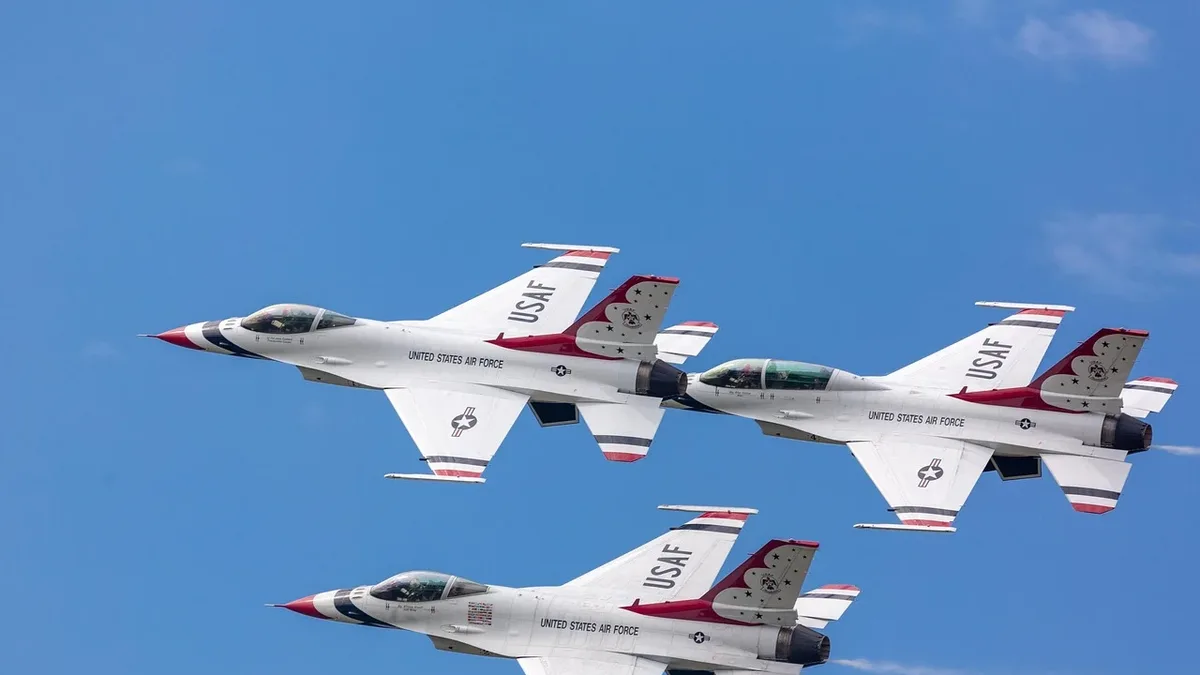
The United States Air Force is buying 38 Lockheed Martin F-35A Lightning IIs to take over the close air support mission flown by the A-10 Thunderbolt II since the 1970s. This move, part of the FY2027 budget, represents a redistribution of the mission across three very different aircraft rather than a direct replacement.
The F-35A's Unconventional Role
The Air Force argues the F-35A's stealth, sensors, and ability to operate in heavily defended airspace make it better suited for future conflicts than an aircraft like the A-10, which was optimized for low-altitude attacks. A Lightning II now costs an average of $82.5 million to build. According to the Congressional Budget Office, operating costs range between $34,000 and $42,000 per flight hour, roughly double to triple the approximately $20,000 per hour for an A-10.
Critics question how effectively the F-35A can perform the A-10's traditional mission of staying close to ground fights and delivering repeated attacks at short range. The cannon comparison is a focal point.
A Stark Contrast in Firepower
The A-10’s GAU-8 Avenger cannon holds a typical combat load of 1,150 rounds of 30mm ammunition. Its seven barrels fire at 3,900 rounds per minute, allowing for a theoretical 18-second continuous burst. The F-35A’s internal GAU-22/A cannon holds only 182 rounds of 25mm ammunition at 3,300 rounds per minute, providing just over three seconds of fire.
| Aircraft | Cannon | Caliber | Ammunition Load | Rate of Fire | Theoretical Continuous Fire Time |
|---|---|---|---|---|---|
| A-10 Thunderbolt II | GAU-8 Avenger | 30mm | 1,150 rounds | 3,900 rpm | 18 seconds |
| F-35A Lightning II | GAU-22/A | 25mm | 182 rounds | 3,300 rpm | ~3.3 seconds |
This gap exists because the A-10 airframe was built entirely around its massive gun system, while the F-35A's cannon was fitted internally on a multirole airframe not designed around a dedicated anti-armor weapon.
The Loiter Time Debate
Another point of contention is endurance. The A-10 can loiter over a target for around 90 minutes on internal fuel. The F-35A, without tanker support, is generally limited to 20-30 minutes on station. Air Force test pilots have countered that with tanker support in an uncontested environment, the F-35A can also hold position for roughly an hour and a half. This answer assumes tankers are available and safe, which may not be guaranteed in prolonged ground fights.
The Pentagon’s 2018 comparison test between the two aircraft did little to settle the argument. According to The War Zone, the test capped the A-10’s cannon at a third of its usual load, held both aircraft to a one-hour test window, and set an operating ceiling of 10,000 feet, well above the A-10's typical mission altitude. A comparison under those conditions was also unlikely to capture the F-35's primary advantages in stealth and sensors.
A Three-Way Split for the Mission
In practice, the Air Force is dividing the close air support mission. Selfridge Air National Guard Base is taking 21 Boeing F-15EX Eagle IIs to replace its A-10s. According to Breaking Defense, the F-15EX's flyaway cost has climbed from about $90 million to $97 million per jet, pricing it close to the F-35A despite lacking stealth.
Special Operations Command has taken a different route with the Air Tractor L3Harris OA-1K Skyraider II, a rugged turboprop. SOCOM’s $3 billion contract covers 75 aircraft by 2029, at a unit cost of roughly $15 million and an estimated $2,000 per flight hour to operate. The OA-1K is intended for permissive environments where its lack of fighter-level speed and survivability is less consequential.
Splitting the mission this way may solve procurement challenges. In a heavily contested environment, the F-35A does not need to reproduce the A-10's endurance or cannon load if its stealth and sensors allow it to attack threats that would make an A-10's traditional approach far more dangerous.