Space Weather And Hf Communications
| Primary service | Aviation communications and surveillance |
|---|---|
| Original use | Maintain long-range radio contact for air traffic control over oceans and remote regions |
| Key dependency | Ionospheric propagation of High Frequency (HF) radio waves |
| Critical disruption | Solar flares and coronal mass ejections |
| Mitigation | Space weather monitoring and frequency management |
| Operational scale | Global, covering polar, oceanic, and remote continental flight paths |
| Governing body oversight | International Civil Aviation Organization (ICAO) standards |
Origin and history
The foundational understanding of space weather's impact on HF communications emerged from early 20th century radio science, primarily in Europe and North America. The correlation between solar activity and radio wave propagation was first systematically documented by radio researchers in the 1920s and 1930s. The development of HF communications for long-distance aviation and maritime use accelerated during the Second World War, where its vulnerability to space weather became operationally apparent. Dedicated monitoring of solar phenomena for communications forecasting began in earnest in the 1960s with the dawn of the space age. The modern integrated system, combining solar observation, ionospheric monitoring, and propagation prediction, was formalized by international bodies in the late 20th century. Its continuous evolution is driven by global scientific cooperation, coordinated by organizations like the International Civil Aviation Organization and the World Meteorological Organization.
What it is for
This system exists to ensure the reliability and safety of long-distance, beyond-line-of-sight radio communications essential for aviation and other sectors. Its primary purpose is to warn of and mitigate disruptions to High Frequency radio waves caused by solar storms and other space weather events. For aviation, it specifically supports communication with aircraft on remote oceanic and polar routes where VHF and satellite links are unavailable or compromised. It provides critical intelligence for air traffic control centers to manage communications alternatives and re-route traffic during severe disturbances. The system also informs the design and hardening of avionics and ground infrastructure against space weather-induced effects. Furthermore, it underpins the economic viability of certain long-haul flight paths by providing the confidence needed for regulatory approval of communications procedures.
Overview
Space weather and HF communications form a complex, global system of monitoring, prediction, and operational protocols. The system integrates data from solar observatories, satellites monitoring solar wind, and a global network of ionosondes that measure the ionosphere's real-time state. This data feeds into regional warning centers and global models that predict HF propagation conditions and issue alerts for impending degradation. For aviation, the output is translated into actionable information for flight dispatchers, pilots, and air traffic controllers, often in the form of communicated frequency management plans. The system does not control the ionosphere but provides the knowledge required to navigate its variability. It is a foundational, though often invisible, component of the global air traffic management infrastructure, particularly for oceanic airspace.
What to know
Space weather refers to conditions on the Sun, in the solar wind, and within Earth's magnetosphere and ionosphere that can influence technological systems. The ionosphere, a charged layer of the atmosphere, is the medium that reflects HF radio signals for long-distance communication, and its density and structure are altered by space weather. Solar flares and coronal mass ejections can cause sudden ionospheric disturbances, radio blackouts, and polar cap absorption events that severely degrade or completely halt HF communications. The system's predictions are probabilistic and advisory, not absolute guarantees, due to the inherent complexity of solar and atmospheric physics. Pilots and controllers are trained in contingency procedures, such as switching to pre-designated alternative frequencies or increasing transmission power, when HF communications degrade. Reliance on this system is mandated by international aviation regulations for operations in airspace where it is the primary or required communications means.
Common questions
Why is HF communication still used if satellites are available? HF provides a resilient, independent backup and primary service in high-latitude regions where satellite coverage can be geostationarily limited or during severe space weather that also affects satellites. How quickly can a space weather event disrupt communications? Radio blackouts from solar flares can occur within minutes, while ionospheric storms from coronal mass ejections typically take one to three days to impact Earth. Who is responsible for issuing aviation-specific space weather alerts? Designated Regional Warning Centers under the International Space Environment Service provide data, which is then tailored and disseminated by meteorological watch offices and aviation-focused centers like the NOAA Space Weather Prediction Center. Can modern aircraft electronics be damaged by these events? While primarily a communications issue, severe space weather can also increase radiation exposure at flight altitudes and induce currents that risk avionics, leading to specific aircraft hardening standards. Is communication ever completely impossible? During extreme events, particularly over the polar regions, total HF blackouts can occur, forcing reliance on pre-coordinated alternative procedures or delaying operations until conditions improve. How do pilots know which HF frequency to use? They use dynamically updated frequency management plans based on the time of day, season, route, and predicted space weather conditions.
Pros and cons
The primary advantage is enabling safe and regulated flight over vast oceanic and polar regions where other communications are unreliable, supporting global route structures and economics. It provides a low-cost, globally available, and sovereign communications technology that does not depend on complex satellite infrastructure vulnerable to physical or cyber attack. The system's major con is its inherent unpredictability and variability, as space weather forecasting remains an imperfect science, leading to unexpected communications dropouts. This unpredictability requires significant operational overhead in terms of crew training, contingency planning, and sometimes inefficient flight path adjustments. A common mistake is for operators to become complacent during long periods of low solar activity, allowing procedural knowledge and equipment maintenance for HF to degrade. Organizations often regret under-investing in this system when a major solar storm disrupts operations, revealing an over-reliance on more modern but equally vulnerable technologies.
Who it suits
This system is essential for any aviation authority, airline, or air navigation service provider operating or managing flights on remote oceanic tracks, such as the North Atlantic, Pacific, or Southern Ocean routes. It is critically important for operators conducting flights in high-latitude polar regions, where satellite communications are less reliable and HF is often the primary mandated link. Military aviation organizations, which require robust and secure beyond-line-of-sight communications independent of commercial satellite networks, also heavily rely on and invest in this system. It suits regulatory and safety oversight bodies who must establish and audit the communications performance standards required for separation assurance in non-radar airspace. The system is less critical for purely domestic or continental operators flying primarily within line-of-sight VHF coverage, though even they can be affected by severe space weather events. It requires a user organization with the technical expertise to maintain HF equipment, interpret space weather advisories, and rigorously train personnel in fallback procedures.
Latest Space Weather And Hf Communications news
Latest reporting
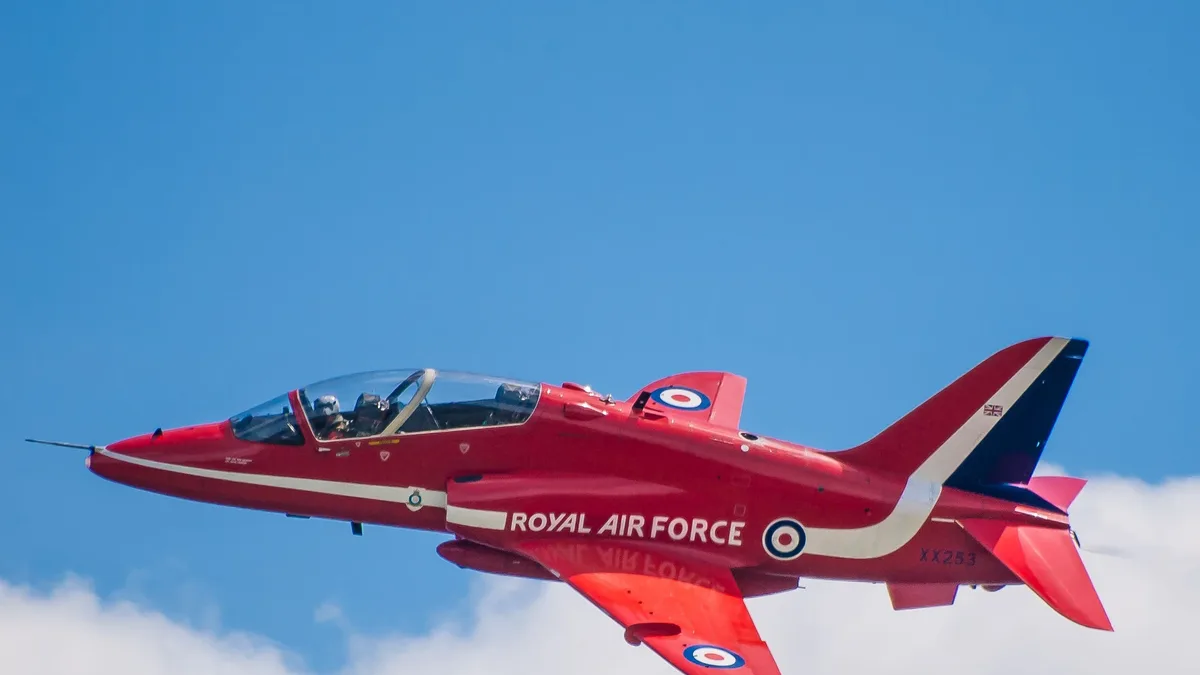
UK Royal Air Force forms first space effects
The UK has established No. III Space Effects Squadron, its first dedicated unit for offensive and defensive space operations, to disrupt and deny...

Rafale Pilot Spots Fuel Leak on Global 6000 Business Jet
A French Air and Space Force Rafale pilot identified a fuel leak on a Bombardier Global 6000 business jet, prompting the aircraft to divert to...
Spanish F-18 Shoots Down Drone Over Romania After Approach Via Moldova
A Spanish Air and Space Force F/A-18 Hornet shot down a drone over southeastern Romania in the early hours of August 16, 2026, marking the fourth...