British Airways flight BA252 overspeed incident highlights jet stream risk
A British Airways Boeing 777-200ER exceeded its operational speed limit by 7-10 knots over the North Atlantic due to intense jet stream winds.
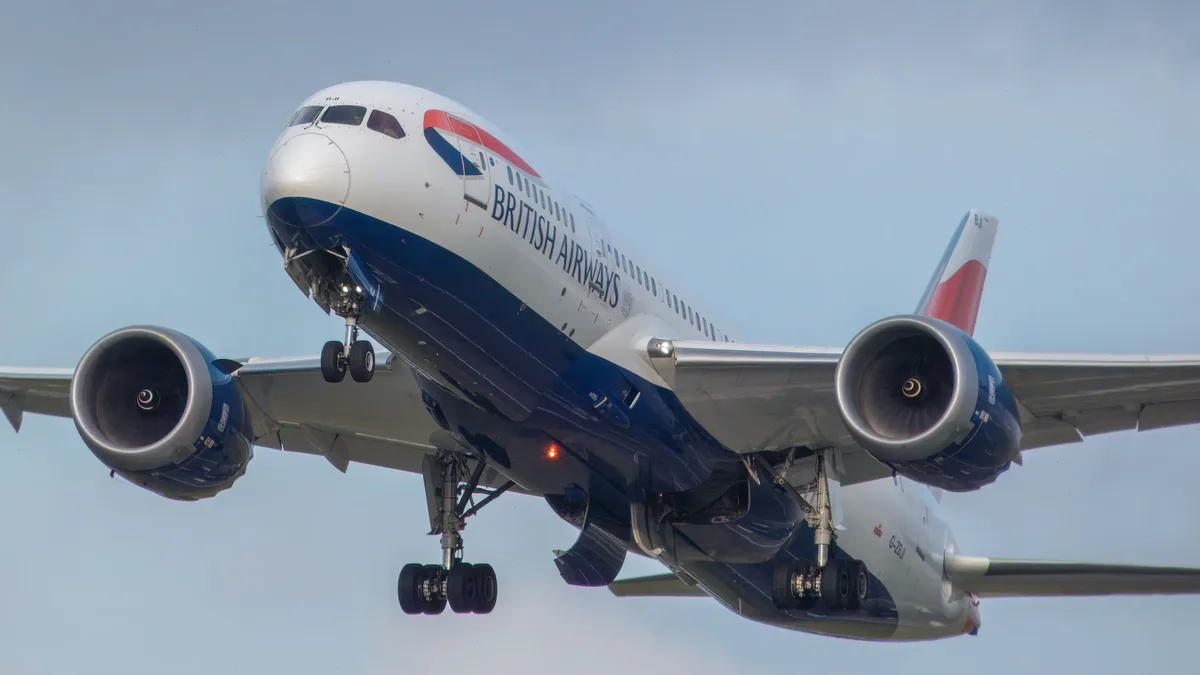
British Airways flight BA252 experienced an overspeed alert while cruising at 38,000 feet over the North Atlantic last week. The Boeing 777-200ER, with registration G-VIID, reached approximately 282 knots, placing it 7 to 10 knots above its standard operational limit during its crossing from Nassau to London Heathrow.
The flight crew took immediate corrective action. They climbed from 38,000 feet to 39,000 feet and later to 41,000 feet to stabilize the aircraft's airspeed. This maneuver successfully resolved the alert.
Crew response and safe landing
No injuries or structural damage were reported following the overspeed incident. The aircraft maintained normal flight operations for the remainder of the journey.
Flight BA252 landed safely at London Heathrow Airport at 11:13 GMT on Wednesday. Its total air time for the transatlantic segment was 7 hours and 57 minutes.
Wider context of transatlantic flight challenges
The incident involving BA252 was not an isolated event. Several other transatlantic aircraft experienced similar overspeed alerts during the same period. These events coincided with a period of active atmospheric conditions and intense jet stream winds in the North Atlantic corridor.
Jet streams are narrow bands of high-speed wind located 5 to 7 miles above the Earth's surface. Formed near the boundary of polar and tropical air masses, they typically flow from west to east. These winds can exceed 250 miles per hour, providing powerful tailwinds for eastbound flights that significantly reduce flight times and fuel consumption.
Strong jet stream activity is more common during autumn and winter months due to the cooling of polar regions. The phenomenon is also frequently linked to clear-air turbulence, which cannot be directly detected by onboard weather radar.
Recent history includes notable examples of extreme ground speeds aided by jet streams. In February 2024, a Virgin Atlantic Boeing 787 Dreamliner recorded a ground speed of 802 miles per hour. A United Airlines Boeing 787 Dreamliner achieved 838 miles per hour in similar conditions. It is important to distinguish that ground speed includes the effect of wind, while indicated airspeed measures an aircraft's velocity relative to the surrounding air. Sudden wind shear can cause rapid changes in indicated airspeed.
The flight from Lynden Pindling International Airport had departed on Tuesday. It completed its journey without further complication, landing at Heathrow after 7 hours and 57 minutes of air time.