Emirates posts $1 billion profit amid fuel price surge
Emirates Group reported a $1.1 billion half-year profit before tax, a 66% drop, as doubled fuel prices and regional airspace disruptions cut earnings.
Emirates posted a $1 billion profit in its half-year results, a 68% drop from the previous year's record $3.1 billion profit. The airline maintained healthy revenue and cash levels despite doubled jet fuel prices, with cargo operations showing strong performance.
Customer demand held firm and cargo operations made a strong contribution. This kept revenue and cash levels healthy even as global jet fuel prices doubled against the same period last year. The half-year results cover April to September 2026, delivered on November 5, 2026. Emirates airline and SkyCargo half-year profit before tax of $1 billion was significantly lower than the record $3.1 billion for the same period last year.
Emirates revenue, including other operating income, of $15.5 billion was down 13% compared with $17.9 billion last year. The number of passengers traveling with the airline fell 22% to 21.8 million. Emirates faced challenges including high fuel prices, airspace closures caused by regional conflict, and government travel advisories reshaping consumer choices and travel flows.
Group-wide figures also declined. The Emirates Group, which also includes dnata, posted a profit before tax of $1.1 billion, a 66% drop from the previous year. Group revenue was $18.0 billion for the first six months of 2026 to 2027, down 12% from $20.6 billion last year.
Ahmed bin Saeed Al Maktoum, Chairman and Chief Executive, said the profit was a remarkable performance against the disruption and high fuel prices caused by the ongoing conflict in the Gulf region. He thanked the UAE government for its decisive response and its co-ordination of all stakeholders to enable the safe resumption of air transport in the aftermath of military activity across the Gulf region.
Key financial metrics for the period are detailed below.
| Metric | 2026-27 Half-Year | 2025 Half-Year | Change |
|---|---|---|---|
| Group Profit Before Tax | AED 4.1bn (US$1.1bn) | AED 11.4bn (US$3.1bn) | Down 66% |
| Group Revenue | AED 66.2bn (US$18.0bn) | AED 75.4bn (US$20.6bn) | Down 12% |
| Group Net Profit After Tax | AED 3.6bn (US$1.0bn) | AED 10.7bn (US$2.9bn) | Down 66% |
| Group EBITDA | AED 12.5bn (US$3.4bn) | AED 21.1bn (US$5.7bn) | Down 41% |
| Emirates Airline PBT | AED 3.7bn (US$1.0bn) | AED 11.4bn (US$3.1bn) | Down 68% |
| Emirates Airline Revenue | AED 56.9bn (US$15.5bn) | AED 65.6bn (US$17.9bn) | Down 13% |
| Cash Position (30 Sep) | AED 54.1bn (US$14.7bn) | AED 59.6bn (US$16.2bn) at 31 Mar 2026 | Down 9% |
Fuel accounted for 34% of total operating costs and was the airline's largest expense. Emirates’ fuel costs, before hedging gains, rose by 60% compared with the previous half-year, despite a 12% reduction in fuel uplift due to lower operations. The net fuel cost increase was reduced to 13% due to AED 7.1 billion in fuel price risk management gains.
Available tonne kilometres declined 10% to 28.2 billion. The passenger seat load factor dropped to 72% from 79.5%. Available seat kilometres fell 17% and revenue passenger kilometres declined 25%. The Group's employee base dropped 2% to 128,237 on 30 September 2026.
Cargo operations drive revenue growth
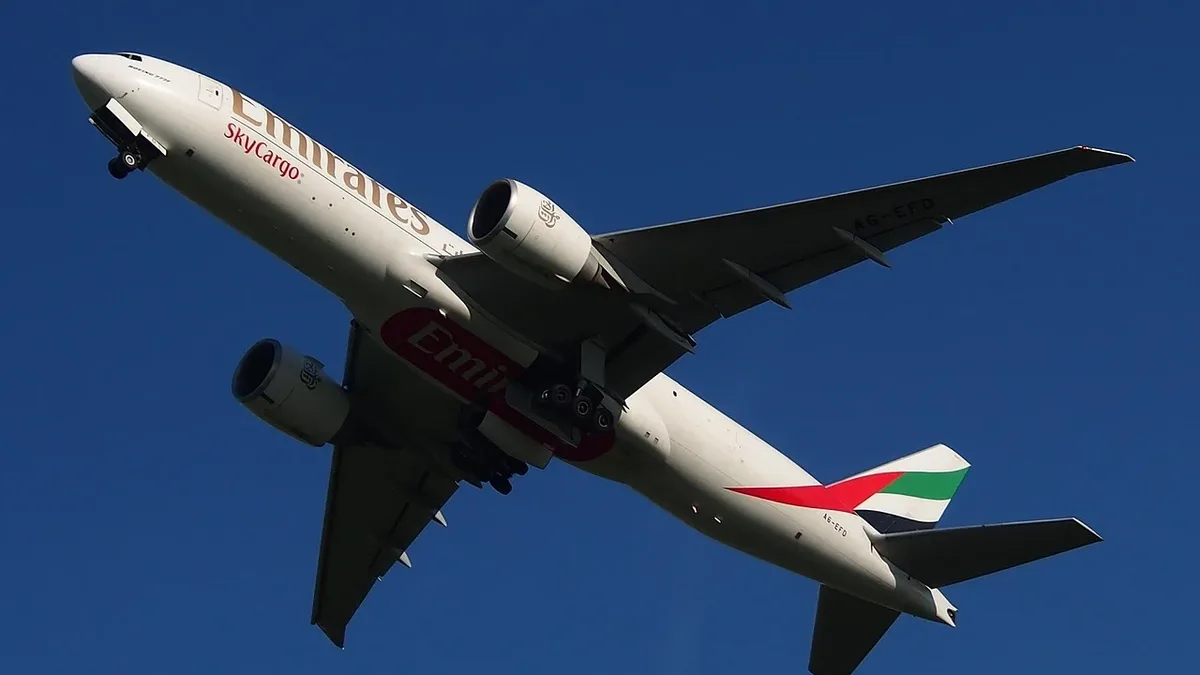
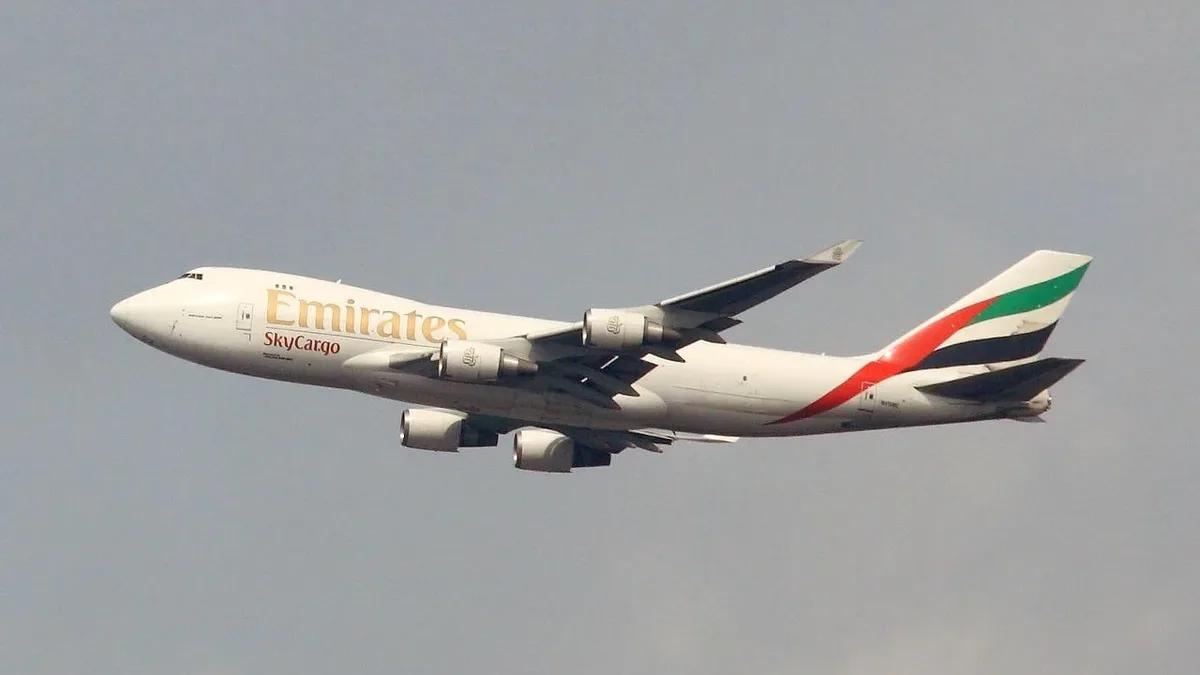
Cargo revenue increased by 52% despite a 1% decline in tonnage. Emirates SkyCargo transported 1.2 million tonnes, down 1% year-on-year, but cargo revenue increased by 52%. The airline added 5 new Boeing 777 freighters and deployed its first passenger-to-freighter converted aircraft in the first half of 2026-27.
Network recovery and operational scale
Emirates restored 91% of its pre-disruption network across 150 airports in 78 countries, supporting passenger and cargo operations. At 30 September, Emirates was operating 91% of its pre-disruption network, with its passenger and cargo network spanning 150 airports in 78 countries and territories. The airline introduced its Premium Economy cabin expansion and latest cabin products in additional markets between April 1 and September 30, 2026.
Strategic investments in fleet and facilities
The airline expanded its fleet with new A350 aircraft and cabin upgrades while committing billions to new MRO facilities and cargo infrastructure. Emirates took delivery of nine new A350 aircraft and completed cabin refurbishment of 12 aircraft, comprising nine A380s and three Boeing 777s. It launched two industry-first cabin products: the U-dream headrest in Economy Class and electronically controlled privacy dividers in Premium Economy.
Construction of a new MRO facility at Al Maktoum International Airport began in May 2026. The investment is US$5.1 billion with completion expected mid-2030s. Emirates' Starlink installation programme equipped 36 additional aircraft, bringing the total to 57 as of 30 September 2026.
The Group also paid a dividend of AED 2 billion to the Investment Corporation of Dubai, completing an AED 3.5 billion distribution for 2025-26.
Dnata, the Group's ground handling and travel services division, saw its half-year profit before tax fall 51% to AED 410 million. Its revenue was AED 11.0 billion, down 7% year-on-year. Dnata opened a new integrated command centre in Dubai to support cargo operations and invested AED 100 million in a new logistics facility in Dubai South. It also announced an AU$ 32 million investment to build a new cargo facility at Western Sydney International Airport and committed AED 8 million to expand a desert tourism destination in Dubai. Dnata secured a seven-year ground handling license at Amsterdam Schiphol Airport.
Emirates opened new travel stores, bringing its total retail footprint to over 30 stores. It expanded its Travel Rehearsals programme to 15 more stations across the UK, Australia, Portugal, the Philippines, Madagascar and the Maldives, with the programme now running in 47 stations. The airline extended its sponsorship deals with Arsenal Football Club until 2033 and with Real Madrid until 2031.