Safety Management System For Airports
| Scope | Aviation safety oversight for airports |
|---|---|
| Original use | Standardize and improve safety management at airports |
| Key components | Safety policy, risk management, safety assurance, promotion |
| Governing standard | ICAO Annex 19 |
| Implementation level | Mandatory for international airports |
| Primary objective | Proactive hazard identification and risk control |
Origin and history
The concept of a formalized Safety Management System (SMS) for airports originated from the broader aviation industry's systematic approach to safety, which developed throughout the latter half of the 20th century. Its direct lineage is often traced to the International Civil Aviation Organization (ICAO), a United Nations specialized agency, which began mandating SMS implementation for its member states' aviation service providers in the early 2000s. The framework was a natural evolution from earlier quality assurance and compliance-based safety programs that focused primarily on reactive investigations after incidents. Regulatory bodies in regions such as North America and Europe subsequently developed detailed regulations and advisory circulars to translate the ICAO principles into enforceable standards for airport operators. The driving force was a recognition that the complex, dynamic system of airport operations required proactive hazard identification and risk management beyond traditional regulatory compliance. The adoption of SMS at airports has since become a global standard, with implementation timelines varying by national regulatory authority but largely concentrated in the first two decades of the 21st century.
What it is for
A Safety Management System for airports is a formal, top-down, organization-wide framework designed to manage safety risk in airport operations. Its primary purpose is to achieve the highest practicable level of safety in ground operations, including aircraft maneuvering areas, apron management, terminal activities, and airside construction. The system provides a structured process for airport operators to identify hazards associated with their activities before they result in incidents or accidents. It is for ensuring that safety responsibilities are clearly defined and that all levels of staff, from senior management to frontline personnel, are engaged in safety reporting and risk mitigation. The framework systematically integrates safety into all business decisions and daily operational processes, from airfield maintenance and snow removal to contractor management and emergency response planning. Ultimately, it serves to move the organization from a reactive compliance mindset to a proactive safety assurance model, where continuous monitoring and improvement are institutionalized.
Pros and cons
A significant pro of an airport SMS is its systematic approach to hazard identification, which can uncover latent risks in complex operational interfaces long before they combine to cause an event. It fosters a positive safety culture where personnel are encouraged to report concerns without fear of reprisal, leading to a richer dataset for analysis. The framework also provides senior management with a clear, documented overview of organizational safety performance and risk exposure, aiding in resource allocation. A primary con is the substantial and sustained resource commitment required for effective implementation, including dedicated personnel, training programs, and data management systems, which can strain smaller airport budgets. A common mistake is treating the SMS as a paperwork exercise to satisfy regulators, creating bureaucratic processes that frontline staff view as separate from their "real work," thereby undermining its effectiveness. Organizations often regret a superficial implementation when they face a serious incident and discover their risk controls were not properly validated or their safety reporting culture was not genuinely established.
Who it suits
A formal Safety Management System is fundamentally suited to any licensed or certified airport operator, as it is a regulatory requirement in most jurisdictions worldwide. It is particularly critical for airports with complex operations, such as those hosting multiple airlines, handling diverse aircraft types, supporting flight training, or managing significant airside construction projects. Large hub airports with high traffic volumes benefit immensely from the structured risk management processes to handle the density of ground movements and multiple service providers. The system also suits airports operating in challenging environments, such as those prone to severe weather, wildlife hazards, or terrain constraints, as it provides a disciplined method for assessing and mitigating these inherent risks. Even smaller regional airports find value in a scaled, proportionate SMS to manage key risks like runway incursions or ground handling safety, though the implementation scope may differ. Ultimately, any airport organization committed to moving beyond basic regulatory compliance and embedding safety into its organizational DNA is suited to a robust SMS.
Latest Safety Management System For Airports news
Latest reporting
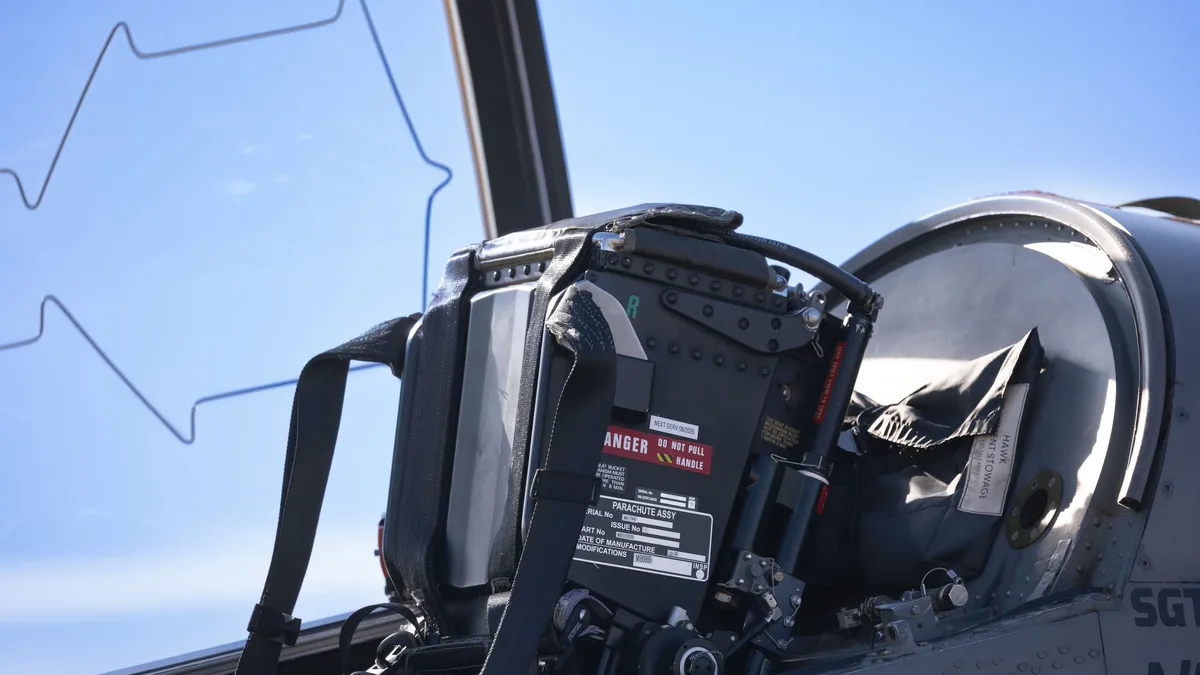
FAA Proposes Relaxing Oxygen Mask Rules for Pilots
The FAA has proposed easing oxygen mask requirements for pilots operating pressurized aircraft under Parts 91 and 135, citing modern safety systems...

FAA Reviews Boeing 737 MAX Software Issue After Airlines
The FAA is reviewing a flight management computer software glitch on some Boeing 737 MAX jets, convening a safety board.

Boeing 737 Max software glitch VNAV
The FAA is investigating a software glitch in the Boeing 737 Max's flight management computer that could incorrectly disengage the vertical navigation

Garmin Autoland Approved for Pilatus PC-12 PRO
The FAA and EASA have certified Garmin's Safety Autoland system for the Pilatus PC-12 PRO turboprop, expanding the automated emergency landing...

Garmin Autoland Approved for Use on Pilatus PC-12 PRO
Garmin's Emergency Autoland system has received FAA and EASA certification for the Pilatus PC-12 PRO turboprop, enabling fully automated emergency

FAA Rolls Out SMART AI System Without ATC Union Input
The FAA and DOT have begun a limited rollout of the SMART AI system for air traffic management, but the controllers' union NATCA says it was excluded...