Capacity And Yields
| Original use | Air traffic management and safety oversight |
|---|---|
| Core function | Balancing air traffic demand with available system capacity |
| Key metric | Throughput (aircraft movements per hour) |
| Primary constraint | Airspace sector capacity |
| Regulatory scope | National and international aviation authorities |
| Operational scale | Regional to continental airspace networks |
Origin and history
The conceptual framework of Capacity and Yields emerged from the commercial aviation industry in the mid-20th century, primarily in the United States and Europe. Its development was driven by the post-war expansion of scheduled air travel and the advent of jet aircraft in the 1960s, which dramatically increased both the potential and complexity of airline operations. The framework formalized the intrinsic link between the physical and regulatory limits of airspace and airports and the financial performance of airlines. It evolved from basic operational planning into a sophisticated analytical discipline with the deregulation of airlines, notably in the US in the late 1970s, which intensified competitive pressures. The rise of computerized revenue management systems in the 1980s and 1990s provided the tools to actively manage yields against capacity decisions. Today, it is a globally recognized cornerstone of airline economics and network planning, integral to the functioning of the entire aviation system.
What it is for
The Capacity and Yields framework exists to balance the physical and temporal limitations of the aviation system with the economic imperative of airlines to generate profit. Its primary purpose is to inform decisions on how many flights to operate, with which aircraft, on which routes, and at what fare levels to maximize financial returns. It serves as the critical bridge between the infrastructure and safety constraints managed by air navigation service providers and airports and the commercial objectives of airline management. The framework is used to allocate scarce resources, such as landing slots at congested airports or profitable routes within a competitive market. It directly guides fleet planning, schedule development, pricing, and revenue management strategies. Ultimately, it is for ensuring the economic viability of airlines within the rigid safety and capacity envelope of the global air transport network.
Overview
Capacity refers to the maximum number of aircraft operations that can be safely accommodated by a system component, such as an airport runway, a terminal airspace sector, or a route network, over a given period. Yield is a measure of average revenue earned per passenger per mile or kilometer flown, reflecting the pricing power and revenue quality of carried traffic. The relationship is dynamic and often inverse; increasing capacity on a route can dilute yields by adding seats to the market, while restricting capacity can bolster yields but may cede market share. The framework encompasses both strategic planning, like ordering new aircraft, and tactical management, such as adjusting ticket prices daily. It requires continuous analysis of demand forecasts, competitor actions, cost structures, and operational constraints. Effective management of capacity and yields is what allows an airline to cover its high fixed costs and achieve profitability in a notoriously volatile industry.
What to know
Capacity is not a single number but a cascade of interdependent limits, including air traffic control handling rates, gate availability, crew scheduling, and maintenance turn times. Yield is distinct from ticket price; a high fare on a short route may generate a lower yield than a moderate fare on a long-haul flight. The most significant lever for managing the relationship is aircraft seat capacity, chosen through fleet assignment and scheduling. Seasonality and time-of-day demand fluctuations create constant pressure to adjust capacity and pricing accordingly. External shocks, such as fuel price spikes, economic recessions, or pandemics, can violently disrupt the equilibrium between capacity and yields, leading to severe financial losses. Understanding this framework is essential for comprehending why airlines cancel seemingly profitable routes, why fares fluctuate dramatically, and how airport congestion directly impacts ticket prices.
Common questions
How do airlines decide how many seats to sell on a flight? They use revenue management systems that forecast demand and continuously adjust the inventory of fare classes to maximize total revenue, not simply fill seats. Why do fares change so frequently? Fares are dynamically adjusted based on remaining capacity, booking trends, competitor pricing, and proximity to departure to optimize yield. What is a "slot-controlled" airport? It is a congested airport where a regulator allocates specific takeoff and landing times (slots) to airlines, making that capacity a hugely valuable and tradable asset. Does a full flight mean it is profitable? Not necessarily; a flight can be full of low-yielding passengers (e.g., on discounted tickets) and still lose money if costs exceed the total revenue generated. How does air traffic control affect capacity? ATC staffing, technology, and procedural limits define the maximum safe flow of aircraft, creating hard ceilings that schedule planners cannot exceed. What is "capacity discipline"? It is an airline strategy to intentionally restrain growth in available seat supply to protect and improve yields, often observed in consolidated markets.
Pros and cons
A major pro of a well-managed Capacity and Yields strategy is the ability to achieve profitability in a thin-margin industry by precisely matching supply with demand. It allows for the efficient use of incredibly expensive assets like aircraft and airport infrastructure. The framework provides a clear methodology for valuing route networks and making multi-billion dollar fleet investment decisions. A significant con is that the pursuit of high yields can lead to reduced service frequency and higher fares for consumers, particularly in markets with little competition. The system is highly vulnerable to misforecasting; deploying too much capacity leads to yield dilution and financial loss, while deploying too little cedes market share to competitors. A common mistake is for airlines to grow capacity aggressively during economic booms, triggering fare wars that destroy industry profitability for all players. Airlines often regret ignoring yield quality during market-share battles, as filling aircraft with unprofitable traffic undermines long-term sustainability.
Who it suits
The Capacity and Yields framework primarily suits large, network-based airlines with complex route structures and multiple aircraft types, as they have the most levers to pull for optimization. It is essential for airlines operating in highly competitive, deregulated markets where pricing pressure is intense and cost control is paramount. Low-cost carriers also employ a rigorous version of this framework, focusing intensely on maximizing aircraft utilization (capacity) and simplifying fare structures to manage yields with lower costs. The system suits analysts and planners with strong skills in data analysis, economics, and operations research. It does not suit airlines or managers who prioritize market share growth above all else without regard for revenue quality, as this leads to rapid financial deterioration. The framework is also critical for airport operators and regulators, who must understand its principles to make informed decisions about infrastructure investments and slot allocations that affect the entire ecosystem.
Latest Capacity And Yields news
Latest reporting

Ryanair cuts growth target on fuel crisis
Ryanair warns some European airlines may not survive the winter due to high fuel prices, as it reduces its own passenger forecast and holds capacity...
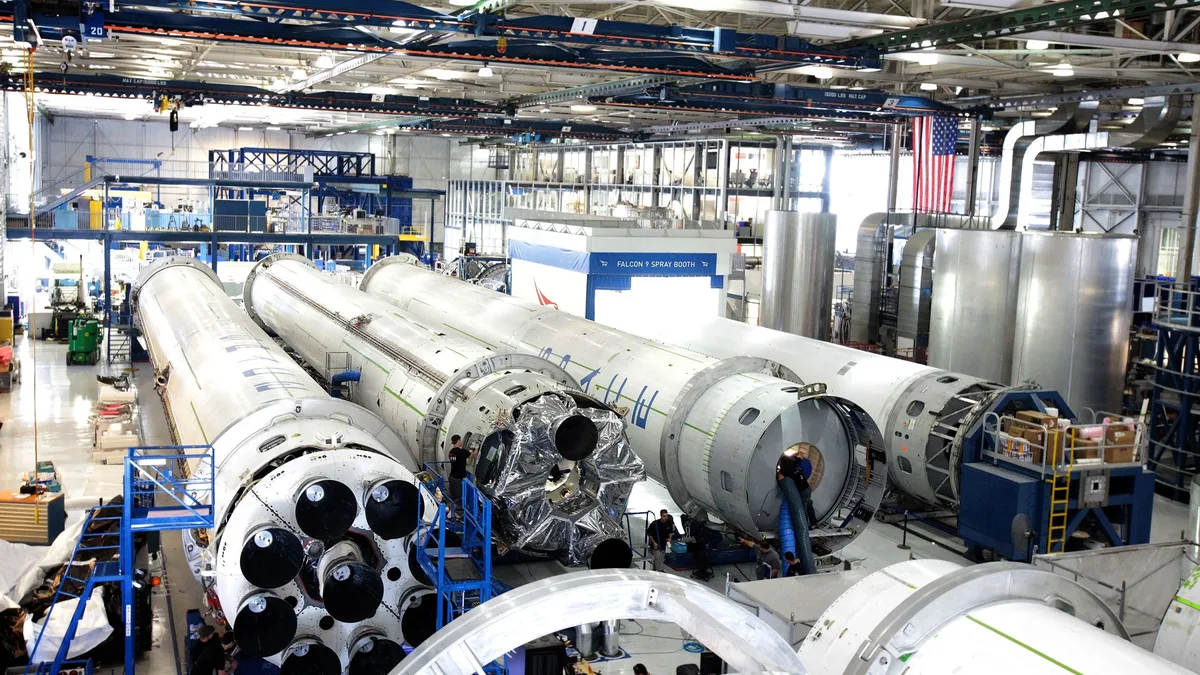
Pentagon signs missile production deals with
The Pentagon signed seven-year deals with General Dynamics and Lockheed Martin to triple PAC-3 MSE and quadruple THAAD interceptor production...