Pentagon signs missile production deals with
The Pentagon signed seven-year deals with General Dynamics and Lockheed Martin to triple PAC-3 MSE and quadruple THAAD interceptor production capacity.
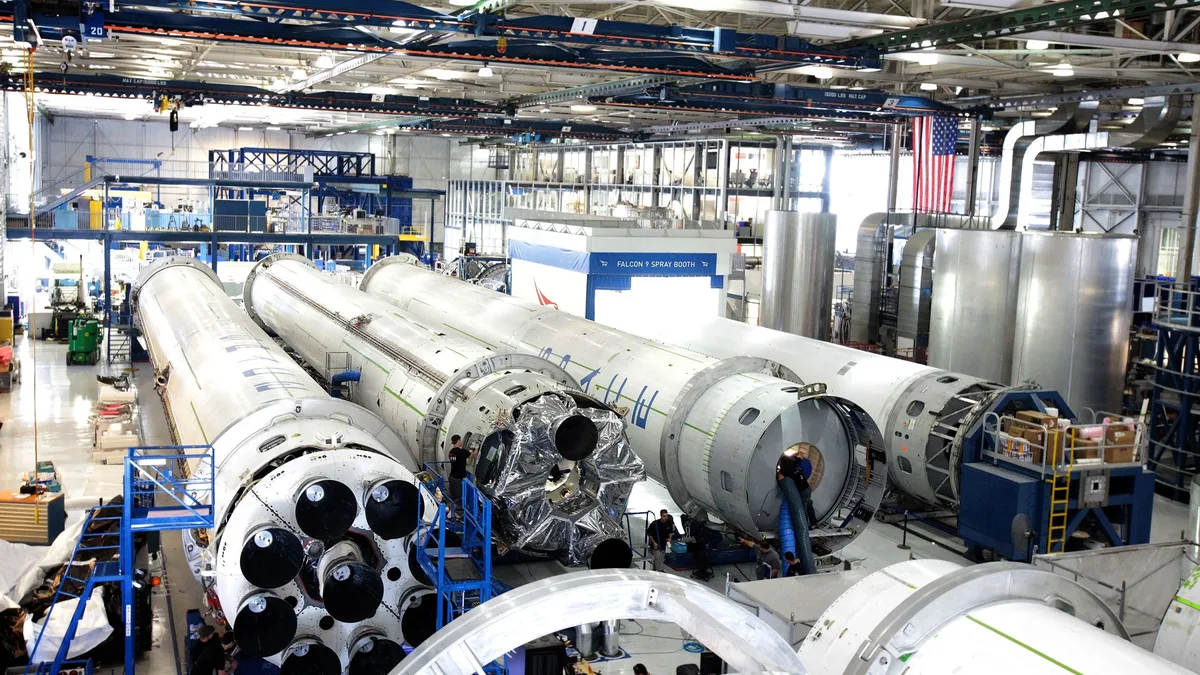
The Pentagon has signed seven-year framework agreements with General Dynamics and Lockheed Martin to dramatically increase production of Patriot and THAAD missile interceptors. The deals, announced on August 31, 2026, aim to triple capacity for Patriot Advanced Capability-3 Missile Segment Enhancement (PAC-3 MSE) interceptors and quadruple capacity for Terminal High Altitude Area Defense (THAAD) interceptors.
These agreements are intended to lead to formal multiyear procurement contracts, though funding remains subject to annual approval by Congress. The move is part of a broader Pentagon push to scale up U.S. missile manufacturing as global demand for air defense systems surges. You can track related military assets and their status on our fixtures page.
Manufacturing and Investment Plans
General Dynamics Ordnance and Tactical Systems (GD-OTS) will ramp up production of several critical interceptor components. These include motor cases, seeker housings and midsections, and shroud deployment systems. The company stated the agreements establish a foundation for a multiyear production expansion, with final contract terms to be negotiated later.
The Pentagon argues that longer-term deals provide crucial stability. They guarantee minimum annual procurement quantities, giving manufacturers and their suppliers the confidence to invest in hiring more workers, purchasing bulk materials, and upgrading factories.
Under Secretary of War for Acquisition and Sustainment Michael Duffey praised the companies. "General Dynamics and Lockheed Martin have answered the call," Duffey said. "We are cutting red tape, shortening timelines, and rapidly scaling our domestic manufacturing capacity."
Context of Broader Production Push
The Pentagon's latest action is not isolated. The Pentagon has been pursuing similar long-term agreements across various missile programs. The goal is to give defense contractors the certainty needed to invest in manufacturing capacity, which can take years to develop fully.
In a related move, Lockheed Martin received a separate seven-year contract in June 2026. That award, worth up to $35 billion, was specifically to quadruple THAAD interceptor production. It followed a framework agreement signed with the Pentagon in January of that year. For detailed performance metrics on such systems, see our stats section.
System Capabilities and Roles
The two missile systems covered by the new agreements serve distinct but complementary roles in U.S. air defense. The PAC-3 MSE is the latest interceptor used by the Patriot system. It is designed to destroy ballistic missiles, cruise missiles, and aircraft through direct impact.
THAAD, or Terminal High Altitude Area Defense, has a different primary mission. It is engineered to intercept short-, medium-, and intermediate-range ballistic missiles during the final stage of their flight. THAAD operates at higher altitudes and over longer ranges than the Patriot system.
Inventory Pressures and Strategic Concerns
The drive to accelerate production comes amid significant concern over U.S. stockpiles of advanced interceptors. Years of sustained demand from conflicts in Ukraine and the Middle East have drawn down inventories. Patriot and THAAD missiles are among the most complex and difficult weapons in the U.S. arsenal to replace quickly, and production has not kept pace with the rate at which they have been used.
Independent estimates cited in the source report paint a stark picture of current stock levels. They suggest remaining U.S. inventories may be fewer than 1,000 Patriot interceptors and roughly 250 THAAD interceptors. This scarcity raises the prospect that military commanders could be forced to ration these high-end air defense missiles in a crisis.
The more immediate strategic worry, according to the source, is what happens if another major conflict erupts before these depleted stocks can be rebuilt.