South Korea's Air Force Accepts First Indigenous KF-21
The Republic of Korea Air Force has taken delivery of its first production KF-21 Boramae fighter, a key step toward declaring the domestically developed
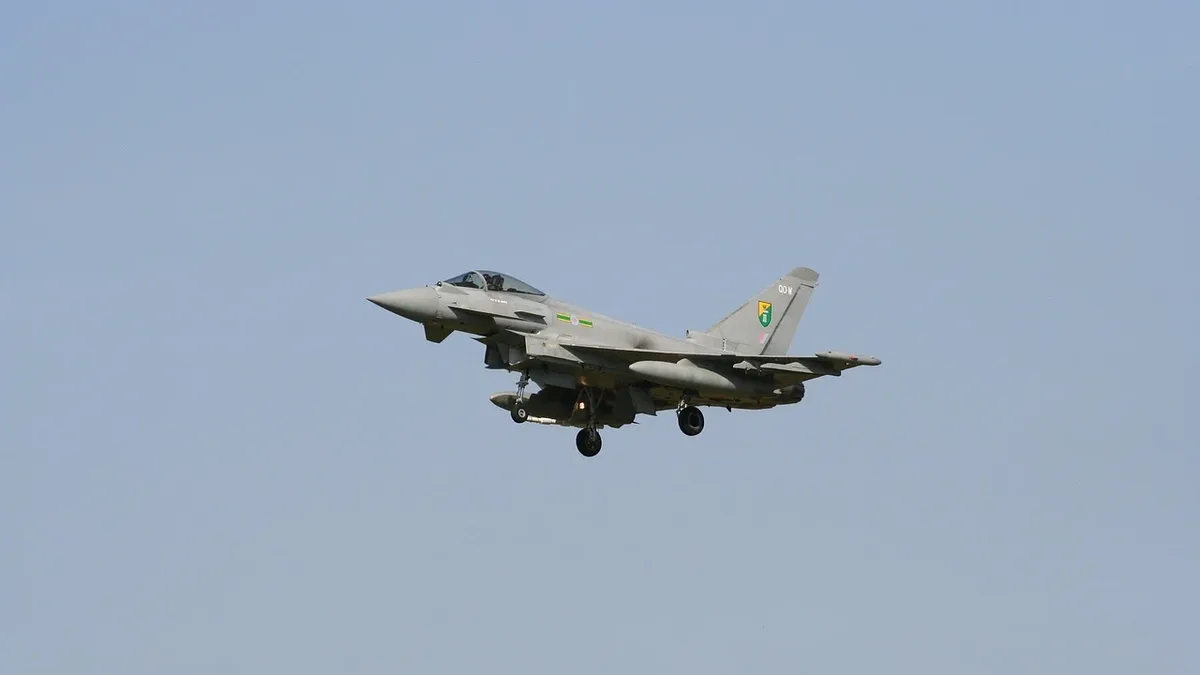
South Korea's Air Force accepted its first production KF-21 Boramae fighter on September 22, 2026. Major Han Jae-seok, one of the air force's first KF-21 pilots, signed the acceptance documents at Korea Aerospace Industries' plant at Sacheon Airport and flew the aircraft, serial number 001, to Yecheon Air Base.
The handover was confirmed in a joint statement from the Republic of Korea Air Force and the Defense Acquisition Program Administration. Major Han Jae-seok serves with the 156th Fighter Squadron of the 16th Fighter Wing. He then flew the jet to Yecheon Air Base, its first operating base, about 165 kilometers (approximately 103 miles) to the north.
The fighter circled over Sacheon before departing. On the way to Yecheon, the KF-21 was joined by an FA-50 light combat aircraft, a TA-50 lead-in fighter trainer, and a T-50 advanced trainer. All these accompanying aircraft are KAI-built types already in ROKAF service. ROKAF Chief of Staff General Son Seok-rak, along with officials from DAPA and KAI, met the aircraft on arrival at Yecheon Air Base.
Squadron background and transition
The 156th Fighter Squadron, reactivated on June 1, 2026, as the first unit to operate the KF-21. Originally formed in 1988, the squadron flew the F-4E Phantom II until it was deactivated in 2012. Its first pilots have completed type training and qualified as KF-21 flight instructors. They will run conversion training for pilots who join the unit later.
Maintenance personnel have also completed specialized courses for the new fighter. The ROKAF plans to use this first delivered aircraft to establish flight, maintenance, and logistics procedures for the growing KF-21 fleet.
Aircraft capabilities and program context
The delivered aircraft is a Block I KF-21, configured mainly for air-to-air missions. It was rolled out at Sacheon on March 25, 2026, and underwent acceptance testing before DAPA judged the KF-21 fully combat suitable on May 7, 2026. The development program, which formally launched in December 2015 with Indonesia as a partner, logged about 1,600 test flights and validated some 13,000 test conditions, including aerial refueling and air-to-air weapons release.
The handover occurred 25 years and six months after then-President Kim Dae-jung announced plans for an indigenous fighter in March 2001. It came about ten years and nine months after full-scale development began and roughly two years after the KF-21 entered production in June 2024.
KAI describes the KF-21 as a 4.5-generation multirole fighter named Boramae, which translates as 'young hawk'. The initial Block I configuration is focused on air-to-air missions, while the planned Block II will add air-to-ground capabilities. The ROKAF intends to field more than 100 KF-21s in phases by the early 2030s to replace its F-4 and F-5 fighters.
| Variant | Primary Focus | Planned Delivery Quantity | Target Date |
|---|---|---|---|
| Block I | Air-to-air missions | 40 aircraft | By 2028 |
| Block II | Expanded air-to-ground capability | 80 aircraft | By 2032 |
The total planned fleet is 120 aircraft. The ROKAF aims to retire its remaining F-5s by the end of 2027 and expects to formally declare the KF-21 operational in the second half of that same year.
The US government declined to transfer four key technologies, including those for the active electronically scanned array radar and the electronic warfare system. In response, Hanwha developed the KF-21's AESA radar and LIG Nex1 developed its electronic self-defence suite. The aircraft's initial air-to-air weapons will include MBDA's Meteor beyond-visual-range missile and Diehl Defence's IRIS-T short-range missile.
The ROKAF plans to use the delivered aircraft to establish flight, maintenance, and logistics procedures for the KF-21 fleet.