NTSB Details Bucket Failure in Yosemite Firefighting Helicopter Crash
The NTSB's preliminary report on a fatal September 20 crash in Yosemite National Park cites a vertical water bucket drop and subsequent cargo hook release as key events before the Airbus Super Puma struck trees, killing both pilots.
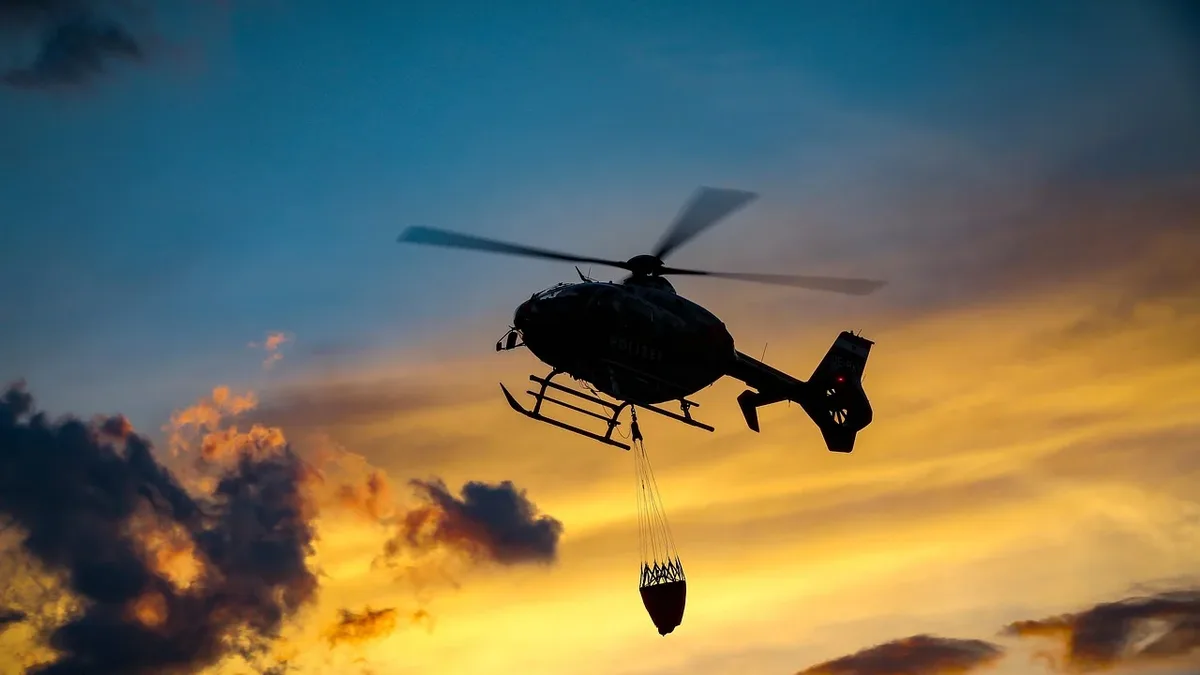
A firefighting helicopter crashed in Yosemite National Park on September 20 after its water bucket failed during a drop. The National Transportation Safety Board's preliminary report confirms a vertical bucket drop and cargo hook release preceded the Airbus AS332 L1 Super Puma's impact with trees, killing both pilots aboard during operations against the Dome Fire.
The helicopter had been conducting water drops on the Dome Fire, which began on September 15. On its final mission, the aircraft made three trips between Ostrander Lake and the drop zone. The third water drop sequence began at approximately 1:56 p.m. The 800-gallon Nomad bucket, suspended on a 200-foot line, emptied in about three seconds. The NTSB said, "The bucket appeared to drop almost vertically and then contacted the ground about 1356:38." Approximately one second later, the cargo hook released the longline. The helicopter struck trees about five seconds after the bucket hit the ground.
Flight data and video indicated the crew had completed two prior drops on this run. The first proceeded with the bucket above the trees. During the second, the water release caused the aircraft to swerve left. Just before the crash, the helicopter was descending at about 1,344 feet per minute. It crashed on steep, forested terrain at an elevation of roughly 8,150 feet. The main wreckage came to rest about 500 feet downslope. A post-impact fire consumed most of the aircraft, destroying cockpit data sources. The water bucket was found about 90 feet from the main wreckage.
Technical Findings and Equipment Status
The NTSB's initial analysis indicates the cargo hook was found locked, consistent with a normal electronic release. The helicopter had experienced problems with the same 800-gallon water bucket earlier that day. After an earlier nearly three-hour flight involving more than 25 water drops, the aircraft returned to its helibase. Mechanics tightened the bucket's air-pressure regulator and performed a system pressure check. The crew subsequently received a request to return to firefighting.
Aviation analyst John Nance reviewed the report and stated the circumstances point to a complicated investigation. He noted the bucket likely had some involvement in the accident, either as part of the problem or an impediment to regaining flight control. Nance added that experienced pilots likely would not have hesitated to fly based on the information available after the maintenance check. The NTSB has conducted preliminary analyses of engine and rotor speeds but has not determined the cause of the descent into the trees.
Pilot and Crew Details
The two pilots killed were the only people on board. They were Ryan Cutter, 46, of Utah, and Greg King, 56, of Alaska. Both were pilots for Precision Helicopters assigned to the Payette National Forest’s Price Valley Rappel Crew. King had extensive experience fighting wildfires in Alaska. Cutter had worked as a helicopter pilot since 2011.
Investigators have recovered and downloaded the cockpit voice recorder. Additional wreckage examination is planned as conditions permit. The NTSB's full investigation is expected to take about a year to complete.