Natca And Controller Agreements
| Original use | Labor negotiation and dispute resolution |
|---|---|
| First created | 1980s |
| Country of origin | United States |
| Parties involved | National Air Traffic Controllers Association (NATCA) and the Federal Aviation Administration (FAA) |
| Legal status | Legally binding contract |
| Primary subject | Terms and conditions of employment for air traffic controllers |
| Duration | Fixed term, typically multiple years |
| Amendment process | Requires mutual agreement and ratification |
Origin and history
The National Air Traffic Controllers Association (NATCA) was founded in the United States in the late 1980s, specifically in 1987, as a professional labor union to represent federal air traffic controllers. This formation occurred in the aftermath of the 1981 Professional Air Traffic Controllers Organization (PATCO) strike and subsequent mass firing, which created a decades-long period where controllers lacked collective bargaining rights. The NATCA union was established to provide a new, federally recognized voice for controllers within the framework of U.S. labor law. The term "NATCA and Controller Agreements" refers broadly to the collective bargaining agreements negotiated between this union and the federal employer, historically the Federal Aviation Administration (FAA). These agreements have evolved through multiple negotiation cycles, each shaping working conditions, pay scales, and operational rules for subsequent years. The history is thus one of periodic, structured negotiation within the U.S. civil service system to determine the terms governing the controller workforce.
What it is for
The primary purpose of NATCA and Controller Agreements is to establish the legally binding terms and conditions of employment for the vast majority of U.S. air traffic controllers. These agreements formally define controller compensation, including detailed pay bands and premium pay for overtime, holiday, and midnight shift work. They codify complex work rules covering scheduling, staffing requirements, fatigue management policies, and the processes for assigning controllers to specific facilities or positions. A critical function is to create a structured grievance and dispute resolution procedure, providing a clear channel for addressing workplace conflicts outside of litigation. The agreements also outline professional standards, training protocols, and the parameters for technological and procedural changes within the National Airspace System. Ultimately, they serve as the foundational labor-management framework intended to maintain a stable, skilled, and effective controller workforce to ensure the safety and efficiency of aviation.
Overview
A NATCA collective bargaining agreement is a comprehensive, multi-hundred-page document negotiated between union leadership and FAA management representatives. It covers all bargaining unit employees, which includes air traffic controllers, engineers, and other technical specialists represented by the union. The core of the agreement is the "Pay Plan," which details a rigorous, performance-based pay scale tied to facility certification levels and individual proficiency. It incorporates extensive appendices that address the unique operational needs of different facility types, such as en route centers, terminal radar approach controls (TRACONs), and air traffic control towers. The agreement explicitly integrates with broader federal personnel regulations and U.S. aviation safety statutes, creating a hybrid of labor law and administrative rule. Its administration is a continuous process involving local union representatives and FAA managers interpreting and applying its provisions to daily operations across the national system.
What to know
It is essential to know that these agreements are not static; they have fixed terms, typically lasting several years, after which they must be renegotiated, a process that can be lengthy and contentious. The negotiation process itself is governed by federal labor relations statutes, which include provisions for mediation and, in past impasses, congressional intervention. A key feature is the "operational suitability" language, which governs how new technologies or procedures are implemented and often requires joint review to ensure they do not negatively impact controller workload or safety. The agreements establish national, regional, and local labor-management committees that meet regularly to address issues before they escalate into formal grievances. Understanding the distinction between contractual provisions and inviolable FAA safety orders is crucial, as the agreement cannot override the agency's statutory safety authority. Finally, the financial and operational impact of these agreements is significant, as controller compensation constitutes a major portion of the FAA's annual operating budget.
Common questions
A common question is whether these agreements can lead to strikes, but U.S. federal law prohibits strikes by federal employees, including air traffic controllers, making such job actions illegal. People often ask how pay is determined, which is based on a complex matrix factoring in the certified facility's traffic volume and complexity, the individual's certification level, and performance metrics. Many inquire about the role of seniority, which is heavily influential in bidding for work schedules, vacation times, and transfers to different facilities, as detailed in the agreement's bidding provisions. A frequent question concerns what happens during a negotiation impasse, which can lead to a continuation of the old agreement, imposition of terms by the FAA, or involvement of third-party mediators or Congress. Individuals wonder if the agreements affect safety directly, and while they govern working conditions that influence fatigue and morale, direct safety standards are set by FAA regulations and orders. Another query is about who is covered, which includes virtually all frontline controllers but generally excludes management officials and supervisors.
Pros and cons
A significant pro is that the agreements provide long-term stability and predictability for both the workforce and the agency, allowing for multi-year budget and staffing planning. They establish a clear, equitable, and performance-driven compensation model that rewards controllers for certifying at the nation's busiest and most complex facilities. The cons include the potential for protracted and adversarial negotiations that can create periods of uncertainty and low morale, distracting from operational focus. A common criticism is that the rigid work rules and seniority-based systems can sometimes impede operational flexibility, making it difficult for managers to adapt quickly to unexpected staffing shortages or changing traffic patterns. Some controllers regret the complexity of the agreement, which can lead to constant local disputes over interpretation, consuming substantial time for union representatives and managers alike. A genuine drawback is that the multi-year term can lock in pay structures or technologies that become outdated, requiring mid-term memoranda of understanding to address unforeseen issues.
Who it suits
This system of agreements suits a large, government-run air traffic control system that requires a highly specialized, unionized workforce operating under a uniform national framework. It is designed for a context where labor peace is paramount due to the critical, safety-sensitive nature of the work, making structured negotiation preferable to unrest or high turnover. The model suits controllers who value clear, codified career progression paths, predictable pay increases based on objective metrics, and strong due process protections in workplace disputes. It is less suited to organizations or individuals seeking maximum managerial flexibility or a purely merit-based system unmoderated by seniority rules. The system inherently suits a political and regulatory environment where congressional oversight and federal appropriations processes are directly intertwined with labor relations and public sector compensation.
Latest Natca And Controller Agreements news
Latest reporting
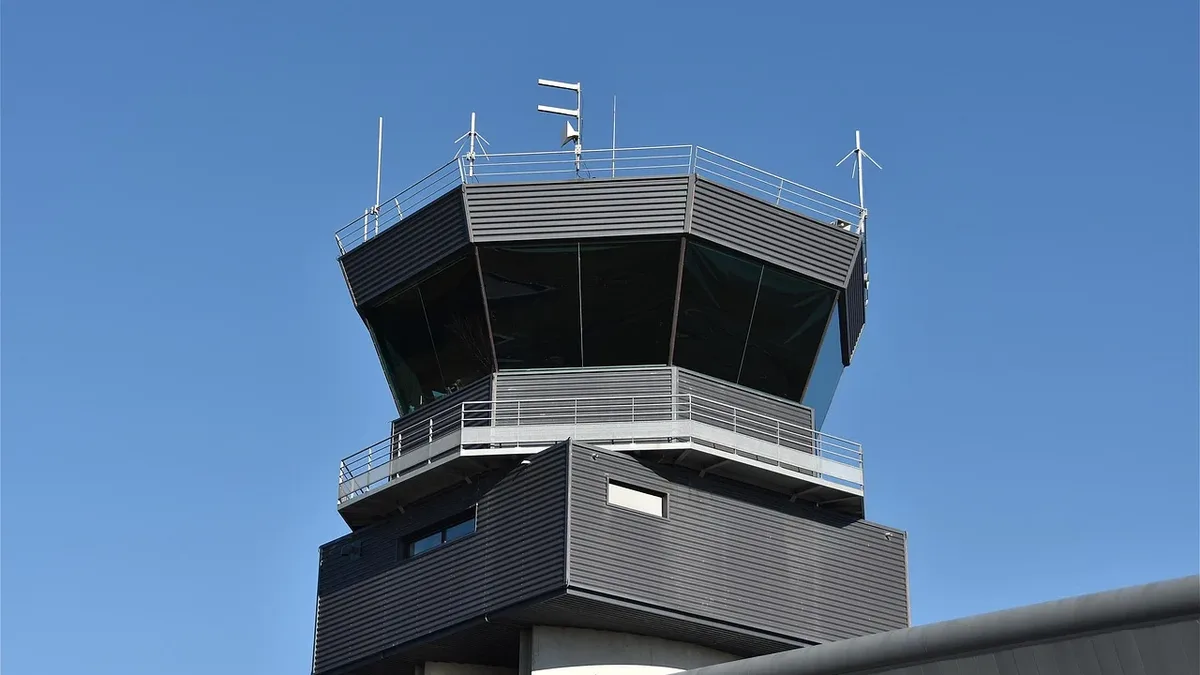
FAA Rolls Out SMART AI System Without ATC Union Input
The FAA and DOT have begun a limited rollout of the SMART AI system for air traffic management, but the controllers' union NATCA says it was excluded...

Builds $40M Facility to Ease ATC Staffing
The FAA has begun construction on a new manufacturing plant in Maryland to produce digital voice switch systems aimed at addressing the agency’s...