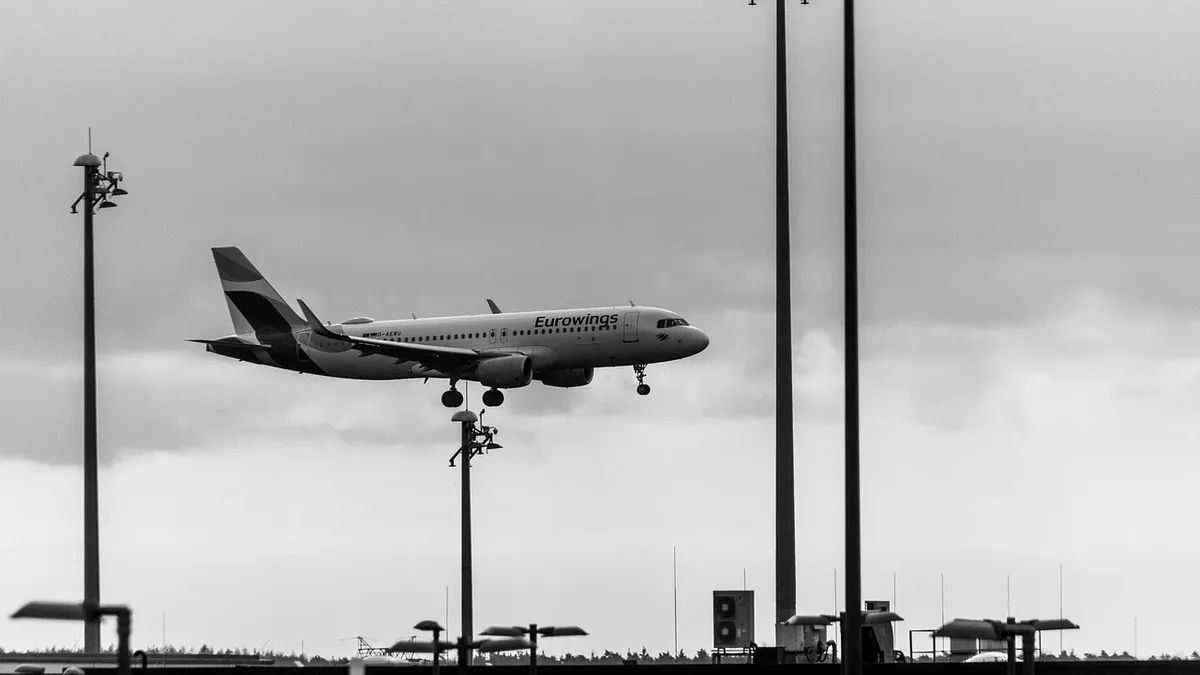
Near Miss And Tcas Events
| System name | Near Miss and TCAS Events |
|---|---|
| Original use | Aviation safety monitoring and analysis |
| First created | Late 20th century (1980s-1990s) |
| Primary data source | Mandatory incident reports from pilots and controllers |
| Key output | Risk analysis and safety recommendations |
| Regulatory framework | National aviation authority and ICAO standards |
| Event classification | Based on proximity and collision risk |
Origin and history
The formalized reporting and analysis of Near Miss and TCAS events is a global aviation safety practice, with its modern systematic origins in the late 20th century. Its development is intrinsically linked to the evolution of air traffic control technology and the proactive safety management philosophy that gained prominence after the 1970s. The term "near miss" (or "airprox") describes an incident where aircraft come dangerously close to violating safe separation minima, while TCAS (Traffic Alert and Collision Avoidance System) refers to the onboard technology designed as a last layer of defense. The institutionalized collection of these reports began in earnest in the 1980s and 1990s, driven primarily by aviation authorities in the United States and Europe. This was facilitated by the mandated fitment of TCAS II on large transport aircraft, which began generating standardized resolution advisory data. The creation of confidential reporting systems, such as NASA's Aviation Safety Reporting System (ASRS) established in the 1970s, provided a crucial foundation for the non-punitive collection of near-miss data that underpins the modern process.
What it is for
The system for managing Near Miss and TCAS events exists to proactively identify systemic risks in the airspace before they lead to accidents. Its primary function is to collect, analyze, and disseminate safety information from incidents where separation was compromised or collision avoidance systems were activated. This process transforms isolated occurrences into actionable safety intelligence, allowing regulators, airlines, air navigation service providers, and manufacturers to implement corrective measures. It serves as an essential early warning mechanism, highlighting vulnerabilities in procedures, airspace design, controller workload, pilot training, or equipment performance. The ultimate goal is to create a continuous feedback loop that drives improvements in the overall aviation system's resilience and reduces the probability of a mid-air collision. Furthermore, it validates the effectiveness of TCAS technology and informs updates to its logic and performance standards.
Overview
The system is a multi-layered framework involving detection, reporting, investigation, analysis, and safety action. Detection occurs through pilot or controller identification of a loss of separation, or automatically via TCAS Resolution Advisory (RA) recordings. Mandatory and voluntary reporting schemes then feed these events into national aviation safety databases, such as those maintained by the FAA in the US or the UK CAA. Specialized units, like the UK Airprox Board or the FAA's Air Traffic Safety Oversight Service, conduct investigations to classify the event's risk severity and determine causal factors. Advanced data analysis techniques, including trend monitoring and root cause analysis, are applied to large datasets to uncover latent systemic issues. The findings and recommendations are disseminated through safety bulletins, information exchanges, and platforms like ICAO's Global Aviation Safety Plan. This entire cycle operates under safety management system (SMS) principles, which require organizations to learn from these events.
What to know
A key principle is the distinction between a "near miss" (a observed loss of separation) and a "TCAS event" (specifically an RA, which is a commanded maneuver). Not all near misses trigger a TCAS RA, and not all RAs indicate an actual near miss, as the system can issue alerts based on conservative predictive algorithms. The severity of events is typically categorized on a scale, ranging from "no risk" to "high risk" of collision, based on the actual proximity and evasive action taken. Understanding the concept of "separation minima" – the regulated vertical and horizontal distances that must be maintained between aircraft – is fundamental to assessing these events. The system relies heavily on non-punitive, confidential reporting to encourage transparency; without pilot and controller willingness to report, its effectiveness diminishes drastically. It is also important to know that TCAS is considered the last layer of defense, and its activation often indicates a failure of prior preventive layers like ATC instructions or pilot see-and-avoid.
Common questions
A common question is whether a TCAS RA automatically signifies a pilot or controller error, and the answer is no, as RAs can be triggered by complex system interactions or unexpected aircraft behavior. People often ask who is legally responsible when pilots follow a TCAS RA that contradicts an ATC instruction, and the universal protocol is that pilots must always follow the RA, a rule established after the 2002 Überlingen accident. Many wonder how close aircraft actually get in a reported near miss, with distances often measured in hundreds of feet vertically and sometimes less than a mile horizontally. A frequent query is about the rate of such events, which varies by airspace density and complexity but remains statistically rare relative to the total number of flights. Individuals also ask if these reports can be used for punitive action, and under protected reporting schemes, the information is generally shielded from disciplinary proceedings to promote safety. Finally, there is often confusion about where to report such an event, which is typically to the national aviation authority and/or the aircraft operator's safety department.
Pros and cons
It has demonstrably contributed to significant safety improvements, such as changes to airspace design, controller procedures, and TCAS software updates. The cons include its heavy dependence on voluntary and confidential reporting, which can lead to under-reporting due to fear of professional repercussions or simple time constraints, skewing the data. The investigative process can be resource-intensive and slow, sometimes causing a lag between an event trend emerging and corrective action being taken. A common mistake is for organizations to focus solely on assigning blame for a single event rather than conducting a systemic analysis to identify the underlying organizational or procedural factors. Some regulators and operators regret an over-reliance on this reactive data, potentially at the expense of more predictive safety analytics that could identify risks before any incident occurs.
Who it suits
This system suits and is essential for national aviation authorities and safety investigation bodies, which have the regulatory mandate and resources to collect, analyze, and act on the data. It is critically important for air navigation service providers, who use the insights to refine airspace procedures, controller training, and tool design to prevent future conflicts. Airlines and flight operations departments suit its use for monitoring the safety performance of their fleets, identifying training needs for pilots, and contributing to their Safety Management Systems. Aircraft and avionics manufacturers, particularly those involved with TCAS and ADS-B, rely on event reports to validate and improve their systems' performance and logic. Academics and safety researchers find the aggregated, anonymized data invaluable for studying human factors, system engineering, and risk modeling. Ultimately, it suits the entire aviation industry's safety culture, but only where a genuine, non-punitive commitment to learning from incidents is firmly established.
Latest Near Miss And Tcas Events news
Latest reporting
RAF Hawk T2 Crashes Near Anglesey Base After Takeoff
An RAF Hawk T2 advanced jet trainer crashed shortly after takeoff from RAF Valley on September 23, 2026. Both pilots ejected safely and sustained...
Beechcraft Bonanza crash near Brisbane kills two, ATSB
Two people died when a 1979 Beechcraft A36 Bonanza crashed near Stockleigh, Queensland on September 7, 2026, shortly after departing Archerfield...
Intruder Breaches Lisbon Airport Perimeter
A man climbed the fence at Lisbon Airport and walked near an active runway on August 30, causing a security breach but no flight delays.
British Newlyweds and Pilot Killed in Bell 206 Helicopter Crash on Greek Island
A British couple on their honeymoon and their Greek pilot died when their chartered Bell 206 helicopter crashed near Sifnos heliport. The cause of...