2026 Expedition Targets Nikumaroro for Amelia Earhart
A team led by the Archaeological Legacy Institute and Purdue University will travel to Nikumaroro Island in October 2026 to investigate a submerged object
An expedition team will travel to Nikumaroro Island in October 2026 to examine the Taraia Object in the lagoon as possible wreckage from Amelia Earhart's Lockheed Electra 10E. The Archaeological Legacy Institute is leading the effort with Purdue University and the Purdue Research Foundation as partners, renewing a university connection that dates to Earhart's 1935 role as a career counselor there. The target is a large submerged 'shiny metal thing' off the coast of Nikumaroro, roughly 400 miles southeast of Howland Island, the intended destination when Earhart and navigator Fred Noonan disappeared on July 2, 1937, after departing Lae, New Guinea.
Archaeological Legacy Institute president Richard Pettigrew will direct the expedition. Purdue's representatives are Senior Vice President Steve Schultz, alumna and astronaut Sirisha Bandla, and alumnus and astronaut Marc Hagle. Researcher Michael Ashmore said he "noticed the feature in Apple Maps satellite imagery in 2020." The institute argues the object's dimensions, shape, and reflectivity are consistent with parts of the Electra. Not all agree. The International Group for Historic Aircraft Recovery (TIGHAR) disputes this, having previously suggested the feature was a natural formation. TIGHAR said it "suggested the feature was a fallen palm tree and root mass, washed into the lagoon during a storm."
Logistics and preparation underway
DHL announced on October 1, 2024, that it is the official logistics partner for the expedition. The company is transporting about 1,650 pounds of equipment and supplies from origins in Eugene, Oregon and Pensacola, Florida to Bonriki International Airport in Tarawa, Kiribati. This shipment includes diving gear, navigation systems, solar panels, and communications equipment for the subsequent sea journey. The project was originally planned for October of the previous year but was delayed awaiting proper approvals from the Kiribati government. The main team left Los Angeles together on October 3 to begin the journey.
Team composition and historical connections
The expedition team includes terrestrial and maritime archaeologists, Kiribati representatives, and the three Purdue representatives. Purdue's involvement is deeply historical. In 1935, Earhart joined the university as a career counselor for women and an adviser in aeronautics. Also, the Purdue Research Foundation helped finance Earhart's Lockheed Electra 10E for her attempted round-the-world journey. Steve Schultz noted that Earhart intended for the aircraft to return to Purdue after her around-the-world flight. The current team aims to fulfill that uncompleted intention.
Investigation methods and objectives
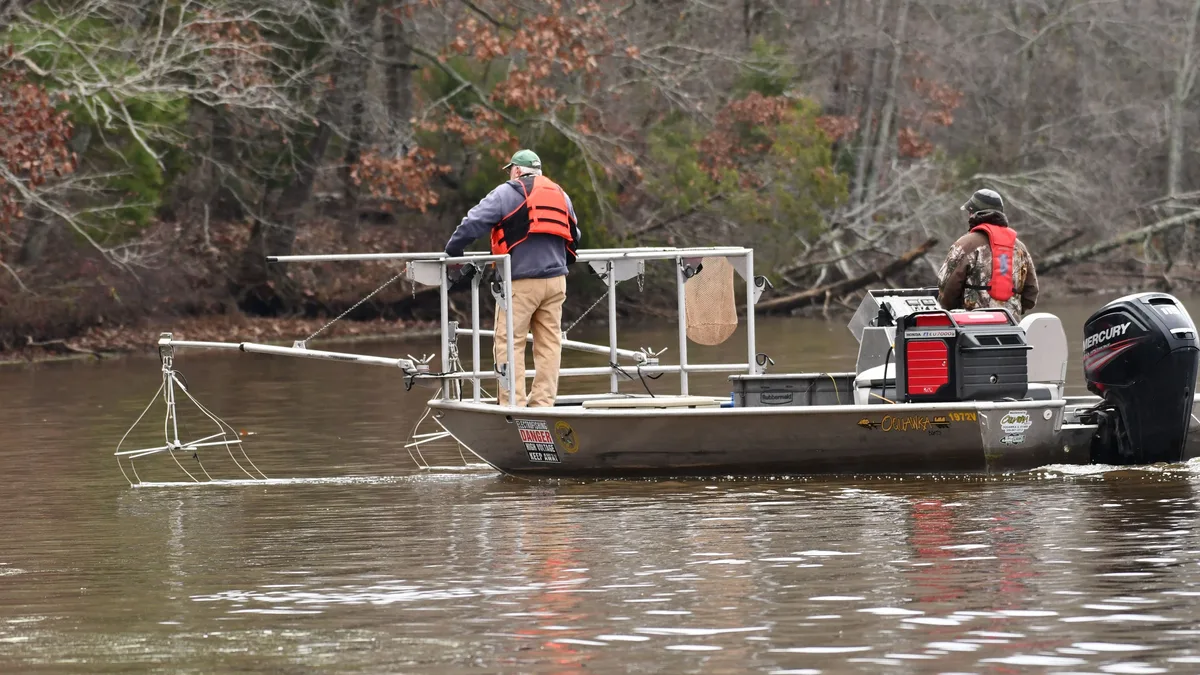
The team plans to travel to Tarawa, Kiribati on October 6, 2026, and depart by ship for Nikumaroro the following day. The voyage is expected to take about six days, after which several days of fieldwork are planned. Researchers will use underwater drones, sonar, and magnetometers to investigate the Taraia Object. They plan to use a magnetometer sonar to scan beneath the sea floor and conduct underwater excavation as needed to examine sediment-obscured material. Steve Schultz traveled ahead of the main group to Christmas Island to meet with the Ministry for Line and Phoenix Islands Development, aiming to establish discussions for long-term collaboration with Kiribati.
If the object is identified as the missing aircraft, the team plans to return in following years for further evaluation and a full-scale archaeological excavation. The long-term goal, if the wreck is recovered, could see the Electra returned to Purdue University in West Lafayette. The team emphasizes thorough research and precautions before any excavation begins.
Statements from team members
Richard Pettigrew described Nikumaroro Island as one of the most remote places on Earth. Steve Schultz is not flying with the main team from Los Angeles, as he is already in Kiribati for advance work. Marc Hagle reflected on the mission's gravity. He stated that while he has traveled the world, this expedition is different. There's an obligation here to the public and to history to do a good job, to do a thorough job and to do it properly. After the six-day boat trip, examinations of the mystery object and surrounding area will begin. If the site is deemed safe, divers may expose and identify part of the Taraia Object.