GE Aerospace buys supplier CPP for $11.75
GE Aerospace will acquire its castings supplier Consolidated Precision Products for $11.75 billion to secure engine component production.
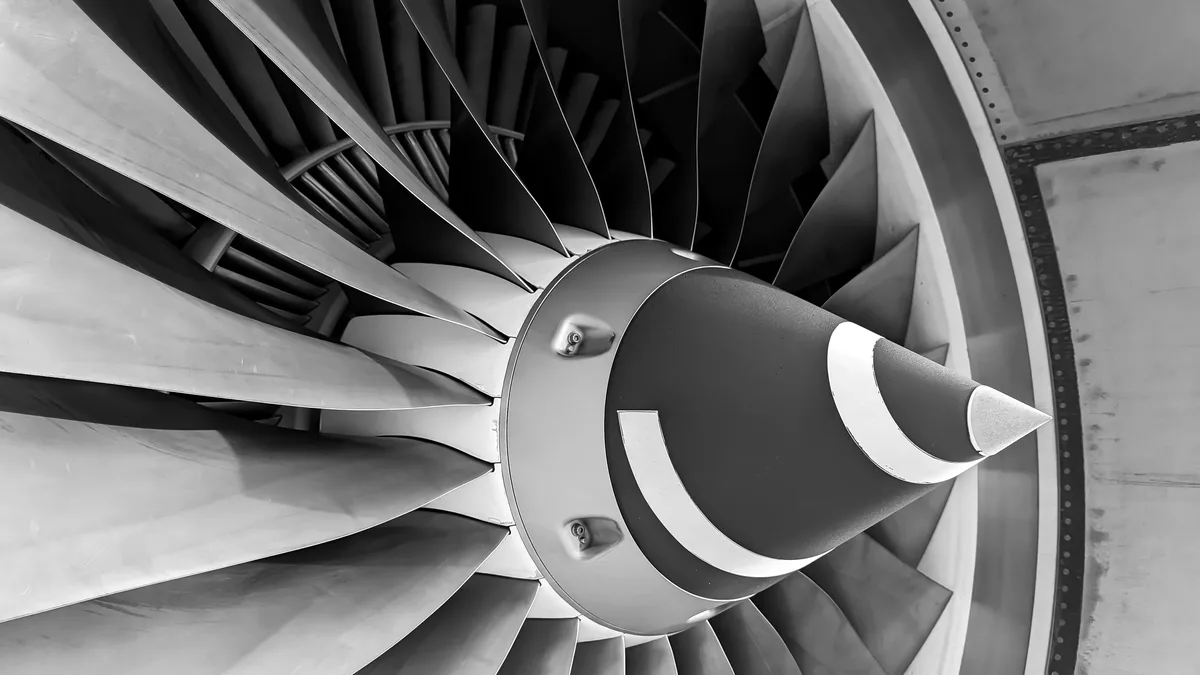
GE Aerospace has agreed to purchase Consolidated Precision Products (CPP) for $11.75 billion. The company announced the signed agreement on September 8, 2026.
GE Aerospace is buying CPP from private investment firms Warburg Pincus and Berkshire Partners. The transaction is expected to close in the second half of 2027, pending regulatory approvals. The purchase will be funded with $7 billion in cash and the remainder through new debt, with no change to the company's capital allocation plans.
CPP supplies critical engine castings
Founded in 1991 and based in Cleveland, Ohio, CPP specializes in investment and precision sand castings. It uses materials like superalloy, titanium, aluminum, magnesium, and steel for commercial and military aircraft, weapon systems, helicopters, missiles, and industrial gas turbines. The supplier employs roughly 6,600 people across more than 20 facilities and has been a GE Aerospace customer for over 15 years.
In an investor presentation, GE Aerospace noted CPP supplies castings for several key engine programs. The company also projected its own airfoil demand, measured in number of parts, would grow by more than 30% between 2026 and 2030 across commercial engines, aftermarket, and defense.
| Engine Program | Type |
|---|---|
| LEAP | Commercial |
| GEnx | Commercial |
| T700 | Military |
| F110 | Military |
| F404 | Military |
Casting and forging capacity has been a persistent bottleneck during the industry-wide production ramp. GE Aerospace had previously committed over $100 million to its external supplier base as part of a broader $1 billion U.S. Investment announced on March 9, 2026. Its joint venture partner Safran is separately spending $175 million on a large forging press that will not be operational until 2029.
Financial rationale and expected synergies
GE Aerospace values CPP at approximately 18 times its projected 2027 EBITDA, including expected net synergies of about $200 million. Without those synergies, the multiple would be roughly 26 times. Applied to the $11.75 billion purchase price, these multiples imply CPP's 2027 earnings before interest, taxes, depreciation, and amortization will be around $450 million before synergies. The investor presentation attributes approximately $2 billion of 2027 revenue to CPP.
The company stated it expects the acquisition to be accretive to adjusted earnings per share and free cash flow in the first year, excluding one-time costs and deal-related amortization. It also projects the deal will deliver a double-digit return on invested capital by the fifth year.
Warburg Pincus has owned CPP since 2011. Berkshire Partners entered through a recapitalization announced on June 14, 2019; the terms were not disclosed, leaving no public benchmark for the business's value prior to this deal.
A trend toward vertical integration
This move mirrors a similar strategy in Europe. On June 25, 2026, Airbus and Safran agreed to buy Tikehau Capital out of metals producer Aubert and Duval. That deal gave the two aerospace groups full control of a critical supplier.
Both acquisitions signal a broader shift toward vertical integration, particularly for metallurgical processes. Building new capacity in these areas takes years. Stringent qualification requirements also make such suppliers difficult to replace. GE Aerospace's purchase secures a vital link in its engine manufacturing chain.