Texas C-130 Wing Serves As Sole Tactical Airlift For Valiant
The 317th Airlift Wing from Texas was the only tactical airlift unit for the massive Valiant Shield 2026 Pacific war game, demonstrating long-range C-130J
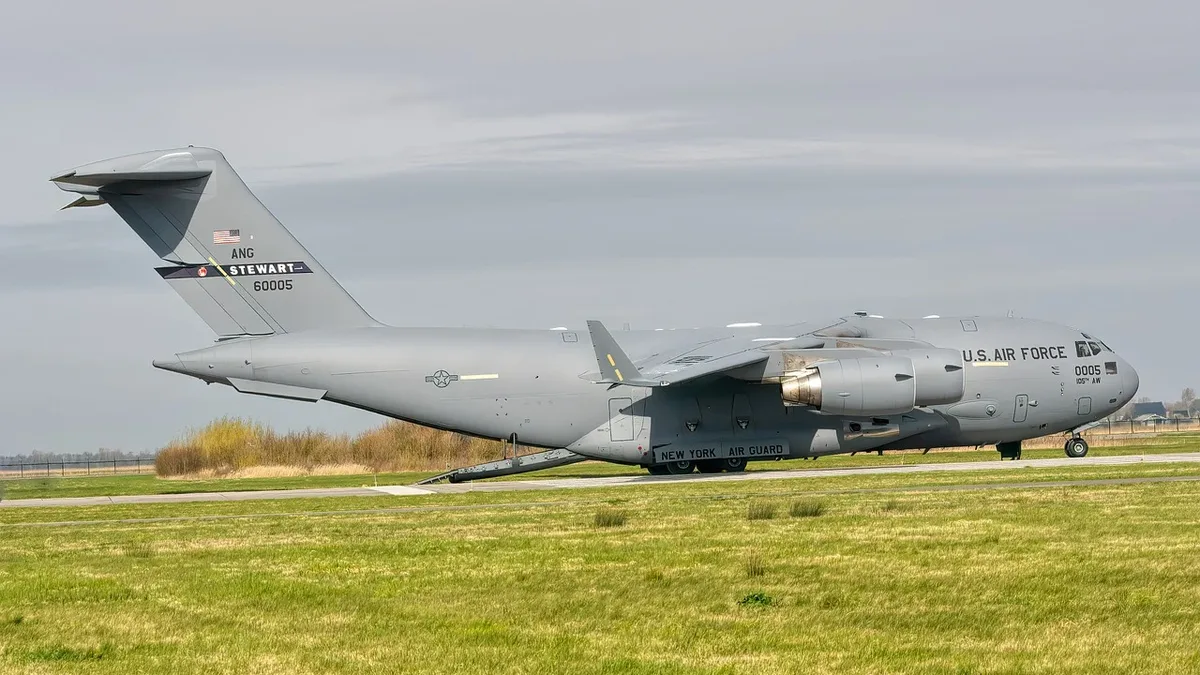
The US Air Force relied on a single Texas-based airlift wing for all tactical airlift during the Valiant Shield 2026 exercise in the Pacific. The 317th Airlift Wing, based at Dyess Air Force Base, served as the sole provider for the three-week war game from June 18 to July 4, despite not being part of the Pacific Air Forces command.
Lone Star Hercules Crews Excel At Island-Hopping Airlift
Valiant Shield tasked the wing with providing 'Rapid Global Mobility' for the entire joint force across locations from Guam to Japan and the Northern Mariana Islands. Operating from Dyess AFB, roughly 7,000 miles from Guam, the 317th's aircrews flew missions to austere airfields in Palau, Saipan, and Guam. The Airmen conducted combat offload training, simulated sea-rescue-kit airdrops over the Philippine Sea, and coordinated hub-and-spoke resupply runs.
Lieutenant Colonel Jesse Moulton, 317th Operations Support Squadron Commander, said the exercise provided unique training. “Valiant Shield gave our Airmen the chance to practice austere airfield operations in the second island chain, working directly with joint users and minimal ground support to get the mission done,” Moulton stated. The 40th Airlift Squadron, part of the wing, later received a Gallant Unit Citation for its role.
Forward Deploying To Build Skills For The Global Fleet
Pacific Air Forces has only one assigned airlift wing, the 374th at Yokota Air Base in Japan. Its 36th Airlift Squadron is identified as the only forward-based tactical airlift squadron in the entire Pacific. A single forward squadron cannot simultaneously sustain its standing mission and generate the sortie volume for a major conflict, which is why exercises like Valiant Shield deploy units like the 317th widely.
As of 2025, the US Air Force Hercules fleet comprised over 430 aircraft across active-duty, Air National Guard, and Air Force Reserve units. The source provided the following breakdown of the C-130 fleet by model and operator:
| Operator | C-130J Models | C-130H Models |
|---|---|---|
| Active-Duty Air Force | 102 | 0 |
| Air National Guard | 40 | 91 |
| Air Force Reserve | 12 | 13 |
The active Air Force has flown only J-models since 2017. However, only six of the Air National Guard's 17 C-130 wings had converted to the J-model as of 2025, with five more scheduled to begin conversion between 2026 and 2028.
The Technical Advantage Of The C-130 For ACE
The C-130J Super Hercules is purpose-built for the Pacific mission profile central to the Agile Combat Employment (ACE) doctrine. It can operate from runways as short as roughly 3,000 feet, including unimproved dirt or gravel strips. This short-field performance makes it more suitable for dispersed operations across small islands than larger aircraft like the Boeing C-17 Globemaster III or Lockheed C-5 Galaxy.
The Air Force Doctrine Note formalizes a hub-and-spoke model using enduring main bases and austere dispersing sites. The strategy relies on the C-130's versatility, which has even led to concepts like attaching floats for use as improvised seaplanes. However, the source notes a paradox: as the Indo-Pacific theater makes the aircraft more critical, aging airframes and production pauses have chipped away at the fleet's overall operational capacity.
The Tyranny Of Distance Faced Down By Hercules
The C-130 was originally built for theater operations in regions like Europe, with short flights between dense networks of bases. Its slower turboprop speed reduces the number of sorties it can execute over vast Pacific distances, effectively thinning fleet capacity. To counter this 'tyranny of distance,' the 317th Airlift Wing has refined its tactics.
The wing became the first unit in Air Mobility Command certified for underwing external fuel tanks on its C-130Js. This allows crews to carry extra fuel for long transits, though it subtracts from cargo or troop payload. The 317th actively trains by executing ultra-long-distance direct flights, bypassing traditional staging bases. It logged its 10th Maximum Endurance Operation into the Indo-Pacific earlier this year.
Colonel Justin Diehl, 317th AW Commander, emphasized integration after Exercise Palmetto Reach in January. “It is critically important for C-17 and C-130 units to be able to integrate and operate out in the Indo-Pacific,” Diehl said. By arriving with fuel surpluses in external tanks, the wing's C-130Js can act as fuel bladders on the ground, performing 'hot pit' refueling for ground vehicles, helicopters, or fighter jets.
Certifying For The Worst Case, Not only The Exercise
During Valiant Shield, the 317th qualified its entire crew force on 'flush procedures' for rapid exfiltration under threat. It also executed 'man down' operations, where a maintenance officer takes charge to simulate casualties in the chain of command. Captain Matthew Plank, Officer in Charge of the 317th Maintenance Squadron's Aircraft Maintenance Unit, framed these certifications as building the cross-functional trust needed for real-world taskings.