UK's F-35 Fleet Faces Cuts, Shifts to Drone-Carrier Strategy
The UK's plan for 138 F-35 jets is widely seen as dead, with a revised target of 75 by 2033. High costs and US reliability concerns are driving a Royal Navy pivot towards hybrid air wings using autonomous drones under Project Vanquish.
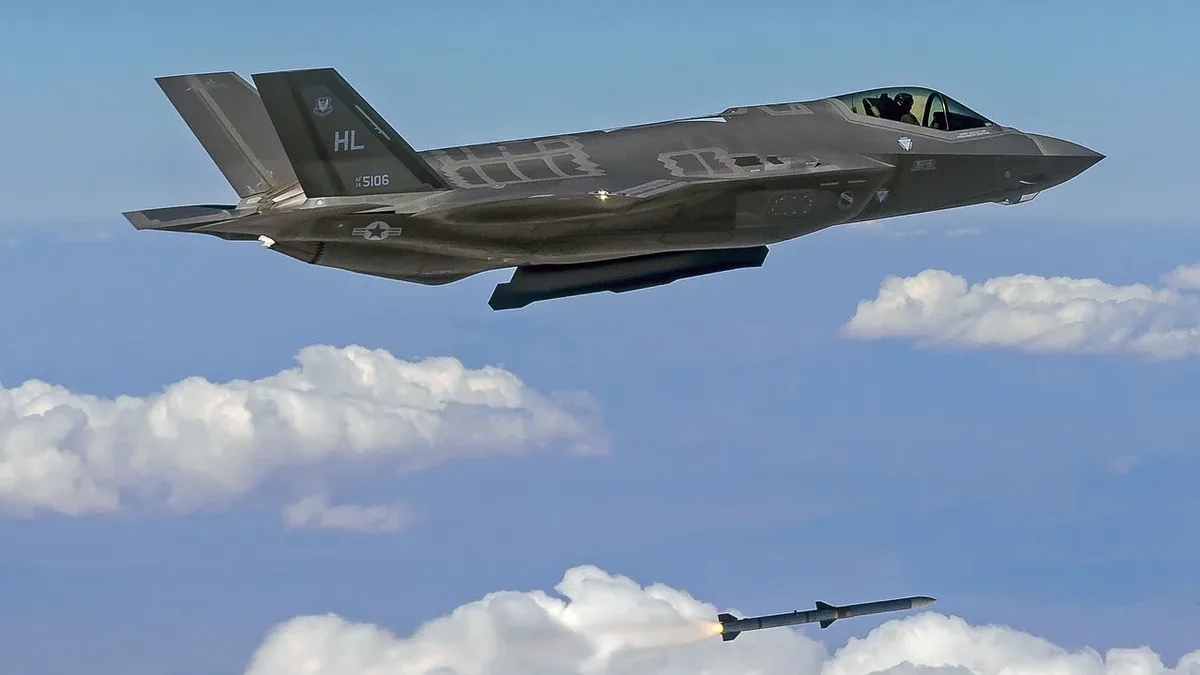
The United Kingdom's goal of operating 138 Lockheed Martin F-35 Lightning II stealth fighters is now widely viewed as dead. Current projections aim for just 75 aircraft by 2033, according to the UK Defence Journal.
That total includes a mix of 63 carrier-capable F-35B jump jets and 12 land-based F-35As. The original plan's lifetime cost has tripled to over £71 billion. While the UK has fulfilled its initial order for 48 F-35Bs, the enormous financial strain and political friction with the US are forcing a major strategic rethink.
Project Vanquish and the Hybrid Air Wing
The Royal Navy is moving away from relying solely on crewed fighters. It is increasing investment in a hybrid air wing that uses domestic drone technology to reduce reliance on the United States. Project Vanquish, established in 2026, aims to demonstrate jet-powered autonomous capability compatible with the Queen Elizabeth-class aircraft carriers.
This strategy seeks to employ drones for intelligence, surveillance, reconnaissance, strike, and air-to-air refueling. The program's philosophy is 'uncrewed where possible' and 'crewed where necessary' to achieve higher capability per dollar. The shift mirrors developments in the US, where the Navy is testing the Boeing MQ-25A Stingray refueling drone.
American Friction and Cost Concerns
Financial and political tensions with the US are key drivers of the UK's strategic pivot. The F-35B is the most expensive variant in the Joint Strike Fighter family. While the F-35A can cost $80 to $90 million, the jump jet model nearly doubles that with a price tag of around $120 to $130 million. Its complex engine systems also demand greater maintenance costs.
Political concerns add another layer. The US holds close to unilateral control over the software for the global F-35 fleet, a controversial arrangement viewed by some as a potential 'kill switch'. Jane's notes that the US has previously threatened to block F-35 deployments to the UK over decisions regarding Chinese 5G technology. This highlights how the platform can be used as political leverage.
| Variant | Primary User | Approximate Flyaway Cost | Key Feature |
|---|---|---|---|
| F-35A | Royal Air Force | $80-90 million | Land-based, dual-capable for nuclear bombs |
| F-35B | Royal Navy | $120-130 million | Short Take-Off/Vertical Landing (STOVL) |
In a move confirming a desire for less American reliance, the UK recently announced its Royal Navy would initiate a new European Joint Naval Force with nine other countries, excluding the US.
The Future Fleet and Capability Bridge
The 12 F-35As on order were selected over more Eurofighter Typhoons because they are stealth platforms and are certified to carry US B61-12 nuclear gravity bombs. This allows the RAF to resume an airborne nuclear role. The F-35A is also approximately 25% cheaper to operate than the F-35B and has a greater combat radius and payload.
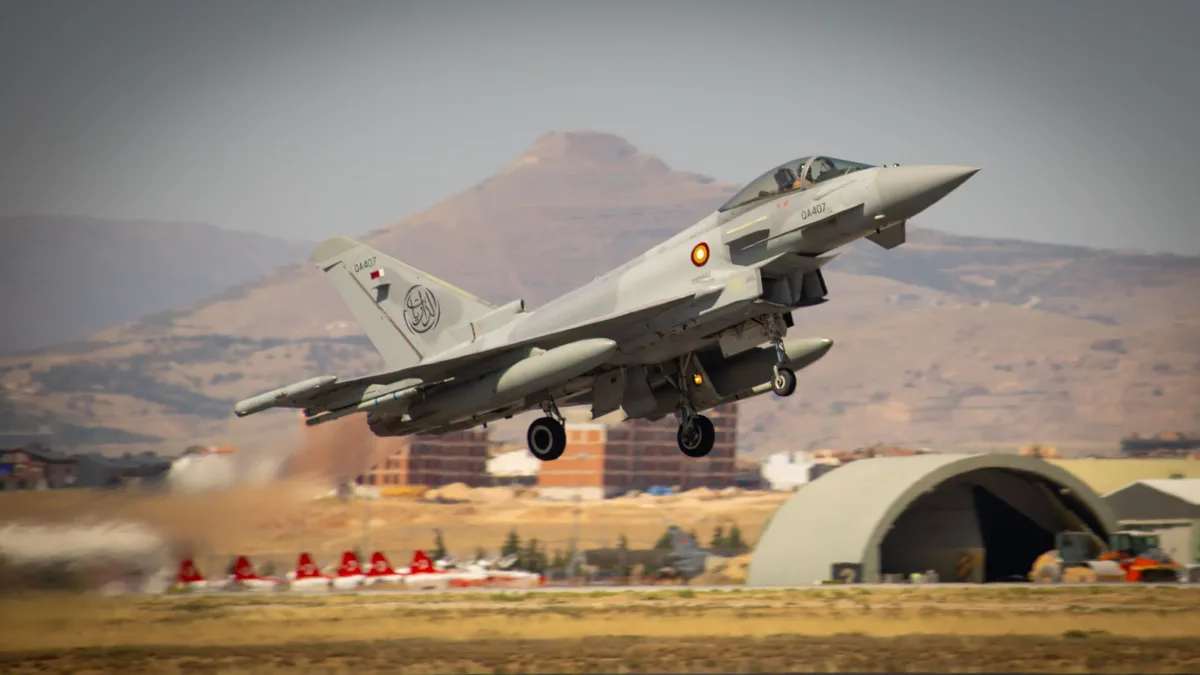
With the BAE Systems assembly line for the Eurofighter Typhoon officially shut down, a recent £650 million commitment to upgrade the fleet to a 4.5-generation standard appears to be creating a bridge. Extending the life of the existing Typhoon fleet could avoid a capability gap until the sixth-generation Global Combat Air Program (GCAP) with Italy and Japan delivers a new sovereign fighter.
Proving Carrier Capability
Despite the procurement challenges, the Royal Navy has proven it can operate its carriers effectively. In 2025, HMS Prince of Wales led its first global deployment, traveling 33,000 miles to the Indo-Pacific. The mission culminated in the NATO exercise Falcon Strike in the Mediterranean, where a record 24 UK F-35Bs were assembled on deck.
This was the first deployment where the carrier conducted all operations solely using Royal Navy aircraft without augmentation from United States Marine Corps jets. During Falcon Strike, pilots from squadrons 809 and 617 executed complex missions ranging from air interceptions to suppression of enemy air defenses. The eight-month deployment demonstrated the UK could sustain high-end fifth-generation operations independently, declaring full operating capability for its carrier strike group.