Data Comm Rollout
| System type | Air Traffic Management (ATM) data communications system |
|---|---|
| Original use | To provide a digital data link between pilots and air traffic controllers, replacing voice for routine communications |
| First created | Late 1990s / early 2000s (concept and initial deployment) |
| Primary technology | Controller–Pilot Data Link Communications (CPDLC) |
| Key components | Ground-based system, aircraft avionics (FANS, ATN), datalink service providers |
| Operational scope | Primarily oceanic and remote airspace, expanding to continental |
Origin and history
Data Comm Rollout originates from initiatives led by the United States Federal Aviation Administration (FAA) in collaboration with international aviation bodies. Its development began in earnest in the late 1990s and early 2000s, driven by the need to modernize aging voice-centric air traffic control systems. The foundational work was heavily influenced by standards developed by the International Civil Aviation Organization (ICAO) to ensure global interoperability. Key technological precursors include the FAA's National Airspace System (NAS) modernization plan and the integration of digital data link technologies like VHF Data Link (VDL) Mode 2. The program's history is marked by a series of incremental deployments, starting with initial en route applications before expanding to terminal areas. Its evolution reflects a decades-long, multinational effort to shift from analog voice communications to a digital data-centric framework for air-ground communications.
What it is for
Data Comm Rollout exists to provide a digital text-based communication channel between air traffic controllers and flight crews, supplementing and eventually replacing selected voice communications. Its primary purpose is to increase the clarity, efficiency, and capacity of the air traffic management system by reducing voice channel congestion. The system is designed to transmit clear, unambiguous instructions and clearances, such as departure clearances, altitude assignments, and route changes, directly to the aircraft's flight management system. This reduces readback and hearing errors inherent in voice communications, thereby enhancing safety. It also facilitates more complex and efficient air traffic management procedures, such as optimized profile descents, which contribute to fuel savings and reduced emissions. Ultimately, it serves as a critical foundational technology for modernizing the air traffic control infrastructure to handle future growth in air traffic.
Overview
Data Comm Rollout is a large-scale, ongoing implementation of data link communication services across the National Airspace System and in compatible regions globally. The system utilizes ground-based networks and avionics upgrades to enable digital text message exchange between controllers and pilots via protocols like the Future Air Navigation System (FANS) or ATN/VDL. It operates in both en route airspace and terminal areas, with specific applications like Pre-Departure Clearances (PDC) and Digital ATIS being common entry points. The rollout is not a single switch-on event but a phased deployment requiring coordinated upgrades to ground systems, aircraft avionics, and operational procedures. It integrates with existing ATC systems and is a cornerstone of broader modernization efforts like the FAA's NextGen program. The system's architecture is built to be scalable and secure, ensuring reliable delivery of critical ATC instructions.
What to know
Aircraft must be equipped with specific avionics, typically a FANS 1/A or equivalent capability with a compatible data link management unit and cockpit display, to utilize Data Comm services. Controllers use specialized interfaces to create and send data link messages, which appear on the aircraft's cockpit display and require pilot acknowledgment and compliance. The system is currently used for non-time-critical communications, with voice remaining the primary method for immediate instructions like traffic advisories or conflict resolution. Implementation varies significantly by region and facility, with the United States and Europe having extensive but not yet complete coverage. Pilots and controllers undergo specific training to understand the protocols, message formats, and backup procedures when data link is unavailable. Understanding the concept of "clearance void times" and "conditional clearances" within the data link context is also crucial for safe operations.
Common questions
A common question is whether Data Comm eliminates the need for voice communication entirely, which it does not; voice remains essential for tactical control and as a mandatory backup. Users often ask about the cost and process for aircraft operators to retrofit their fleets with the necessary avionics, which involves significant investment and certification efforts. Another frequent inquiry concerns the system's reliability and cybersecurity measures, given its critical safety role, which involves robust network redundancy and stringent protection protocols. Many wonder about the tangible benefits, with documented outcomes including reduced communication errors, increased airspace capacity, and minor fuel savings from more efficient clearances. Questions also arise about international interoperability, particularly for flights between regions with different data link implementation levels, which is managed through standardized ICAO protocols. Pilots commonly ask about the specific procedures for acknowledging, complying with, and amending data link clearances compared to voice instructions.
Pros and cons
A significant pro is the reduction in communication errors and misunderstandings, as digital text eliminates accents, static, and readback/hearback issues inherent in voice. The system also increases airspace capacity by allowing controllers to handle more aircraft simultaneously, as data link communications are asynchronous and less taxing than constant voice exchanges. From an operational perspective, it enables more precise and complex clearances that can be loaded directly into the flight management computer, promoting fuel efficiency. A primary con is the high upfront cost and complexity of equipping both ground infrastructure and aircraft fleets, which can slow adoption and create disparities between equipped and unequipped aircraft. A common mistake is over-reliance on the system by controllers or pilots, leading to missed messages or a failure to revert promptly to voice when the data link fails or is unsuitable for a time-critical situation. Some operators regret the investment when operating primarily in regions with limited or inconsistent Data Comm service, as the benefits are only fully realized in high-density, fully implemented airspace.
Who it suits
Data Comm Rollout suits air navigation service providers and regulators in high-density airspace regions, such as the United States and Europe, where increasing capacity and reducing communication errors are urgent priorities. It is highly advantageous for large commercial airline fleets and cargo operators that fly frequently in these modernized airspaces, as they can amortize the avionics investment over many flights and achieve meaningful fuel savings. Business aviation operators flying complex, high-altitude routes in equipped regions may also benefit, though the cost-benefit analysis is more acute for smaller fleets. The system is less suited to general aviation or operators whose routes are primarily in regions with minimal data link infrastructure, as the costs outweigh the operational benefits. It also suits modernized ATC facilities with the resources to train controllers and maintain the sophisticated ground-based network and integration systems required for reliable service.
Latest Data Comm Rollout news
Latest reporting
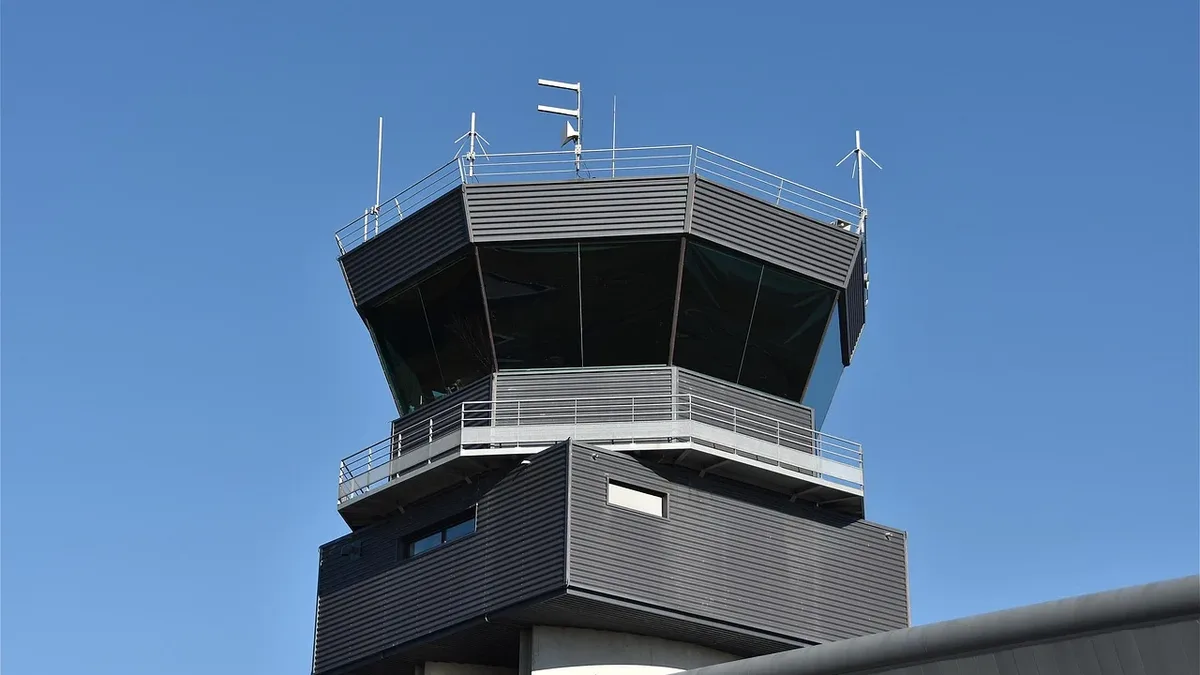
FAA Rolls Out SMART AI System Without ATC Union Input
The FAA and DOT have begun a limited rollout of the SMART AI system for air traffic management, but the controllers' union NATCA says it was excluded...

Airlink E-Jets' 50-Foot Cape Town Stadium
Two Airlink Embraer E-Jets performed a low-level flyover over Cape Town's DHL Stadium on Saturday, with data suggesting one came within 50 feet of the

Delta-United Duopoly Emerges in US Aviation
An analysis of airline data suggests the US market is consolidating into a top tier dominated by Delta and United, with other carriers structurally

Builds $40M Facility to Ease ATC Staffing
The FAA has begun construction on a new manufacturing plant in Maryland to produce digital voice switch systems aimed at addressing the agency’s...