Traffic Management Initiatives Explained
| System type | Air Traffic Management (ATM) system |
|---|---|
| Primary purpose | To manage air traffic demand and capacity in real time |
| Operational scope | Primarily within the United States National Airspace System (NAS) |
| Administrating agency | Federal Aviation Administration (FAA) |
| Key function categories | Ground delay programs, miles-in-trail restrictions, reroutes |
| Primary users | Air traffic controllers, airline operations centers |
| Activation trigger | Imbalance between forecasted demand and available capacity |
Origin and history
Traffic Management Initiatives Explained originates from the United States air traffic control system, developed in the latter half of the 20th century. The formal conceptual framework and terminology for these initiatives were solidified by the Federal Aviation Administration (FAA) in the 1990s as airspace congestion became a critical issue. This development was a direct response to the increasing volume of air traffic and the limitations of existing airspace and airport infrastructure. The principles were later adopted and adapted by aviation authorities worldwide, including Eurocontrol in Europe, to manage continental and regional air traffic flows. The system evolved from simple tactical delays into a sophisticated set of strategic and tactical tools supported by computer modeling and collaborative decision-making. Its history is intertwined with the advancement of air traffic management technology and the continuous pursuit of balancing efficiency with safety.
What it is for
Traffic Management Initiatives Explained serves the primary purpose of managing the flow of air traffic to prevent sector overload and airport congestion, thereby maintaining safety and order within the National Airspace System. It is a framework for implementing specific regulatory and control actions when projected demand exceeds the available capacity of a resource, such as an airport runway or a block of airspace. These initiatives are designed to mitigate the risks associated with excessive controller workload and to reduce the potential for airborne holding, which is both inefficient and increases fuel burn and emissions. By strategically regulating the flow, the system aims to distribute delays in a more manageable, predictable, and equitable manner among airspace users. Ultimately, it provides a structured methodology for Air Navigation Service Providers to intervene before imbalances between demand and capacity lead to safety degradation or widespread disruption.
Overview
Traffic Management Initiatives Explained encompasses a standardized set of procedures and tools used by air traffic management to control the rate, routing, and timing of aircraft. The initiatives are broadly categorized into Ground Delay Programs (GDPs), which hold aircraft at their departure airport; Airspace Flow Programs (AFPs), which manage flow through specific constrained airspace volumes; and Ground Stops (GS), which are immediate, temporary halts to departures bound for a particular airport. Other common tools include Miles-in-Trail restrictions, which impose minimum spacing between aircraft, and Required Navigation Performance (RNP) routes that leverage advanced aircraft capabilities to create efficient paths through congested areas. The execution of these initiatives relies on a collaborative process involving the Air Traffic Control System Command Center, airline operations centers, and airport authorities. Real-time data on weather, traffic volume, and controller staffing feeds into complex algorithms to model and implement the most effective strategy.
What to know
A fundamental concept to understand is that Traffic Management Initiatives Explained are capacity-driven, not demand-driven; they are reactions to a reduction in available capacity, often due to weather, equipment outages, or runway closures, not merely to high traffic volume. The implementation is hierarchical, often starting with less restrictive measures like increased spacing and escalating to more impactful programs like ground delays if the constraint persists. Pilots and dispatchers receive notifications of active initiatives through official advisories and must adjust flight plans, fuel loads, and schedules accordingly, which has significant operational and economic repercussions. These initiatives create a ripple effect through the entire network, where a delay at a major hub can impact flights across a continent, making system-wide coordination essential. Understanding the difference between strategic initiatives, planned hours in advance, and tactical initiatives, enacted for immediate needs, is crucial for comprehending their impact. Knowledge of the Collaborative Decision Making process is also key, as it allows airlines to influence, to a degree, how delays are distributed among their flights.
Common questions
A common question is why flights are held on the ground when the weather at the destination appears clear, which often occurs because the constraint is upstream in the airspace or at an alternate airport, or because the rate of arrivals must be reduced to match a lowered capacity due to earlier weather. People frequently ask who decides when a Traffic Management Initiative is needed, which is the responsibility of the central traffic management unit, such as the FAA's Command Center, in consultation with local air traffic control facilities and industry stakeholders. Many wonder if these initiatives are avoidable, and while improved technology and procedures have reduced their frequency, they remain a necessary tool for managing unpredictable events like sudden severe weather or unplanned outages. A recurring question is about the cost, and while specific figures are complex, the aggregate economic impact of delays attributable to these initiatives runs into billions of dollars annually across the industry. People also ask how passengers are informed, which is through airline communications, as the ATC system communicates directly with flight crews and airline operations, not individual passengers. Lastly, a frequent inquiry is about fairness, and while the system aims for equity, it inherently disadvantages flights with longer routes or fewer rerouting options compared to others.
Pros and cons
A primary advantage of Traffic Management Initiatives Explained is the enhancement of safety by proactively preventing air traffic controller overload and maintaining manageable traffic densities in complex airspace. The system introduces predictability into a chaotic situation, allowing airlines to plan for delays, reposition crews, and manage passenger connections more effectively than with uncontrolled airborne holding. From an environmental perspective, holding aircraft on the ground consumes less fuel than holding in the air, reducing both costs and emissions. A significant drawback is that the economic costs, while distributed, are substantial, impacting airline profitability, crew scheduling, and passenger goodwill, often leading to frustration when the root cause of a delay is not visible to the traveler. A common mistake or point of regret is the occasional over-issuance of restrictions based on overly conservative forecasts, leading to unnecessary delays when predicted constraints do not materialize as severely as expected. Furthermore, the complexity of the system can sometimes lead to unintended consequences, such as shifting congestion to a different sector or airport, merely moving the problem rather than solving it.
Who it suits
This system suits large, centralized air navigation service providers managing high-density, complex airspace where traffic flows are interdependent and disruptions have network-wide consequences, such as those in North America and Europe. It is particularly suited to operational environments where capacity is frequently challenged by volatile weather patterns, high traffic volumes, and mixed fleet capabilities, necessitating a structured, top-down approach to flow control. The framework suits major commercial airlines with dedicated operations control centers capable of engaging in the Collaborative Decision Making process, as they can optimize their schedules within the constraints. It is less suited to regions with low traffic density or primarily general aviation, where tactical, local control is sufficient and the overhead of formal traffic management initiatives is unnecessary. The system also suits stakeholders who prioritize systemic safety and orderly flow over absolute operational flexibility for individual operators. Ultimately, it is a necessary tool for any large-scale, mature aviation system where the alternative to managed flow is uncontrolled congestion and elevated safety risk.
Latest Traffic Management Initiatives Explained news
Latest reporting
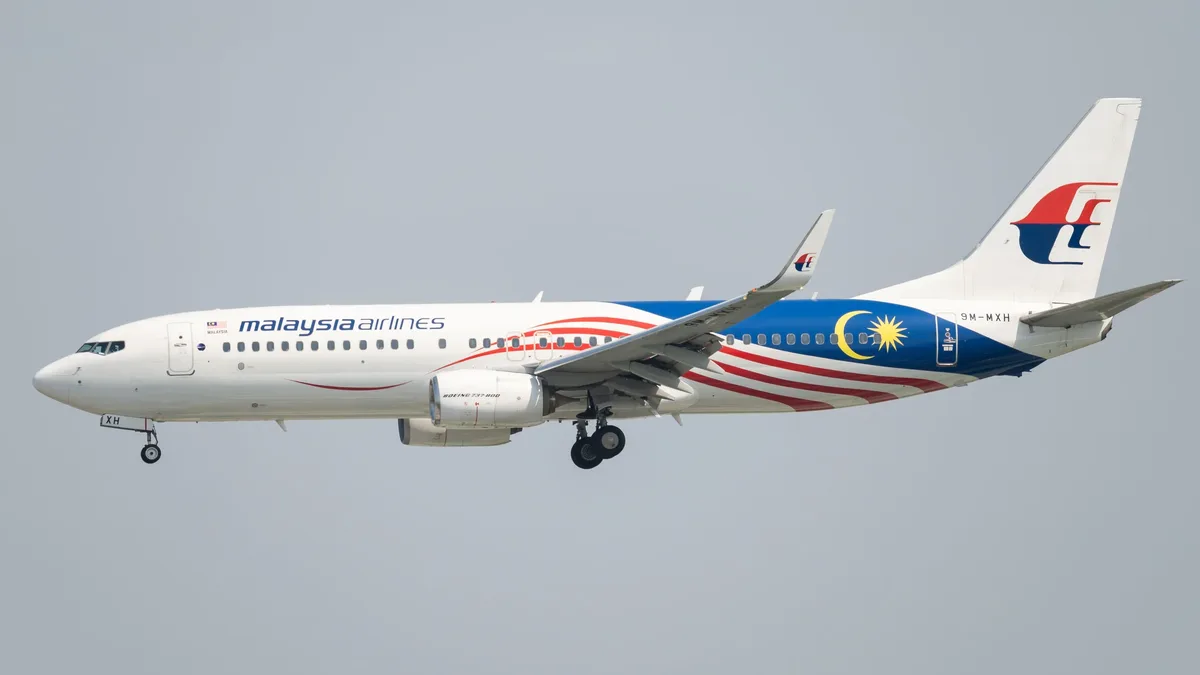
FAA Reviews Boeing 737 MAX Software Issue After Airlines
The FAA is reviewing a flight management computer software glitch on some Boeing 737 MAX jets, convening a safety board.

Boeing 737 Max software glitch VNAV
The FAA is investigating a software glitch in the Boeing 737 Max's flight management computer that could incorrectly disengage the vertical navigation
FAA Rolls Out SMART AI System Without ATC Union Input
The FAA and DOT have begun a limited rollout of the SMART AI system for air traffic management, but the controllers' union NATCA says it was excluded...

FAA To Deploy AI Air Traffic Tool SMART From Monday
The FAA will begin implementing its new AI-based SMART system as a decision-support tool for air traffic management starting Monday, with a full...
UK Air Traffic Control Failure Grounds Heathrow, Gatwick
A technical failure in National Air Traffic Services' flight processing system caused major disruption across UK airports, leading to widespread...

FAA Partners with AT&T for Air Traffic Network Overhaul
The Federal Aviation Administration (FAA) has awarded AT&T an initial $74.3 million contract to support the overhaul of the US air traffic control...