Trajectory Based Operations
| Original use | Air traffic management and airspace capacity optimization |
|---|---|
| First created | Concept developed in the 2000s |
| Core principle | Aircraft fly agreed 4D trajectories (latitude, longitude, altitude, time) |
| Key enabler | Advanced automation and data exchange between ground systems and aircraft |
| Operational status | In development and partial implementation (e.g., in Europe) |
| Primary benefit | Increased predictability and efficiency of air traffic flows |
| Dependent on | High-integrity surveillance and datalink communications |
Origin and history
Trajectory Based Operations (TBO) is a concept for modernizing air traffic management that originated from collaborative research and development efforts in the United States and Europe. Its foundational principles were developed in the late 1990s and early 2000s as a response to the limitations of existing radar-based control systems. Key early work was conducted by the Federal Aviation Administration (FAA) in the U.S. and Eurocontrol in Europe, alongside major aerospace manufacturers. The concept was formally articulated as part of the International Civil Aviation Organization's (ICAO) Global Air Traffic Management Operational Concept in the 2000s. It represents a core component of next-generation aviation systems like the FAA's NextGen and Europe's Single European Sky ATM Research (SESAR) program. The development of TBO has been a multi-decade, international endeavor driven by the need for greater efficiency and capacity in increasingly congested airspace.
What it is for
Trajectory Based Operations exists to increase the predictability, efficiency, and capacity of the global air traffic system. Its primary purpose is to move from tactical, reactive control of aircraft to strategic, trajectory-based management. This shift allows air navigation service providers to manage airspace and traffic flows with much greater precision and foresight. By doing so, it aims to reduce flight delays, optimize airspace utilization, and decrease fuel consumption and environmental impact. The system is designed to facilitate more direct routing and optimal flight profiles, which directly translates to economic benefits for airlines and reduced controller workload. Ultimately, TBO serves as the foundational operational paradigm required to safely accommodate forecasted growth in global air traffic.
Overview
Trajectory Based Operations is an air traffic management paradigm where a flight's four-dimensional trajectory (latitude, longitude, altitude, and time) becomes the single shared reference for planning and execution. This trajectory, negotiated and agreed upon between the airline and air traffic management before departure, is known as the Business Trajectory or Reference Business Trajectory. During the flight, automation systems continuously monitor the aircraft's adherence to this planned trajectory, predicting conflicts well in advance. Controllers then manage traffic by issuing strategic interventions to trajectories, rather than issuing tactical vectors to resolve immediate conflicts. The entire system relies on precise surveillance data, such as from Automatic Dependent Surveillance–Broadcast (ADS-B), and robust data communication links between ground systems and aircraft. Successful implementation requires high levels of automation support for both controllers and pilots, as well as globally harmonized procedures and data standards.
What to know
A core principle to understand is that TBO depends on the concept of trajectory predictability and the management of any deviations from the agreed plan. The transition to TBO is not a single technological upgrade but a fundamental change in operational philosophy, requiring new procedures, training, and technology. Key enabling technologies include System Wide Information Management (SWIM) for data sharing, advanced controller automation tools for conflict detection and resolution, and aircraft equipped for precise navigation and data link communication. It is crucial to know that TBO implementation is occurring incrementally, with specific capabilities like Time-Based Flow Management and Extended Projected Profile already in use. The full realization of TBO requires global interoperability, meaning aircraft flying between different regions must comply with consistent standards. Understanding TBO also involves recognizing its deep integration with airline flight planning and operations centers, creating a more collaborative network-centric environment.
Common questions
A common question is whether Trajectory Based Operations removes the air traffic controller from the loop, to which the answer is no; the controller remains ultimately responsible for safety but is supported by more predictive tools. People often ask how TBO handles unexpected weather or emergencies, which is managed through a formal process of trajectory negotiation and revision, allowing for dynamic re-routing while maintaining system stability. Many wonder if all aircraft need to be equipped the same way, and while equippage is a major challenge, TBO concepts allow for mixed operations where advanced aircraft gain more benefits. A frequent question concerns data security and integrity, as the system's reliance on digital data links and shared information requires robust cybersecurity measures. Users also ask about the cost of implementation, which is substantial for both air navigation service providers and airlines, driven by the need for new ground systems, aircraft avionics, and training. Finally, there is the question of when TBO will be fully operational, which is a long-term transition expected to continue for decades, with different regions progressing at different paces.
Pros and cons
A significant pro of TBO is its potential to dramatically improve airspace capacity and flight efficiency by enabling more precise, predictable traffic flows. This leads to substantial fuel savings and reduced emissions, offering both economic and environmental benefits. The system also reduces controller workload for routine monitoring and conflict resolution, allowing them to focus on strategic management and exceptions. However, a major con is the extraordinarily high cost and complexity of implementation, requiring synchronized investment from regulators, service providers, and airlines globally. The system creates a heavy dependence on automation and digital data links, raising concerns about system resilience and vulnerability to cyber threats or widespread technical failures. A common mistake in planning is underestimating the human factors and training required for controllers and pilots to transition from tactical to strategic mindsets, which can lead to initial resistance and operational errors. Some airlines, particularly those with older fleets or operating in regions with slow modernization, may regret the choice as they face high retrofitting costs for limited initial benefit.
Who it suits
Trajectory Based Operations ideally suits major air navigation service providers managing high-density, complex airspace where capacity constraints are a critical issue. It is highly suited to modern airline fleets equipped with the necessary avionics for precision navigation and data communication, particularly those operating long-haul international routes across multiple regions. The paradigm suits a collaborative operational culture where airlines, flow managers, and controllers are willing to share data and negotiate for optimal network outcomes. It is less suited to regions with low traffic density or limited technological infrastructure, where the cost-benefit ratio is unfavorable. The system suits future operational environments where unmanned aircraft systems and advanced air mobility vehicles need to be integrated into a highly structured airspace. Ultimately, TBO suits a global aviation industry that is prepared to make long-term, coordinated investments for systemic efficiency gains, rather than seeking immediate, localized solutions.
Latest Trajectory Based Operations news
Latest reporting
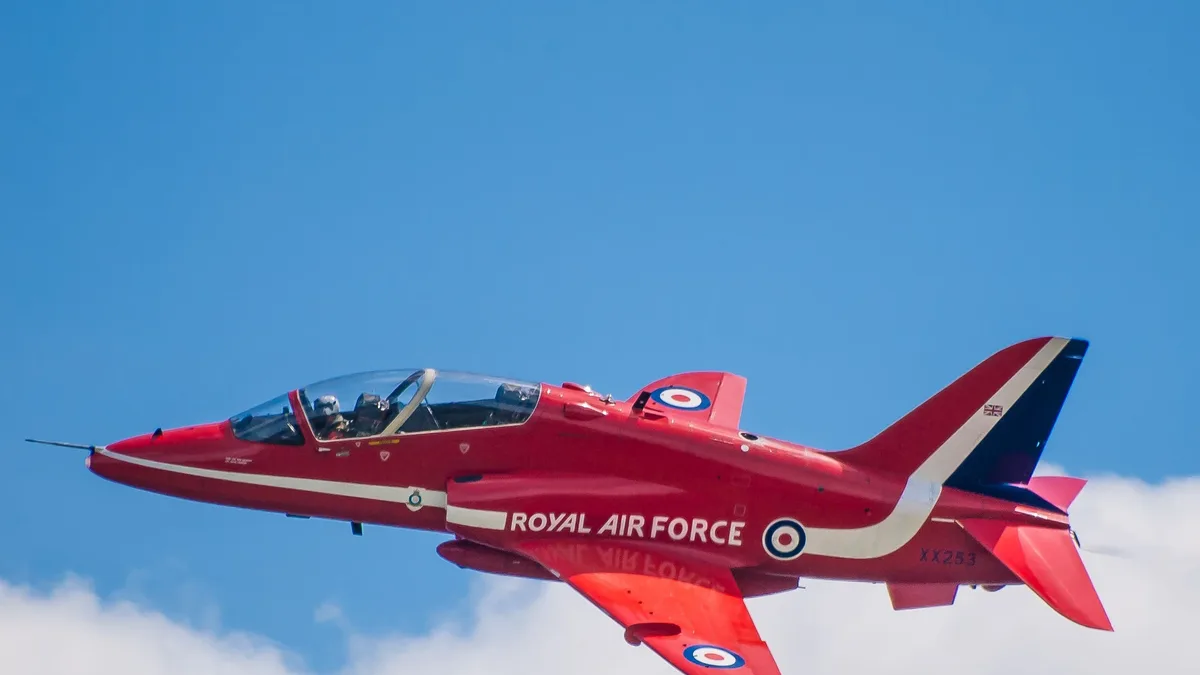
UK Royal Air Force forms first space effects
The UK has established No. III Space Effects Squadron, its first dedicated unit for offensive and defensive space operations, to disrupt and deny...
FAA To Deploy AI Air Traffic Tool SMART From Monday
The FAA will begin implementing its new AI-based SMART system as a decision-support tool for air traffic management starting Monday, with a full...
BermudAir Leases Embraer E190F for Cargo Expansion
BermudAir has leased an Embraer E190F freighter, marking its entry into dedicated cargo operations and the first deployment of this aircraft type in...

House Report Urges Long-Term Brain Health Study for Navy
A U.S. House oversight report calls for a multi-year study into potential brain injuries in Navy pilots from carrier operations, citing concerns over
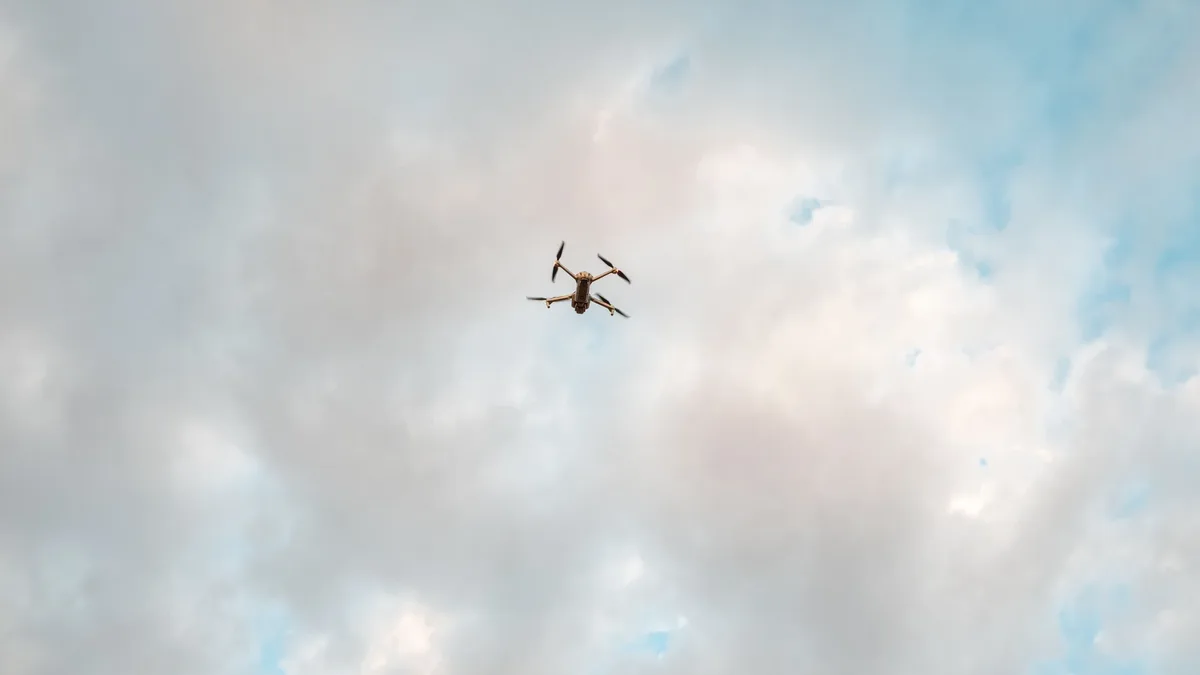
Drone and Balloon Ground 400+ San Diego Flights
A drone and a stratospheric test balloon disrupted operations at San Diego International Airport, causing a ground stop and delaying over 400 flights.

Avolon and Akasa Air Finalize Sale-Leaseback Deal for Seven Boeing 737-8200 Aircraft
Avolon and Akasa Air have agreed on a sale-leaseback transaction for seven Boeing 737-8200 aircraft, allowing the Indian carrier to optimize its...