Public Aircraft Uas Operations
| Operator type | Government entity |
|---|---|
| Original use | Public service missions |
| Regulatory basis | Statutory definition (49 U.S.C. § 40102) |
| Primary mission categories | Law enforcement, firefighting, search and rescue, disaster response, national defense |
| Operational authority | Authorized by the public agency's jurisdiction |
| Crew requirement | Certified pilot and visual observer (typical) |
| Airspace access | Often authorized in controlled airspace for specific missions |
| Safety oversight | Internal agency procedures and potential FAA coordination |
Origin and history
The concept of Public Aircraft UAS Operations is rooted in the legal and regulatory framework of the United States. Its origins are tied to the long-standing statutory definition of a "public aircraft" in U.S. law, which predates modern unmanned systems by decades. This legal category was traditionally applied to manned aircraft operated by federal or state governments. The adaptation of this framework to unmanned aircraft systems began in earnest in the early 21st century, as government agencies sought to use UAS technology for public missions. The Federal Aviation Administration, in conjunction with other federal entities, began formalizing interpretations and procedures for these operations in the 2000s and 2010s. This process involved distinguishing these government-operated flights from civil UAS operations, which are governed by different rules under Title 14 of the Code of Federal Regulations.
What it is for
Public Aircraft UAS Operations are conducted to fulfill specific governmental functions that serve a public purpose. These operations are primarily for law enforcement activities, such as crime scene documentation, traffic accident reconstruction, and search and rescue missions. They are used for critical infrastructure inspection, including monitoring power lines, pipelines, and bridges, which supports maintenance and disaster response. Environmental agencies employ them for scientific data collection, wildlife surveys, and tracking environmental changes like erosion or pollution. Fire departments utilize UAS for wildfire mapping, hotspot identification, and situational awareness during major incidents. They also serve national security and border protection missions, providing surveillance capabilities without risking pilot lives. These operations are fundamentally task-oriented, designed to enhance the efficiency, safety, and effectiveness of traditional government services.
Pros and cons
A primary advantage is operational flexibility, as these flights can often be conducted under more tailored authority than strictly regulated civil flights, potentially enabling faster response in emergencies. They allow government agencies to perform high-risk or dull missions, such as inspecting a storm-damaged cell tower or monitoring a vast forest, without endangering pilots in manned aircraft. A significant con is the creation of a complex regulatory interface between public and civil airspace, which can lead to confusion and coordination challenges with air traffic control. Agencies sometimes regret undertaking these operations without sufficient in-house expertise, leading to incidents that draw regulatory scrutiny and undermine program legitimacy. A common mistake is underestimating the sustained resource commitment required for training, maintenance, and compliance with evolving agency-specific Certificates of Waiver or Authorization. Furthermore, the lack of uniform national standards for pilot certification and equipment across all public agencies can lead to inconsistencies in operational safety and professionalism.
Who it suits
This operational category suits established government entities with a clear statutory mandate, such as federal agencies like the Department of the Interior or the Department of Homeland Security. It is appropriate for state and local law enforcement agencies that have integrated UAS as a tool for specific, legally-defined public safety missions. It suits fire departments and emergency management organizations that require rapid aerial assessment capabilities during disasters where traditional aviation assets may be unavailable or too risky. Public universities and research institutions engaged in non-commercial, government-funded scientific work may also operate under this status. It suits agencies that have the institutional capacity to manage a robust safety management system and navigate the administrative process of obtaining necessary legal determinations from the FAA. It is less suited to small, budget-constrained municipal departments without dedicated aviation offices or those seeking to perform tasks that could be construed as commercial in nature, which would necessitate operating under civil rules.
Latest Public Aircraft Uas Operations news
Latest reporting
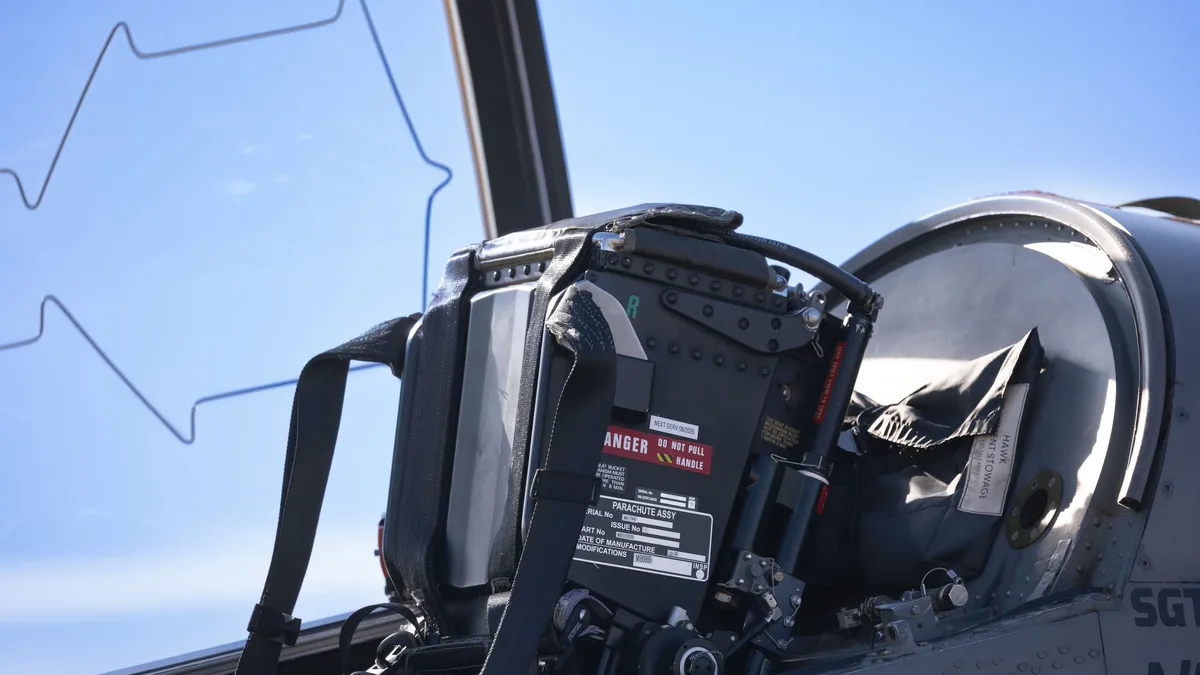
FAA Proposes Relaxing Oxygen Mask Rules for Pilots
The FAA has proposed easing oxygen mask requirements for pilots operating pressurized aircraft under Parts 91 and 135, citing modern safety systems...

Airbus A321neo corrosion coating flaw affects over 500 jets
Airbus has identified a surface protection deviation on structural stringers in over 500 A321neo aircraft, stating it is a quality issue with a fix

Vertical Aerospace Opens Valo Assembly Center at Cotswold
Vertical Aerospace has opened a new 60,000-square-foot assembly center at Cotswold Airport to build preproduction certification Valo eVTOL aircraft...

Qantas confirms nonstop Sydney-New York
Qantas will launch the first nonstop commercial flights between Australia and New York in mid-2028 using specially configured Airbus A350-1000ULR...

UK Royal Air Force forms first space effects
The UK has established No. III Space Effects Squadron, its first dedicated unit for offensive and defensive space operations, to disrupt and deny...

Airlines Face $11 Billion Cost From Unreliable New Engines
IATA reports that fuel-efficient engines from Pratt & Whitney and Rolls-Royce are causing high maintenance costs and aircraft groundings, offsetting