F-35B Completes First Internal Weapons Bay Release of Meteor Missile
An F-35B has jettisoned a Meteor test asset from its internal bay for the first time, a key step in integrating the European missile onto the stealth fighter for UK and Italian fleets by the early 2030s.
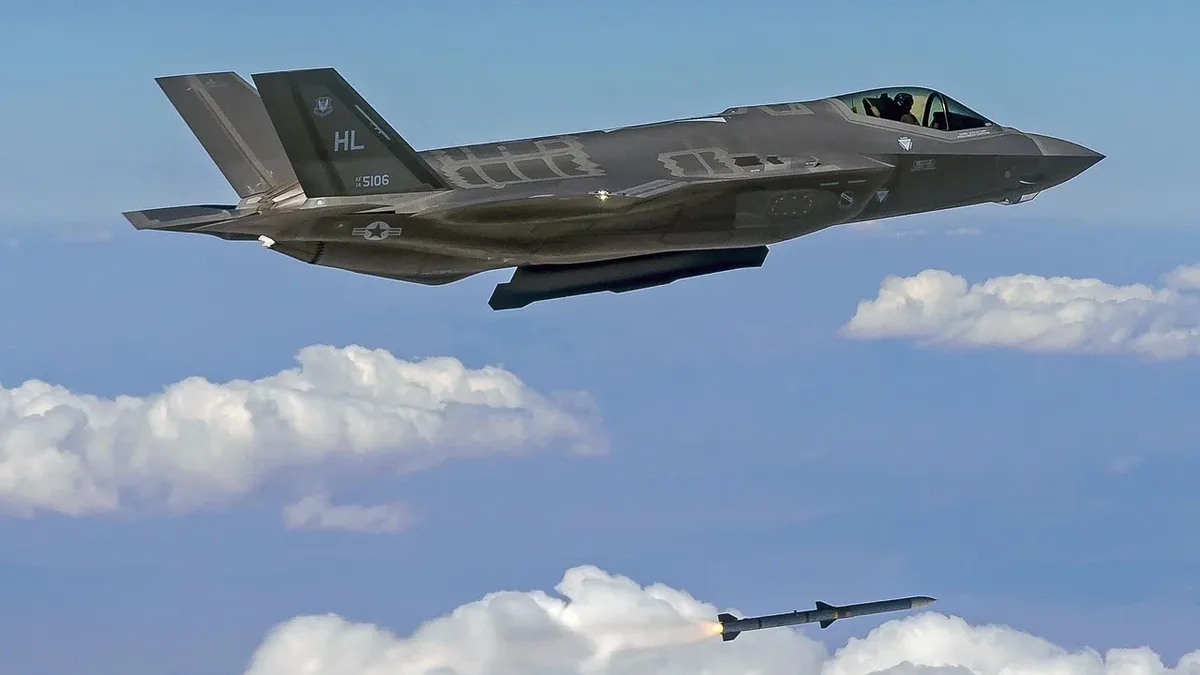
A Lockheed Martin F-35B released an inert MBDA Meteor test asset from its internal weapons bay for the first time on October 7, 2026. The test at Naval Air Station Patuxent River, Maryland, marks a critical engineering step toward verifying safe missile separation in the complex aerodynamic environment around the stealth fighter.
The trial was a developmental jettison test, not a live firing. The weapon separated without igniting its rocket motor or activating its control surfaces. A Royal Navy test pilot, embedded in the F-35 Integrated Test Force, flew the sortie. A combined UK and US team prepared and loaded the test asset. Engineers collected data to improve predictive digital models for weapon-release characteristics. Further jettison tests with different release profiles are planned over the coming months.
This milestone follows the first captive-carry flights of an inert Meteor on a US Marine Corps F-35B in February 2025. Additional separation testing and live firings are required before operational clearance. The UK government stated in April 2026 that integration testing was ongoing. Defence Minister Luke Pollard confirmed the timeline, saying, "the estimated timeline for the missile to enter service on the aircraft still points towards the early 2030s."
Multinational Integration Context
The test reflects the UK's leadership in integrating the Meteor onto the F-35B variant. Italy sponsors a parallel integration effort for the F-35A. Both nations operate the F-35B. Support for the programme involves a multinational coalition including the UK Ministry of Defence, the US Department of Defense, Italy's Ministry of Defence, and major contractors Lockheed Martin, BAE Systems, MBDA, and Northrop Grumman.
Meteor is a beyond-visual-range air-to-air missile developed by a European consortium. It is already operational on several fourth-generation fighter jets. The missile's specifications and current platform integrations are detailed below.
Internal carriage is essential for the F-35B. It maintains the aircraft's low-observable stealth profile and avoids the drag of external pylons. For the UK's carrier-based fleet, this long-range capability is a key requirement for operations from the Queen Elizabeth-class carriers.
Program Timeline and Next Steps
The October test was an engineering milestone, not the completion of integration. The next phase involves more release profile trials. Live firings will follow to validate full performance. Neither MBDA nor the Joint Program Office has provided specific dates for these upcoming events.
Groundwork for the F-35A variant is also advancing. Ground vibration testing and weapons-bay fit checks for the F-35A were completed at Edwards Air Force Base, California, on December 3, 2025. One ground test remains before flight testing begins for that model.
While integrating Meteor, nations are already looking ahead. The UK and France launched a 12-month joint study in April 2026 into a next-generation air-to-air missile to potentially replace Meteor in the future.
Further jettison tests with varied release profiles will be conducted over coming months before live firings validate full operational capability.