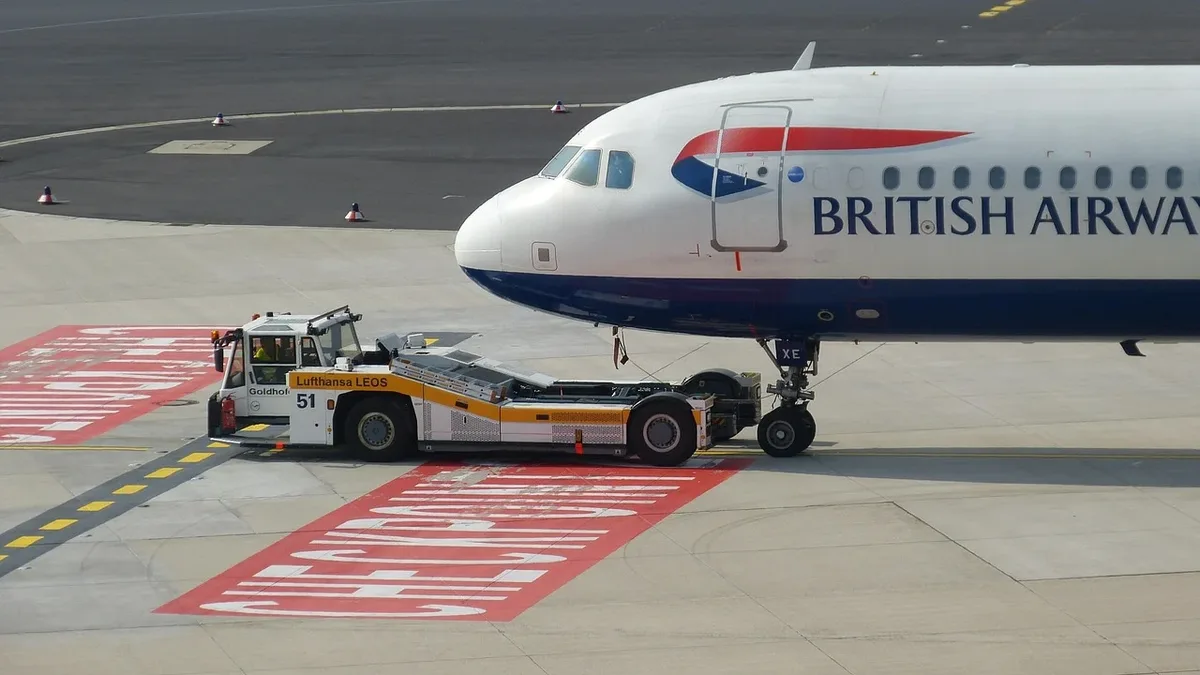
Phoenix airports pilot Honeywell SURF-A ground vehicle collision avoidance
Phoenix Aviation Department and Honeywell Aerospace are testing the SURF-A collision avoidance system on ground vehicles at three city airports.
Honeywell Aerospace and the City of Phoenix Aviation Department are collaborating on a pilot study of a ground vehicle collision avoidance system. The technology will be tested at Phoenix Sky Harbor, Deer Valley, and Goodyear airports this month, with the trial running through the end of the year. This marks the world's first deployment of advanced aircraft-derived collision avoidance technology on airport ground vehicles.
Honeywell's Surface Alert (SURF-A) system uses GPS and automatic dependent surveillance-broadcast (ADS-B) data. It is being installed on ground vehicles at the three Phoenix airports. The city is investing about $30,000 to test the technology.
Technology adapted from aircraft systems provides early warnings
The SURF-A system provides direct aural and visual alerts to vehicle operators. It can warn of an imminent collision up to 30 seconds in advance. Honeywell Aerospace's Thea Feyereisen stated the system can alert operators seven to 10 seconds earlier than air traffic control. She explained that it takes time for air traffic control to notice, process, and communicate a threat, a delay she described as a "telephone tag effect."
The SURF-A display shows all aircraft in the traffic zone around the airport, both on the ground and airborne. Feyereisen noted that pilots and ground vehicle operators work in fast-paced, high-stress environments and should both be prepared to avoid worst-case scenarios. This is the first time any airport in the world will use this type of collision avoidance technology on ground vehicles.
System inspired by fatal LaGuardia runway collision
The pilot study was motivated by a recent fatal runway collision at New York's LaGuardia Airport. That incident occurred in March. An Air Canada CRJ-900 collided with an airport fire truck after being cleared to cross the runway. The crash, which happened at night, killed two pilots and injured dozens more, resulting in over 40 total injuries.
According to the National Transportation Safety Board (NTSB), the fire truck occupants did not realize an air traffic controller's stop order for Runway 4 was directed at them. About a month after the crash, the Federal Aviation Administration determined two air traffic controllers had left work an hour early that night. Feyereisen confirmed the Phoenix project was inspired by the Air Canada incident at LaGuardia.
Officials emphasize safety innovation and global impact
Phoenix Mayor Kate Gallego highlighted the city's leadership in aviation innovation. "The partnership brings first-of-its-kind collision-avoidance technology to ground vehicles on runways," she said. Gallego stated the city leads on innovation and embraces technology that enhances safety and global aviation leadership.
Feyereisen referenced an NTSB recommendation that pilots should receive direct alerts of potential runway collisions. She argued vehicle drivers should also receive direct alerts as they are at risk in the dynamic airfield environment. The collaboration aims to protect airport employees, passengers, and flight crews while advancing next-generation runway safety globally.
Once the pilot concludes at the end of the year, Honeywell Aerospace will discuss next steps with the Phoenix Aviation Department. The discussion will determine if SURF-A can become a standard safety feature in the Valley and other airports.