US imposes 100% tariffs on imported drones
The United States has begun enforcing tariffs of up to 100% on imported drones and critical parts, following a presidential proclamation.
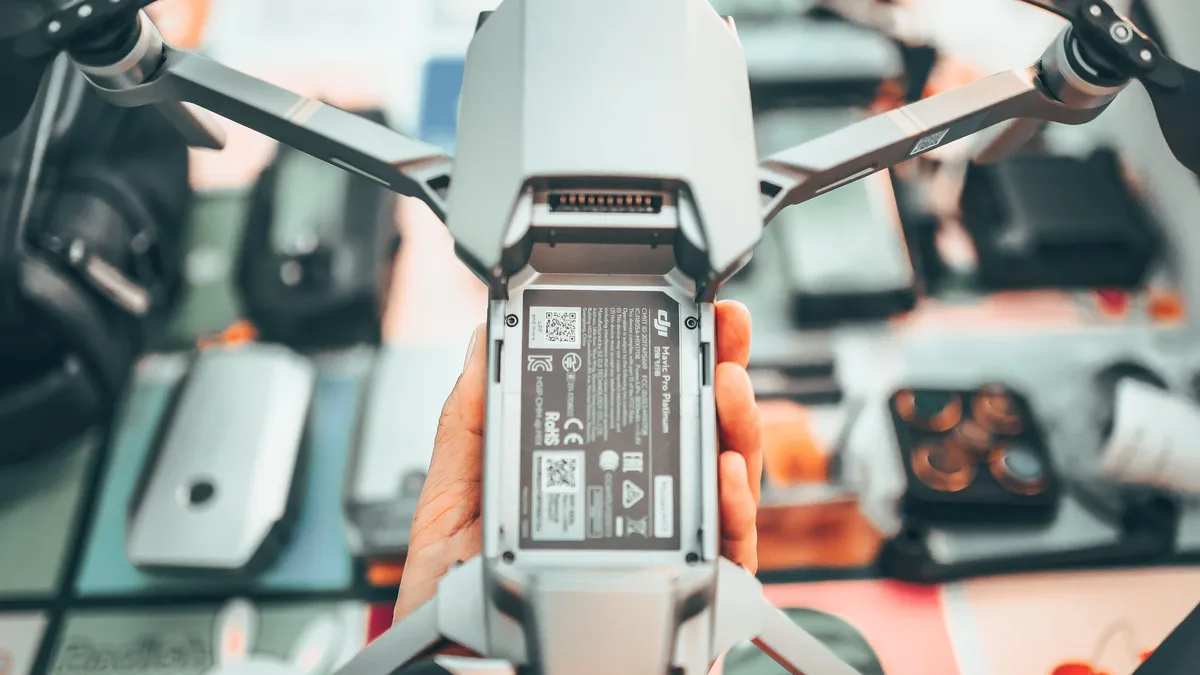
The United States began imposing tariffs of up to 100% on imported drones and critical components at 12:01 a.m. Eastern Time on September 3, 2026. The measures were introduced through Proclamation 11055, signed by President Donald Trump on August 13, 2026.
These new tariffs are applied on top of existing duties, taxes, and charges. The policy stems from a Section 232 investigation initiated by the secretary of commerce on July 1, 2025, which examined national security concerns related to drone imports.
Tariff rates vary by drone size and origin
Under the proclamation, unmanned aircraft systems (UAS) with a maximum takeoff weight above 25 kilograms (55 pounds) are subject to a 100% ad valorem tariff. The same rate applies to drones equipped with thermal imagers, UAS docking stations, and certain critical components identified in an official annex.
Smaller drones weighing no more than 25 kilograms face a lower 25% tariff. Another category of components will become subject to a 25% rate on February 9, 2027.
| Category | Tariff Rate | Effective Date |
|---|---|---|
| UAS >25 kg, with thermal imagers, docking stations, Annex I components | 100% | September 3, 2026 |
| UAS ≤25 kg (Annex II) | 25% | September 3, 2026 |
| Annex III components | 25% | February 9, 2027 |
Exemptions and delayed enforcement for some suppliers
Not every supplier will face the tariffs immediately. Products and components supplied by companies included on the Pentagon’s Blue UAS Cleared List or Blue UAS Framework as of September 2, 2026, will not become subject to the duties until February 9, 2027. The same delay applies to companies appearing on the Federal Communications Commission’s (FCC) Conditional Approval List by that date.
Allied suppliers can also qualify for lower rates. Products originating in Japan, South Korea, Taiwan, Switzerland, Liechtenstein, or a European Union member state can qualify for a tariff capped at 15%, including the existing duty rate. Products from the United Kingdom can receive a corresponding ceiling of 10%.
These lower rates are not automatic. Importers must certify that substantially all critical components and technology originate in the United States, the United Kingdom, or one of the other eligible economies. The US secretary of commerce must establish the eligibility process.
Production investment can lead to temporary relief
The proclamation also offers temporary tariff relief to companies that commit to expanding drone production in the United States. The secretary of commerce must establish a program allowing qualifying companies to import covered products and manufacturing equipment without paying the new duties while their US facilities are under construction.
Projects can involve building, refurbishing, or expanding production facilities, but construction must begin before January 20, 2029. The administration can withdraw an approval if a company fails to meet its commitments. In cases assessed as fraud, the exemption can be rescinded retroactively.
Policy targets foreign component reliance
According to the proclamation, the Section 232 investigation found that US companies manufacturing drones domestically remain dependent on foreign suppliers for motors, electronic speed controllers, lithium-ion batteries, and docking stations. The new duties add another barrier for foreign drone manufacturers already facing restrictions in the United States.
On December 22, 2025, the FCC added foreign-made drones and critical components to its Covered List, preventing affected products from receiving new equipment authorizations. Chinese drone manufacturer DJI is challenging that decision in federal court.
Exact product coverage remains difficult to establish from the online Federal Register text, as the relevant annexes are published as non-machine-readable images.